fitbusinesspros.com

Category: Marketing

Questions and information about, Using case studies, getting the clients, re-engagement strategies, social media, content creation, word-of-mouth advertising and networking.

  • Reviving Relationships: Unleashing the Power of Win-Back Marketing Strategies

    Reviving Relationships: Unleashing the Power of Win-Back Marketing Strategies

    Unlocking The Potential Of Win-Back Marketing

    In the competitive market of the boutique fitness business, attracting new clients is crucial for long-term success, but so is retaining clients. It’s not uncommon for people to drift away for various reasons.

    This is where win-back marketing comes into play. 

    Win-back marketing refers to the strategies and actions taken by fitpreneurs to re-engage and regain the trust and loyalty of former clients. In this blog post we will explore several win-back marketing strategies and decipher possible pros and cons for each strategy, and then lay out the actions underneath each strategy.

    win-back marketing

    First, what exactly is win-back marketing?

    It’s a targeted approach that aims to reignite the interest of lapsed clients who have previously engaged with your business, but have not made a purchase or interacted for a certain period.

    win-back marketing

    By identifying these dormant clients and implementing specific strategies, businesses can reconnect with them and encourage repeat purchases or renewed engagement.

    Before we get to specific strategies let’s outline the goals for win-back marketing.

    The Goals of Win-Back Marketing

    There are several potential advantages to implementing win-back marketing strategies:

    Rebuilding Customer Relationships:

    The primary advantage of win-back marketing is the opportunity to rebuild relationships with former client. By reaching out to them and addressing their concerns, you have a chance to rectify any issues and demonstrate your commitment to their satisfaction. Learning what went wrong, means adjustments can be made to avoid the same problem in the future.

    Cost-Effective: 

    There’s an old saying, “It’s cheaper to retain existing customers than it is to acquire new ones.” Win-back marketing is a cost-effective strategy because you already have a relationship with your disengaged clients. For little or no cost you can launch targeted campaigns using Email and SMS Marketing channels to deliver personalized invitations, offers and promotions designed to win them back.

    Gain Customer Insights:

    WIn-back marketing campaigns present the perfect opportunity to learn why a client might have left. To know the truth, no matter what the reason, gives you valuable insights about client preferences, overlooked pain points, and any lapses in customer service. In short, the boutique fitness business that understands why a client becomes inactive, can take responsibility for making adjustments to their services that can prevent losing a customer for the same reason in the future.

    Competitive advantage:

    Actively pursuing win-back strategies can set a fitness studio apart from competitors who focus solely on acquiring new clients. The business that demonstrates a commitment to re-establishing relationships and addressing client concerns, Is the business that creates a competitive advantage for itself in the market.

    win-back marketing

    The Best Win-Back Marketing Strategies for Boutique Fitness Businesses

    Win-back marketing strategies are aimed at re-engaging with clients who have stopped using your services. Here are some win-back marketing strategies specifically tailored for a boutique fitness business:

    win-back marketing

    Win-back marketing Via Personalized Email Campaigns:

    Send personalized emails to previous customers, addressing them by their names and highlighting the benefits of returning to your fitness business.

    These emails can offer:

    •  Incentives
    • Discounted memberships
    • Exclusive classes
    • Personalized sessions

    The benefits of personalized email campaigns are easy to decipher and include

    • Showing your clients that you are thinking about them (who doesn’t love that).
    • Bringing your fitness studio to the top of their mind, so that when they have that “I need to get in shape” thought. Your business is the first place they think of.
    • Reminds clients of a time when they felt great.
    • Shows your clients that they are special!

    win-back marketing

    Win-back marketing Via Personalized Re-engagement Calls:

    Identify a segment of previous clients who were once highly engaged or long-term members, and reach out to them with personalized phone calls. Ask them questions that show you care about their fitness and their health.

    In this conversation remember to:

    • Discuss their fitness goals
    • Where they may be succeeding in fitness today. Be sure to congratulate them if they have found a new way to keep moving.
    • Ask about any past injuries that might be leading to pain points in the present
    • Be frank. Make sure that they didn’t leave because of dissatisfaction with a part of your business, and if you find that they did, let them know that you really appreciate the feedback and will make appropriate changes.
    • Be conversational. We all learn to love our clients and the relationship that is built over the years is special and catching up with a client like an old friend will make them feel special too.

    This personal touch can make a significant impact and remind them of the positive experiences they had with your business. And If they become long term clients once again they will be sure to increase your average client value

    win-back marketing

    Win-back marketing Via Feedback and Surveys:

    Send out surveys to former customers to gather feedback and understand why they stopped using your services.

    Use this information to address:

    • Address discovered Issues and concerns
    • Improve your offerings
    • Create new classes or services based on suggestions

    This will show former clients that you value their opinions. And it will provide a platform for them to voice their feedback and suggestions directly. If they are able to communicate their dissatisfaction with you then they are less likely to tell the community at large.

    Remember, consistency and personalization are key in win-back marketing strategies. Tailor your approach based on your target audience’s preferences, communicate the value you offer, and make it easy for them to return.

    win-back marketing

    Win-back marketing Via Social Media Engagement:

    Leverage your social media platforms to influence previous customers.

    You can share information about other customers that have returned to your fitness business. This helps the client you want to win-back see themselves in your social media.

    These posts can include:

    • Share success stories
    • Before-and-after transformations
    • Testimonials
    • You can use TBT and flashback Fridays to highlight the clients you want to win-back

    win-back marketing

    Win-back marketing Via Special Promotions and Offers:

    Create special promotions and offers exclusively for returning customers.

    You could offer:

    • A “Welcome Back” package
    • Discounted membership rate for a limited time
    • Offer a free welcome back class to individual people

    win-back marketing

    The goal of these offers is to make your clients feel valued and missed, and you show this with your actions by providing an enticing reason to return.

    win-back marketing

    Actions For Successful Win-Back Marketing

    Now, let’s examine some of the actions that can be taken if you’ve decided to go ahead with win-back marketing.

    1. 1Personalization: Always address a client’s concern or pain point, when you learn of it, by responding to them personally. This demonstrates that you value their individual needs and are committed to rectifying any previous shortcomings.
    2. 2Incentives and Benefits: Offer exclusive incentives, discounts or benefits to entice former clients back. Highlight any improvements or new features you have implemented since their departure to showcase your commitment to continuous growth and enhancement.
    3. 3Multi-Channel Approach: Utilize various marketing channels to reach out to former clients. This can include personalized emails, a personal phone call or even direct mail.
    4. 4Feedback and Customer Support: Provide avenues for clients to voice their concerns or feedback. Promptly address any issues showing your dedication to their satisfaction and resolving any past grievances.

    win-back marketing

    In A Nutshell

    win-back marketing

    Win-back marketing can be a powerful strategy for fitness businesses looking to revitalize relationships with lapsed customers. By implementing personalized and targeted actions, leveraging client data and maintaining a client-centric approach, businesses can increase their chances of successfully reconnecting with lapsed clients, fostering loyalty, and driving growth in the long run.


  • 4 Reasons It’s Beneficial To Know: What Is Retargeting In Digital Marketing?

    4 Reasons It’s Beneficial To Know: What Is Retargeting In Digital Marketing?

    The 4-1-1 On What Is Retargeting In Digital Marketing

    If you’ve ever browsed a website for a product, only to see an ad for that same product on a different site, you’ve experienced retargeting in action. In this blog post, we’ll explore:

    • What is retargeting and digital marketing
    • How retargeting works
    • Why retargeting is such a important tactic for marketing Boutique fitness businesses

    what is retargeting in digital marketing

    A simple answer to the question “what is retargeting and digital marketing?” is this:

    Retargeting is a form of online advertising that only shows ads to people who’ve interacted with your website.

     Any interaction can trigger the showing of retargeting ads to a website visitor. Interactions like:

    • A visit to your website
    • A visit followed by creating an account without purchasing an intro package or scheduling a first visit
    • A visit where someone added an intro package to the shopping cart, but then abandoned the cart

    what is retargeting in digital marketing

    The idea behind retargeting is to keep your potential clients’ desire to try your services top of their mind and encourage them to take the next step, such as buying an intro package or scheduling their first appointment. 

    Now that we have a better understanding of the answer to the question “What Is Retargeting in Digital Marketing?”, let’s move on and talk about the benefits of using it.

    Why You Should Use Retargeting In Digital Marketing

    Retargeting is a highly effective digital marketing technique that can help you reach potential clients who have already researched your service.

    Here are 4 benefits of using retargeting in your digital marketing campaigns:

    what is retargeting in digital marketing

    Increased Conversion Rates: Retargeting helps to keep your service in front of potential clients, reminding them of their initial interest in your skills. This consistent exposure can lead to more purchases because people are more likely to convert after being exposed to the possibilities of your service multiple times.

    what is retargeting in digital marketing

    Better ROI: Retargeting ads typically have a higher ROI than other forms of online advertising because they are only shown to people who have already shown an interest in your business. The ads are shown to fewer people that are more likely to convert. As a result, you will have a smaller investment that leads to a higher return. 

    what is retargeting in digital marketing

    Improved Awareness: Retargeting ads can help to improve the awareness of your boutique fitness business within your community. By keeping your brand in front of potential customers that don’t convert immediately, you are helping them remember that they want the fitness transformation that your service provides. And they may even tell their friends about it.

    what is retargeting in digital marketing

    Customized Messaging: Retargeting allows you to create customized messaging for people that are at different points in your sales process.

    For example, you could create retargeting ads for people who registered but didn’t buy an introductory package, and then create different ads for people that simply were perusing your website.

    This customization can help to make your ads more relevant and appealing to your potential clients.

    How Does Retargeting Work?

    Here’s how retargeting typically works:

    what is retargeting in digital marketing

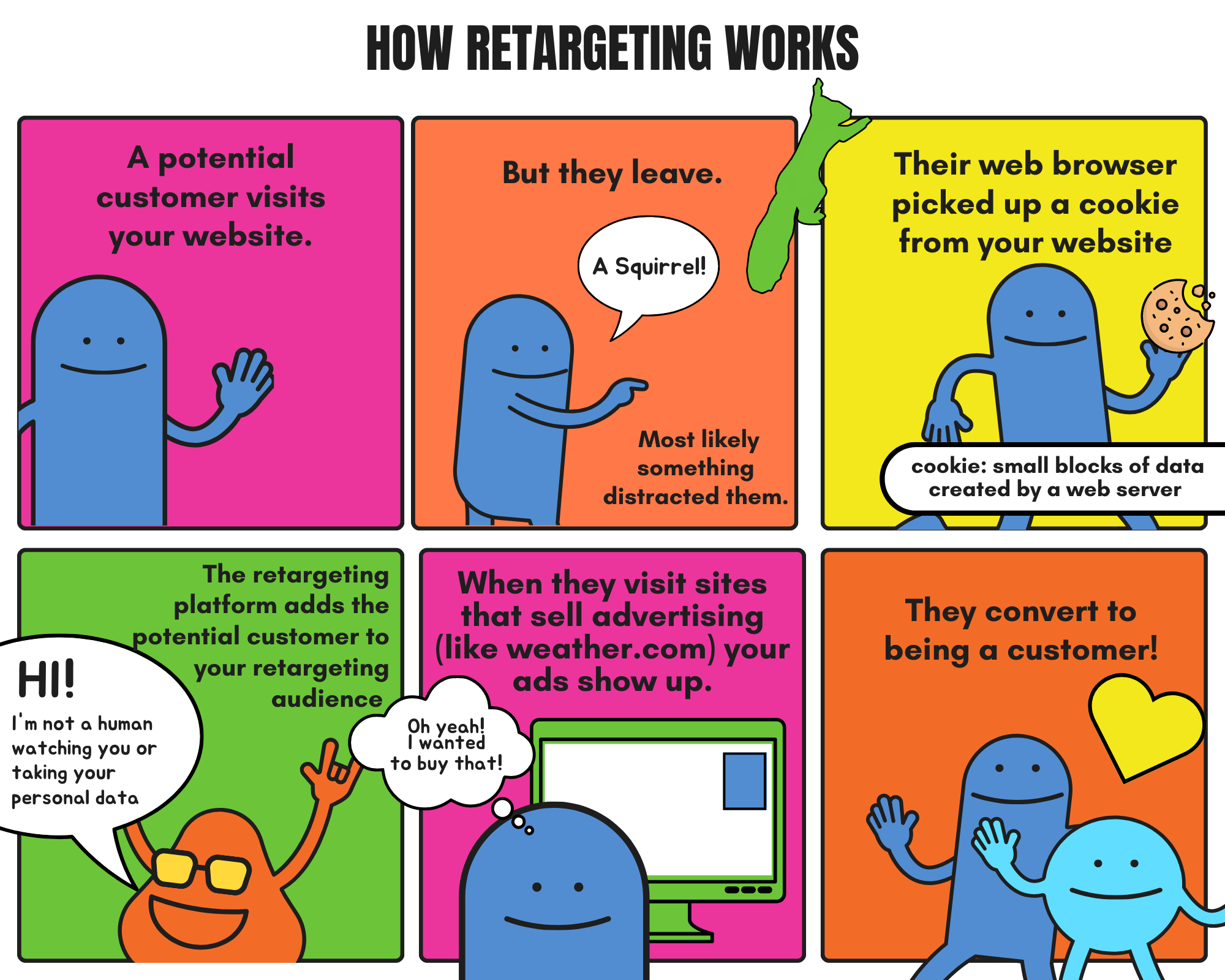
    1. 1A user visits a website: When a user visits a website, a cookie (a small piece of data) is stored in their browser.
    2. 2The user leaves the website: If the user leaves the website without making a purchase or completing a desired action, the cookie signals the website’s retargeting provider to add the user to a retargeting audience made up only of your website visitors.
    3. 3The user is targeted with ads: The retargeting provider uses the retargeting list to serve ads to the user on other websites they visit, social media platforms, or through email campaigns. The ads usually promote products or services related to the user’s previous interactions with the website.
    4. 4The user returns to the website: If the user clicks on the retargeted ad and returns to the website, the retargeting provider can measure the success of the retargeting campaign and even remove them from a retargeting audience when a conversion event occurs. 

    The Bottom Line: What Is Retargeting In Digital Marketing?

    Retargeting is a powerful digital marketing technique that can help you increase conversion rates, improve ROI, and increase brand awareness.

    what is retargeting in digital marketing

    By reminding customers about your boutique fitness business and encouraging them to take action, you can see significant improvements in your digital marketing campaigns. So if you haven’t tried retargeting yet, it’s definitely worth considering!

     So if you haven’t tried retargeting yet, it’s definitely worth considering!

    Mindbody BOLD Replay: Increase Intro Offer Sales with Retargeting 

    Free resource showing how it’s done right and wrong for a fitness business!

  • What Is Branding? 5 Essential Elements For Building A Successful Boutique Fitness Brand

    What Is Branding? 5 Essential Elements For Building A Successful Boutique Fitness Brand

    What IS Branding And Why You Need To Know

    When I first bought my Pilates studio, I remember being so excited to have my logo and website designed. I didn’t ask myself, “what is branding?” I just knew I wanted it to be beautiful.

    I hired a graphic designer, paid for an hour-long design consultation, and slogged through 3 rounds of revisions before we finally arrived at the finished, very pricey logo.

    what is branding

    Looking back, I realize that the process was arduous and expensive. I thought that the measure of a perfectly branded business was me loving it. Since then, I’ve learned that what’s perfect about branding isn’t just the logo or website.

    I’m going to share with you 5 key elements you must consider when asking yourself, “what is branding?”

    When you need the answer to “What Is Branding?”

    It’s critical that you know the answer to the question “What Is Branding?” before you do the branding work.

    what is branding

    That’s because branding is so much more than just a logo or a tagline. It’s a strategic approach that helps individuals build a successful boutique fitness brand. In today’s competitive market, effective service business branding plays a crucial role in

    • Differentiating your business
    • Building trust and credibility
    • Connecting with your potential clients
    • Increasing awareness of the possibility that your service meets their needs

    When you’re looking to build a boutique fitness brand, you will end up having created the 5 essential elements branding experts say you need, your:

    1. 1Brand Identity
    2. 2Brand Messaging
    3. 3Brand Personality
    4. 4Brand Consistency
    5. 5Brand Engagement

    what is branding

    Creating Your 5 Key Elements Is Not As Simple As Answering The Question “What Is Branding?”

    There are lots of choices that can be made to produce these 5 elements. Which means that

    1. 1An infinite number of outcome variations are possible
    2. 2Some variations will be more effective than others

    The way to ensure your variations lean toward the more effective side is to be conscious of what informs your choices.

    Here is the most important thing to know about branding!

    If you only take 1 lesson learned with you from this article – let this be it!

    1. 1All human beings have an “ego”. Not just the customer, the marketer has one too!
    2. 2The ego’s role is to maintain the drive toward “pleasure and satisfaction” and away from “pain and dissatisfaction”.

    what is branding

    The ego is constantly ask questions like 

    • “What’s in this for me?”
    • “Will this help me meet my present needs, desires, wishes, goals, whatever they are?

    With that profound and simple truth in mind, which of these choices regarding the best answer to the question “What is branding?” is likely to be successful?

    A

    “YOUR brand should reflect YOUR unique personality, YOUR values, and what sets YOU apart from others in your industry.”

    or

    B

    Your brand should reflect the unique personality and values of your CLIENTS, and effectively communicate that YOUR brand exists to fulfill THEIR needs.

    [theme music from Jeopardy playing as you consider your answer}

    The choice you make will mean the difference between becoming an average brand or an extraordinary brand!

    Hopefully you chose B as your answer.

    what is branding

    Because developing the 5 elements of YOUR boutique fitness brand, while holding the unique personality and value of YOUR clients in your mind, will help you craft the content variation that effectively communicates that YOUR brand exists to fulfill THEIR needs!

    The 5 Elements

    1

    IDENTITY

    The visual, verbal, and sensory elements that represent a brand:

    • Brand name
    • Logo
    • Colors
    • Fonts
    • Visual style


    2

    MESSAGING

    The language, tone, and style that a brand uses to communicate with its audience:

    • Brand story
    • Tagline
    • Elevator pitch
    • Overall tone of voice


    3

    PERSONALITY

    The human-like characteristics associated with a brand to make it more relatable to consumers.

    EXAMPLES:

    • Exciting: Bold, adventurous, and daring. 
      • Example: Red Bull.
    • Sincere: Honest, genuine, and down-to-earth.
      • Example: Dove.
    • Innovative: Creative, cutting-edge, and visionary. 
      • Example: Apple.
    • Authentic: Genuine, transparent, and real. 
      • Example: Patagonia.
    • Friendly: Approachable, welcoming, and warm.
      • Example: AIRBNB.


    4

    CONSISTENCY

    The need for a brand to be uniform and recognizable across all channels and touchpoints.

    • Visuals: 
      • colors, typography, and design images
    • Tone of Voice:
      • emails, social posts, and ads
    • Customer Experience:
      • service standards, quality, and customer support across in-store, online, and on social media.

    5

    ENGAGEMENT

    The act of creating emotional connections with customers through interactions and experiences with the brand

    • Social media interactions
    • Customer service interactions
    • Providing valuable content
    • Creating a community around the brand


    The Bottom Line on the question “What Is Branding?”

    The bottom line is this: effective branding is essential for building a successful boutique fitness brand. This is accomplished by starting with a client-centric point of view to craft the 5 essential elements of branding.

    1. 1Consistent brand identity (colors, fonts, etc) 
    2. 2Brand messaging that highlights potential client transformation
    3. 3Transparent and honest brand personality
    4. 4Brand consistency across all channels
    5. 5Client-centered brand engagement

    You can create a strong and memorable boutique fitness brand that really resonates with your potential clients.

    By helping others achieve their personal goals you will build trust and achieve your personal and professional goals.

    what is branding

    Investing time and effort into understanding and implementing these branding elements will put you well on your way to crafting a boutique fitness brand that will thrive in today’s competitive market.

  • Why Not Knowing Your Marketing Return On Investment Can Be Disastrous

    Why Not Knowing Your Marketing Return On Investment Can Be Disastrous

    When I Knew Nothing About Marketing Return On Investment – A True Story

    marketing return on investment

    I want to tell you how not knowing my marketing return on investment almost got the best of me. I’m hoping that by putting my story out there, it will help other business owners save time and energy when it comes to marketing.

    When I finally opened the doors to my Pilates studio, I was elated. I had put so much hard work into opening my own place, and it had finally come to fruition. I had a great network of colleagues and friends who spread the word about my studio which landed me a bunch of wonderful clients. 

    marketing return on investment

    After a successful year, I knew that I wanted to grow my studio even more. I decided to try all of the different strategies that I’d seen in similar businesses. The plethora of strategies included:

    • Social Media Posts
    • Blogging
    • Opening a retail store in the studio itself
    • Ebook for email list building
    • Email Marketing
    • Various Intro offers
    • Internet ads
    • Facebook ads
    • Studio events
    • Radio ads
    • Newspaper ads

    As you might imagine, after about six months of this extensive yet disorganized marketing plan, the exhaustion set in.

    I was working so hard and knew that if I continued at the rate I was going, burnout was coming. 

    Creating the content, organizing inventory and planning events was taking so much time and energy. Not to mention the fulfillment side of the business; I still had to teach Pilates!

    marketing return on investment

    On top of all this, I had no idea what was working. Something had to give. But what? I didn’t want to take the chance of eliminating the wrong things.

    But I had no idea what the right things were.

    What You Don’t Know CAN Hurt You

    The problem was that I had no idea what was working (and what wasn’t working) when it came to getting (and keeping) clients. I didn’t know :

    marketing return on investment

    1. 1What tactics were bringing clients in
    2. 2What tactics were helping clients make the first purchase
    3. 3What tactics were keeping the clients interested
    4. 4What tactics were leading directly to increased income

    I couldn’t tell if all of my efforts were worth it. I was working harder but not smarter.

    And then a friend and fellow business owner told me how to figure out my average client value, or ACV. More importantly she showed me how to use it to make critical decisions.

    marketing return on investment

    I had heard about lifetime client value (LCV) but ACV was new to me. It turns out that in the fitness business industry, we can’t really go by LCV as an average. It’s too hard to figure out when you have so many different relationships with your clients. For instance:

    • A 10-year relationship with a client vs. a 6-month relationship
    • If a client has an injury that takes them out of commission for a while
    • Maybe a client wants a home program and will only be coming for a few sessions
    • If a client only comes in sporadically for check-ins

    All of these inconsistencies in the boutique fitness industry make the LCV less helpful when making marketing decisions.

    Checking the ACV for a consistent rolling time period paints a clearer picture of the habits of your clientele.

    This customer data allows you to assess your marketing return on investment and client retention. 

    The ACV can also help analyze strategies that maximize customer value and aid in pricing decisions. But how do you do that? It’s actually pretty simple and I’ve narrowed it down to 4 steps. Keep reading

    How To Figure Out Your Average Client Value

    1. 1Time Frame – While you can do this calculation for any time frame, you’ll definitely want to know your ACV over the past 365 days.
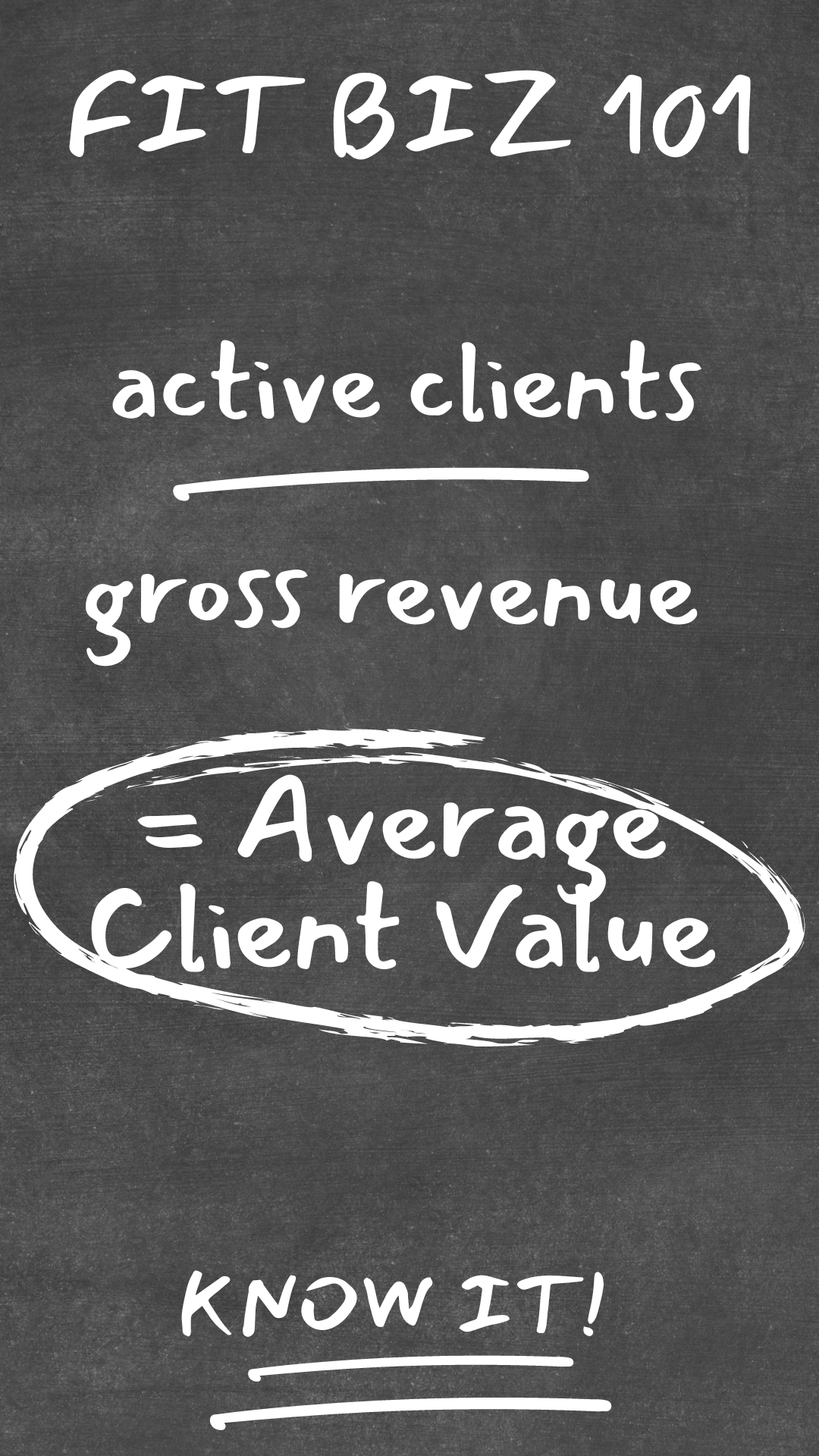
    2. 2Number of Active Clients – How many active clients and members do you currently have? Most scheduling softwares will have a report that tells you this. (If you use Mindbody, see the end of the article for specific steps to pull up this report.)
    3. 3Total Revenue – Next, get your total revenue for the same time period.
    4. 4Calculate – Total Revenue divided by Total Active Unique Clients will equal your average client value.

    How ACV Can Measure Marketing Return on Investment and Help Maximize Customer Value

    If you’re investing in internet advertising

    • Calculate your rolling 365 ACV.
    • Create your first ad budget. (Remember this is an investment and not an expense.)
    • Make sure that in your intake process new leads have a way to tell you how they found you.
    • After a period of time see how many people who clicked on the ads became clients.
    • Multiply that number by your ACV and then subtract your ad spend budget to find your projected return on investment.

    If you want to increase existing customer value

    • Calculate your rolling ACV.
    • Create a special that you will promote through social media and email marketing to your current clients. Possibilities include a retail sale, class special, and anything else you might like to try. (Click this link for some of the promotions that have worked for clients of FBP.)
    • Run the special for a period of time.
    • Calculate your rolling ACV again for the special’s time period.
    • Compare that ACV to the previous period.
    • Is it higher?

    What about Retention?

    The ACV is a fantastic tool to calculate retention success. If you calculate your Rolling ACV on a monthly basis you can learn so much about your studio’s retention performance.

    • If your ACV is increasing, look further. If the number of clients increased and your income increased you can be confident that your retention strategies are working.
    • If your ACV decreases because your income is stagnant. This means you have more clients making initial purchases, but they are not purchasing as many services or services of the same price as previous months. In this situation, you can ask yourself what you can do to maximize the value of each and every client.
    • If your ACV decreases because the number of clients decreases and the income is stagnant or decreases. You can deduce that there are problems with retention and look at your systems for retention after the first visit. Do you need more email nurture sequences, or do you need to speak with staff about making sure that clients are scheduling their next appointment?

    Choices About Pricing

    • Calculate your ACV.
    • Recalculate your ACV with a 5% increase.
    • Use this information to make decisions and create budgets around infrastructure and ad expenditure.

    By knowing your ACV, you’ll have data that will tell you what is adding income to your bottom line.

    marketing return on investment

    Work Smarter, Not Harder

    The bottom line is this. You don’t need to do all the things to try get a marketing return on your investment. Use the data. Use your ACV and let it tell you what specific marketing endeavors are profitable, and focus on those.

    Our own Results

    Data analysts tell us that at the end of Q4 2022

    • The Pilates market had recovered to 100% of pre-pandemic revenue levels.
    • That the Yoga market had recovered to 80% of pre-pandemic revenue levels.

    By following the very advice in this article, our Pilates Studio, in a tiny market in Massachusetts, had recovered to 

    • 122% of pre-pandemic revenue levels
    • With 40% fewer instructors.   

    You’ll have the same results by following time proven business practices like these.   

  • The Monumental Importance Of Online Reviews For Businesses

    The Monumental Importance Of Online Reviews For Businesses

    If You Think Online Reviews For Businesses Don’t Matter – Think Again

    I have a confession to make. I used to be someone who NEVER read online reviews for businesses. I was young and silly and figured, “Eh, how bad could it be?” Well, let me tell you. I ended up experiencing some pretty terrible unpleasantries, all of which could have been avoided had I taken the time to read the reviews. It wasn’t until I started working for a boutique fitness studio that I realized the massive importance of online reviews for businesses. 

    We, as a studio, had spent all of this money on hiring a search engine optimization (SEO) company. The goal we had in mind was simple- to have our website appear when people search for what we do. 

    online reviews for businesses

    It sounded easy enough, yet despite utilizing the SEO company, the number of clicks to our website didn’t increase.

    online reviews for businesses

    The owners expressed their frustration in a meeting when another employee said something that suddenly made everything crystal clear. 

    He said that when he searches for local businesses, he always starts with the one with the best reviews. It was like a light went on.

    online reviews for businesses

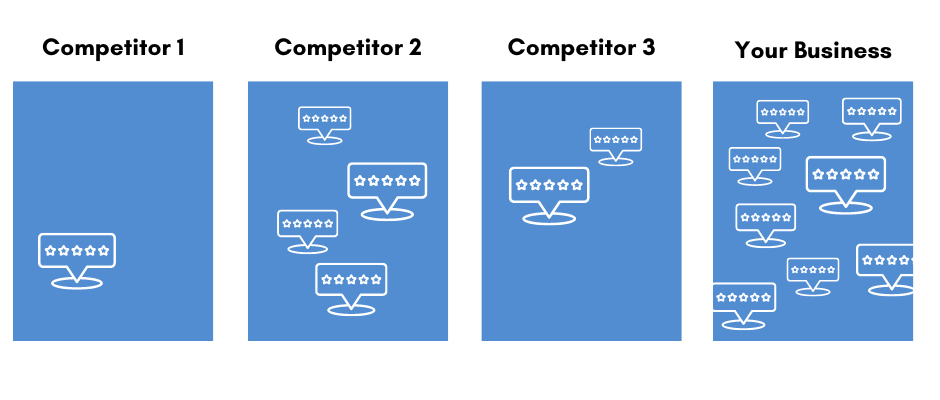
    After doing a little research, we discovered that we had only a fraction of the reviews that our competitors had.

    It would have been nice if our SEO provider had pointed out that being “found” by a search engine is only half of the equation. Being chosen is the other half. Instead, our SEO investment was pointing people to the competition because they already had reviews! 

    Why Online Reviews For Businesses Are Crucial

    online reviews for businesses

    For any business offering services or products to the public, customer satisfaction is essential for success. Demonstrating to potential customers that your company is committed to providing the best service possible is another great way to set yourself apart from the competition and build trust.

    One of the most powerful tools for demonstrating customer satisfaction is customer reviews.

    Reviews from existing customers provide potential customers with an insight into the experiences of using your company and can be a competitive advantage for businesses.  Understandably, potential customers want to see genuine customer reviews before using a company. 

    Here are some ways in which online reviews for businesses can be beneficial:

    online reviews for businesses

    • They validate your expertise – Online reviews show potential customers that you know what you’re doing. They show that you’ve helped people before and achieved the results people want. They validate your expertise – Online reviews show potential customers that you know what you’re doing. They show that you’ve helped people before and achieved the results people want. 

    online reviews for businesses

    • They give you an open line to consumers – Reviews and personalized responses are the ultimate way to put a friendly face to your brand. Showing you’re open to feedback will give your brand a major boost!

    online reviews for businesses

    • They make you visible – Online reviews boost your website in search engine rankings. With a higher rank, algorithms and people will see you as a trusted source in your industry, resulting in greater visibility.They expand your reach – Online reviews boost your brand’s online presence beyond your website and social media channels. Customers can discover more about your brand on well-known third-party sites like Google, Angi and Yelp.

    online reviews for businesses

    Those online reviews for businesses sound pretty worthwhile, right? It is imperative to have online reviews so potential customers can find you, see what you’re about, and know they’ll be in good hands.

    online reviews for businesses

    But how, as a business, do you go about getting these reviews from your clients? Keep reading to discover some easy-peasy ways to boost your business’s online reviews.

    The Trick To Getting Online Reviews For Business

    Now that you know the why behind online reviews for your business, it’s time to learn how.

    Here are 4 ways that have been tested by us that have garnered a ton of new reviews.

    1. 1Ask – Often getting a review is as simple as asking. As long as the process is clear and you make it fast and easy to do, you’re likely to get warm responses to your request. (P.S. We discovered that a lot of our clients were super happy to leave a review, even though we assumed it might be a bother to them!)
    2. 2Get specific – Ask a specific question instead of asking for a general review. Something like;a. What have you achieved since using [your product or service]?b. What’s the #1 reason you’d recommend [your product or service] to a friend?c. What would you tell someone who is considering [your product or service]? 
    3. 3Make it easy – Make the process of leaving a review as easy as possible for your customers. Ideally you should provide them with a link that brings them directly to where they write their review.
    4. 4Be prompt – Encourage your customers to share their thoughts soon after their experience while the details are still top of mind! (BTW, we have some awesome email templates you can use!)

    So there you have it- a better understanding about why online reviews for businesses are so monumentally important. This is especially true if you are a business owner yourself! 

    online reviews for businesses

    You have your beloved clientele who know how wonderful your business is – now let them go and tell everyone else just how awesome you are! It will really make a huge difference in how your business is viewed. 

  • If Your Profit and Loss Statements Are Traumatizing You – Do 3 Things

    If Your Profit and Loss Statements Are Traumatizing You – Do 3 Things

    When You’re An Expert At What You Do, But Not In Running A Business

    profits and loss statements

    I’m going to tell you a secret I haven’t told many people. I Googled examples of what to put in the business plan section on my loan application for the bank. I had no idea what I was doing- I was lost in a world of 

    • Profit and loss statements (or P&L) 
    • Balance sheets
    • Cash flow statements

    My expertise is in Pilates, not things like profit and loss statements.

    profits and loss statements

     I knew I wanted to own my own studio, and that I’d be good at it! But I had absolutely no idea about the business side of it. I knew I needed a business loan, but also knew that I needed a business plan to get a loan. 

    profits and loss statements

    Google became my best friend and teacher. I remember throughout the loan process our loan officer would ask for more projections and more spreadsheets, and it felt like I was just making it all up.

    Finally, we got a call from the bank and our loan officer said, “Guess what? Your loan has gone to underwriting. You’ve done great, now go get some rest.”

    profits and loss statements

    I could tell from the sound of his voice that this was good news. I turned to Google and searched for the key words, “What is underwriting?” Thankfully, the bank saw the big picture through the weeds of my naivete and I was able to open my business! 

    profits and loss statementsprofits and loss statements

    During the first year, I struggled with understanding my cash flow. I couldn’t understand why there were times when I was so super busy yet there was no money in the bank. But then times when business was slower, I had plenty of money in the bank. It made no sense to me. Thankfully, a close friend heard my (somewhat desperate) cries for help and worked with me to figure it out.

    profits and loss statements

    Why Messy Bookkeeping Makes Things 10 Times Harder.

    1. 1Identify the areas where you could be saving money, as well as opportunities for generating more revenue
    2. 2It tells you whether your company’s financial performance is positive or negative
    3. 3Reveals trends in your financial performance over time.
    4. 4If you stay on top of your profit and loss statements on a monthly basis, it makes your bookkeeping accurate in real time. (This will save you big time when you go to do your taxes!)
    5. 5It helps you figure out which activities are helping you make a return on investments, and which ones are resulting in losses.

    This was all very eye-opening and helpful to me. But I still wasn’t organized when it came to all of my financial stuff. That’s when I learned about the 3-step cleanup.

    Easily Manage Your Profit and Loss Statements With This 3-Step Cleanup

    profits and loss statementsprofits and loss statements

    In order to ensure the reviewing of your profit and loss statements is as easy as possible, it’s highly recommended to utilize these 3 organizational steps.

    1. 1Delete Irrelevant Categories – oftentimes bookkeeping software comes preloaded with default categories you may not use. Go to your Chart of Accounts and delete the categories you aren’t using or that don’t apply to your business. (You won’t mess anything up as long as you’ve never assigned a transaction to them!)
    2. 2Condense – comb through your categories and see what you can condense. For instance, you may have one category for supplies and one for materials. You’ll have to change the transactions to the new category, which can be time consuming if your software does not allow for a bulk operation. (QuickBooks does) But it will save you a lot of time and frustration in the future!
    3. 3Rename Categories and Be Specific – A category named “supplies” is too vague. Rename it so you’re clear on what is supposed to go in that category. For example, a boutique fitness studio may have one category called “office supplies” and one called “studio supplies.” 

    Being as organized and specific as possible will be quite beneficial in reviewing your profit and loss statements each month.

    The Bottom Line 

    profits and loss statements

    So there you have it. You now know that you’re definitely not the only one who has difficulty with understanding their profit and loss statements, cash flow, or any of the other business-related bookkeeping activities. Organization of your categories and checking the profit and loss statements monthly will go a long way in keeping things running smoothly. 

  • 3 Tips and Using Google My Business to Measure Local Online Marketing Success

    3 Tips and Using Google My Business to Measure Local Online Marketing Success

    Local online marketing success in today’s marketplace requires taking responsibility for meeting the requirements necessary to compete against others seeking the same customers. 

    One of the very foundations for success for local businesses begins with your Google my business profile. Later on in this article, you’ll find a case study video that demonstrates how to use Google my business data to set a baseline and measure your local online marketing success moving forward.

    Gaining new customers from the Internet requires 2 things to happen;

    • being found
    • being chosen

    Tip 1 For Local Online Marketing Success

    Local Directory Submission Services

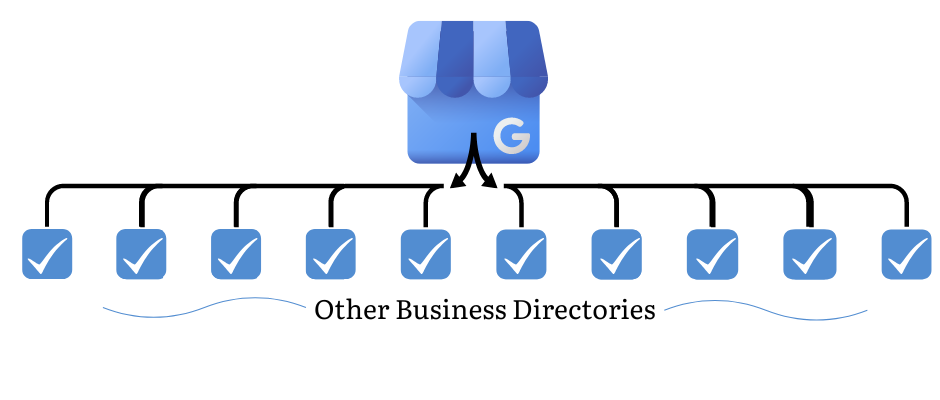
    This first tip gives your business a boost in being found. Claim and optimize the top 50+ local listings for your business. The smartest way to do this, is to use a Local Directory Submission Service that programmatically submits to all of the top 50 local listings at once.

    This makes it easy to guarantee that a single source of information, your Google my business listing for example, is then duplicated in all locations.

    Local online marketing

    Our local directory submission service is the perfect example.

    Doing it yourself Is not a practical choice because it would require the set up, and management of;

    • More than 50, directory services
    • 5 or more data aggregators
    • Connection to more than 80 GPS Mapping accelerators.

    Your time is valuable so use the service since getting set up with one only takes about 15 min.

    Local online marketing

    If you’re curious about the state of your online visibility, enter your business name and zip code in this form to get a full report.

    Fitness Business Pros

    Get Found Online!

    Enter a Business Name and Zip Code

    Tip 2 for Local Online Marketing Success

    Cultivate the best online reputation with a focus on Google reviews

    This tip supports the “being chosen” part of the equation. For most of this century, online reviews have been a key deciding factor for consumers, looking to make a choice in a competitive marketplace. Businesses are almost never the only provider in the average market. That’s why taking necessary steps to ask your satisfied customers for online reviews is the key.

    make your goal having more reviews of the highest score 

    Local online marketing

    To be chosen more often than your competitors, you can’t skip this step. 

    The good news is that It’s not difficult to get there.  Once you do get there, you will need to keep your foot on the gas and don’t allow any competitor the opportunity to overtake you!.

    You can use services for this, but I recommend not overthinking it. 

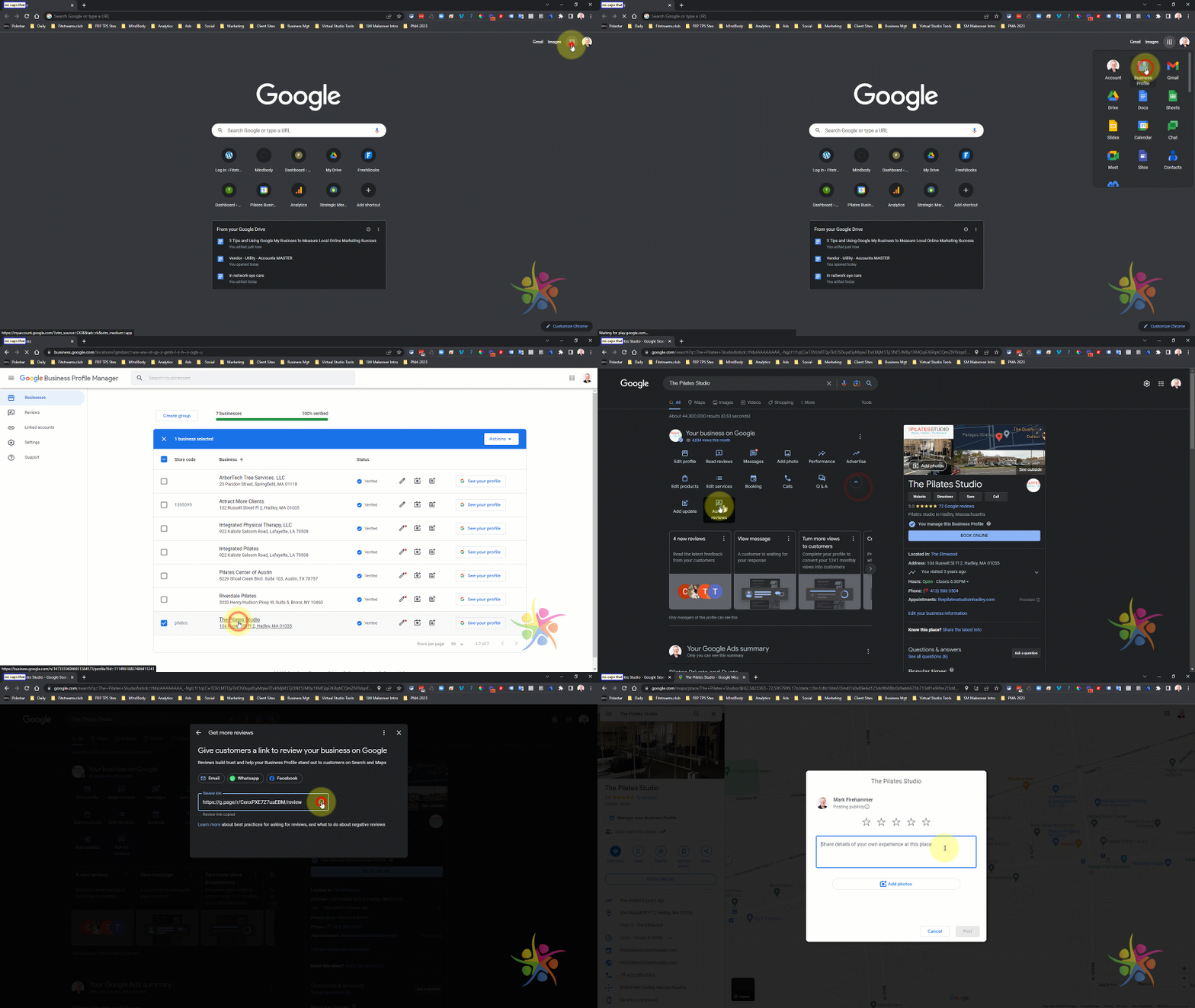
    Start by taking the link, from your Google my business portal that allows your customer to go right to the place where they start writing their review in a single click. 

    Google My Business Makes it easy to get reviews 

    Google my business makes it easier to ask for reviiews.

    Add that to your e-mail signature, and any ongoing e-mail communications that you have with your customers, and in no time at all you’re likely to have the best online reputation in the marketplace.

    Tip 3 For Local Online Marketing Success

    Impress search engines, with lightning fast web hosting

    Local online marketing

    In 2010 Google confirmed that their search algorithm would start taking speed into account when racking in search results. Here’s a quote from that announcement.

    “Like us, our users place a lot of value and speed – that’s why we decided to take site speed into account in our search rankings.”

    That change focused only computer page load speeds. Google followed up In early 2018 and added mobile page speed as a ranking signal in ttheir mobile search results as well.

    speed is king for local online marketing success

    You get what you pay for in web hosting. That means that budget web hosting is a big mistake if you want search engines to take your website seriously.

    I recently rescued a clients website from really bad hosting at Site5, after their site went down and the engineers at the data center we’re unresponsive in requests for a recovery support.

    I had been advising this client for years that they should move, and this was the event that help them finally make the decision. Less than a day later, the site was live and after expressing extreme gratitude, the senior director from the company said to me, 

    ”Is it possible that our site is 10 times faster than it used to be?” I said, “yes it was hard not to notice wasn’t it!”

    Just do it people. Here’s the one I recommend, especially if your website uses WordPress as its content management system.

     WPX.NET

    Full disclosure: We are an affiliate, but not just because they give us a small commission. Most of our client sites are hosted there and all but 1 of ours are, including the one you’re on now.

    They are the best of the best, with the fastest support in the world.

    How to Use Google My Business to Measure Your Success

    This is a must watch video, there’s a transcript below if you want to skip around. The case study in this video, does all three things mentioned above, and in less than five months they experienced significant gains in all 7 Measurable categories. Take a look.

    The bottom line is that, for local businesses these things always work, no matter what business you’re in.

    Below the video and the transcript are 2 more case studies, 1 for a Pilates studio, the other for an Acupuncture practice. 

    A Case Study following those 3 tips

    00:00:07

    One of the most important aspects of digital marketing is developing the ability tomeasure results. That’s truly the key to managing expectations, your own, your teams as well as your clients expectations.

    Now, there’s an old saying that you have to know where you started and whereyou want to go if you have any hope of measuring your progress between those two points getting where you want to be. Now for local businesses Google my business insights represent the very front lines of the if, the when and the where people are finding that business when searching for services.

    And of course, the point of marketing is o make those numbers go up steadily over time and the only way to know that is to track it. So before doing any marketing at all,  it’s really important to create a record of that baseline that represents where the business was before you did anything.00:00:58

    Watch how easy that is to do using Google my business insights.Step one is to log into your Google my business panel and to do that just make sure you’re signed into the Google account you use to manage your Google my business location or locations. Once you do that and you can verify that by hovering over the icon and I see I’m in my business account and now I click on the 9 squares where all the Google apps are all the time. It is 1 stop shopping for anything Google.

    00:01:30

    So I go in there I scroll down and I look for the my business tent.  It may not be in the same location for you. Sometimes it’s up here sometimes down here, but wherever itis, it’s gonna look exactly like that. Click on that icon.00:01:44And whether you have one location or many locations, the next thing you’re going to do is simply put a checkbox in the location you want the insights for. Watch what happens click and the actions menu comes up. I open the actions menu and I choose insights. I’m gonna just leave it at Discovery insight because I want all the information. So I click next. Now it defaults to 7 days, but I want to do a last year to this year comparison. So for this client, I’m gonna go to customize range and I’m gonna start in January 1 and go through the 14th. And I click.00:02:23Download the report. Now I’m going to go ahead and choose the same period of time from the prior year so I can see the difference for the same, term. So January 1 18 to May the 14th 2018. Change the 8. Oh, yeah, right. I just changed the year. So yes the same term five months ish the year before. I download that report.00:02:49So here’s my downloads folder and the two files we just downloaded.there’s CSV files. Now. I’m gonna really quickly just upload these into Google Drive and convert them to Google Sheets so I can show you what to do with this data in the next step. All right,00:03:04

    So here we are in Google Drive. There’s the original CSV files and they’ve been converted into sheets. So I’m just going to get rid of the CSV files real quick. We don’t need those anymore. All right. So now we’re gonna do something real special. We’ve got a spreadsheet that automatically graphs out the percentage of change. So what we’re going to do is open up the first term which is January 1 through 5 14 2018, and I’m just going to copy the values. Just the numbers themselves right there and I’m gonna paste them into the 2018 row. Okay, so there’s a graphic representation of 2018. I go to the 2019 file and I do the same thing.00:03:54Copy and then paste the 2019 numbers and we get our percentages of change. And as we can see this client, I’ll just zoom in a little bit, has significant gains in all 10 data points from the Google my business insights. 00:04:11Here’s what I’m gonna do. I’m gonna download this as a PDF file and I’m gonna have the team very quickly turn that into a case study just check the page breaks and annotate it a little bit so that it’s easier to tell at a glance what this data represents for ach of the data points. That’s only gonna take a minute. So while we’re working on that I’ll just pop over here with you and take a couple of minutes to explain what this client actually did to achieve those gains.00:04:35Believe it or not, there were only 3 things and all of them any business can do without hiring an agency.

    Tip 100:04:44They optimized their local directories to make sure that their business was represented in a uniform and consistent way wherever a prospect could possibly find them.

    Tip 2

    They upgraded their web hosting because their page speed load timeswere way too slow. They went from about three and a half seconds of load time,  meaning, that’s how long you wait to see the page. To a second and a quarter or less depending on the time of the day. That’s critical to the visitor and Google makes note of that as well because their concern is user experience.

    Tip 3

    So the third thing that they did was they very quickly worked on building an onlinereputation so that they have the best review scores and the highest number of current reviews of any of the competing tree services in their market.

    That’s it, those three things produce these results now, I do see the case00:05:35Study is in my folder. So let’s take a look at the data again. Now that you have some context of what they did to achieve them.Okay. So total searches in Google my business insights represents. The number of times customer found the business by searching in Google search or Google Maps up 16.82% Just a year later.

    00:05:58Direct searches. That’s the number of times customers found the listing searchingfor the business name or their address in search or Maps. And up 4.82 percent on the heels of their efforts.00:06:12Discovery searches. That is the number of times a customer found the listing bysearching by keyword a product a category or a service in Google search. Up 18.41% heels of their effort.00:06:29Total views represents the number of times the listing was viewed on Google search or Maps. It’s an aggregate of two numbers and that’s up 1.55% for the following year.00:06:41Search views that is the number of times customers found the listing by searching for the business name in search. And that increase is 0.15%. A small amount ofincrease there but still increased nonetheless. 00:06:54Here’s what really matters, the maps views. Local businesses live and die getting into the maps more often. And that’s the number of times that this business was viewed in that 3 pack and that increase for the term is 19.68% almost 20% increase on the heels of those efforts that we talked about.00:07:13So total actions. It’s an aggregate of website visits, directions and calls. Increase for the period is 51.08%. And let’s see website actions share of total actions, increase for the period was 43.66% That’s how many more times people visited the websitefrom that Google listing instead of 536 in 2018, for five months it was 770. There’s where that experience of the increased hosting really made a difference right there. 00:07:48 

    Directions, how many people asked for directions from the Google my business listing. It went from 69 to 71. It’s only 2.9% increase but when you think about this business, they come to the customer. People don’t typically go there. They might go there and get some mulch in the back of the truck. But for the most part a tree service goes to the customer, so there’s a gain here, but it’s not significant because it doesn’t really apply to this kind of business.00:08:16Phone call actions. This is the one that makes your mind blow up given the kind of effort that they put in. They went a 118,8% percent increase in the number of calls during the same period a year later 133 calls in 2018 January through April turned into 291 calls the same term the following year.

    Additional Case Studies

  • 5 Social Media Automation Tools to Use/Save Time (comparison)

    5 Social Media Automation Tools to Use/Save Time (comparison)

    Growing your social media accounts is a critical part of running a business in the modern day. Even for businesses that are more focused on in person clients like boutique fitness, a large social following goes a long way. The problem is:

    • Growing your social media presence takes a lot of time and effort
    • It requires consistent posting

    • You need a solid grasp of online trends to spread your brand beyond your existing audience

    • Taking time out of your day to post at specific times is inconvenient

    Social Media Automation is a great way to address this challenge. These services can make planning your posts easy and time efficient. You can create and schedule posts in advance in addition to the other useful tools provided. The only question is; What Social Media Automation service should you use?

    To start off with some basic information, most social media automation services provide the ability to manage multiple social media accounts at once, and schedule posts over a long period of time, among other tools. These services are subscription based, and many have different tiers of subscription. As you would expect, this means that many of the best tools are saved for the bigger subscriptions. However, the basic subscriptions are more than enough for simply setting up automated social media posting, and those extra features may not be particularly helpful or relevant for small businesses. Some features that are generally included for any level of subscription are bulk uploading, engagement optimization, and analytics.

    Fitness Business Pros Social Media Automation

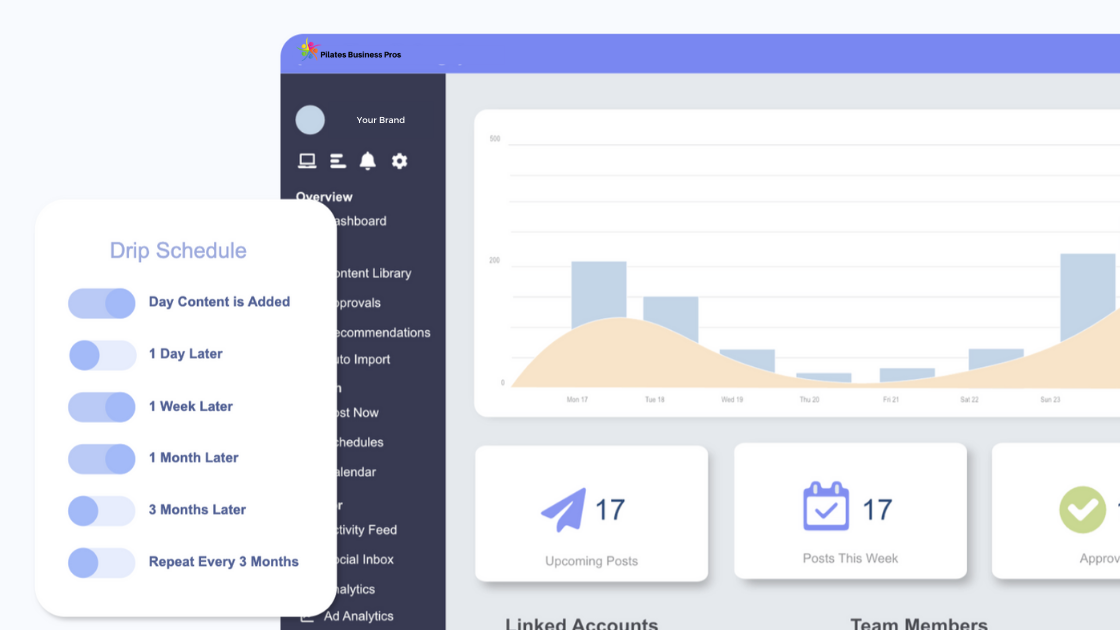
    Fitness Business Pros Social Automation is a new kid on the block created for the boutique fitness business. That doesn’t mean it’s a good option for only one industry though!  PBP offers a variety of tools that aim to make it easy to manage social media effectively while taking as little time as possible away from managing a business. 

    The biggest standout of the platform is the unlimited users and a comprehensive team management framework at any level of subscription. Speaking of, the 3 levels of subscription are Basic, Grow, and Thrive, but some key features are:

    • Unlimited user for an unlimited number of social media accounts
    • Unlimited storage for your content
    • Team management tools

    • Reporting tools for analytics

    • Evergreen content features

    • Preloaded Campaigns for you to instantly pick up and use for yourself

    • Dynamic Posting based on events like weather

    • Trending article resources to tap into what’s hot

    • Oodles of integrations to accelerate your workflow

    Opinion

    PBP’s social automation gives users a lot of power with the unlimited connected accounts. For most other social automation platforms one of the key differences between subscriptions is the amount of accounts that you can manage and how many users can use the platform. The preloaded campaigns and dynamic posting are also features that other platforms don’t offer. While it’s designed for fitness businesses to manage their social media, PBP has created an automation platform that is just as useful as any other competitor regardless of business. It’s clearly designed for small businesses to be able automate their social media without taking up all of their time.

    Hootsuite

    Hootsuite is a social media automation platform that’s been around for ages. It was originally designed for Twitter before expanding into managing other sites as well. As such, it’s got all the standard tools that you would expect from an automation platform, and has subscription models that can scale all the way up to enterprise level.

     While they don’t provide anything crazy, everything you would need for automation is provided and works like a charm. The user interface is a little dated, and while features for Twitter are all amazing, other platforms can be lacking. The big features provided by Hootsuite are:

    • 1-5 users and 10-35 social media accounts depending on subscription level
    • Unlimited post scheduling
    • Engagement and Analytics tools

    • Trend monitoring

    • Brand mentions

    • Team management tools for all levels of subscription except for basic

    Opinion

    Hootsuite is a great option for social media automation. It’s what PBP used for a long time. The real limitation comes from the amount of users and accounts. The basic plan only allows for one user and 10 accounts. But if you’re only looking to manage a handful of accounts, especially on Twitter, Hootsuite will provide plenty of value to your business. It may not be at the forefront of the industry creating new features, but there’s a reason Hootsuite is still a major competitor after over a decade in the business.

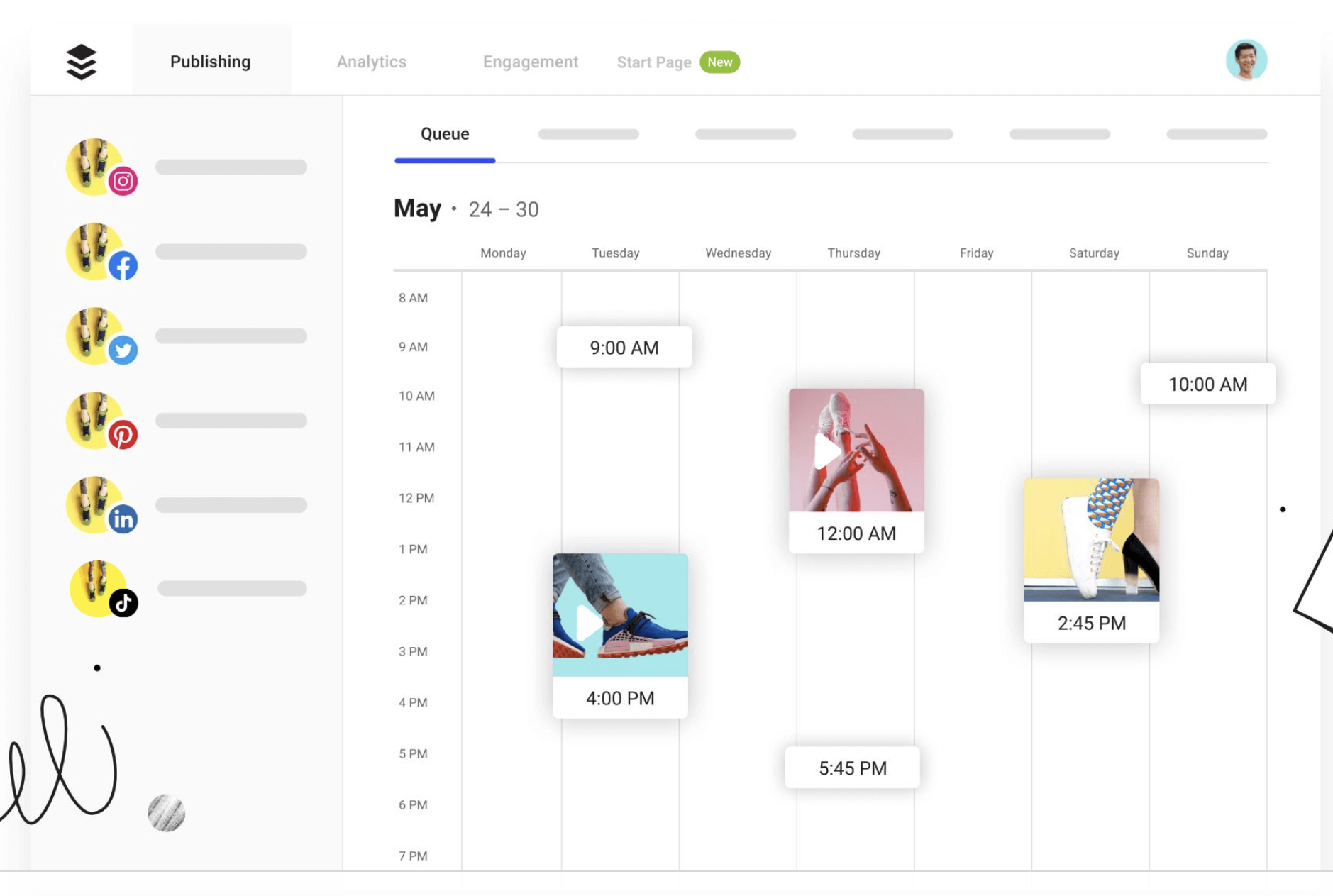
    Buffer

    Buffer is a low cost automation platform. It is noticeably cheaper than other platforms on this list but comes with limitations to match. The free subscription is a great way to test out if automation is for you at no cost, but it’s missing many tools that you have to pay extra to access. 

    There are 3 separate tools separate from the basic account. Buffer Publish, Buffer Reply, and Buffer Analyze. However, if you just need a low cost or even free way to automate your social media accounts easily, Buffer Publish is a great option.

    • Low cost, including a free option
    • 3 accounts, extra accounts for $5/mo
    • Simple to use interface
    • Additional users and team management behind the 2 higher cost subscriptions
    • 10 post limit for free accounts, 2000 post limit for paid
    • Posts are in a queue, not individually scheduled
    • Huge 3rd party integration
    • Lots of free tutorials and reports
    • Team features for Buffer Premium and Buffer Business users only
    • Social Listening behind the paywall of Buffer Reply
    • Analytics and Engagement tools only available for paid subscriptions

    Opinion

    Buffer is a great way to test out if social media automation is for you. However, it has a lot of limitations around the tools you can use for free and has important features included in other services separated by extra price tags. With the functionality of the queue system, scheduling posts for something like Throwback Thursday can be hard without a lot of math and forethought. The flexibility of being able to choose what parts of the service you want to pay for is nice, but only so long as you use one or two of Buffer’s offerings. If you’re trying to get the complete automation package, it may end up being more cost effective to pick something with a more complete offering.

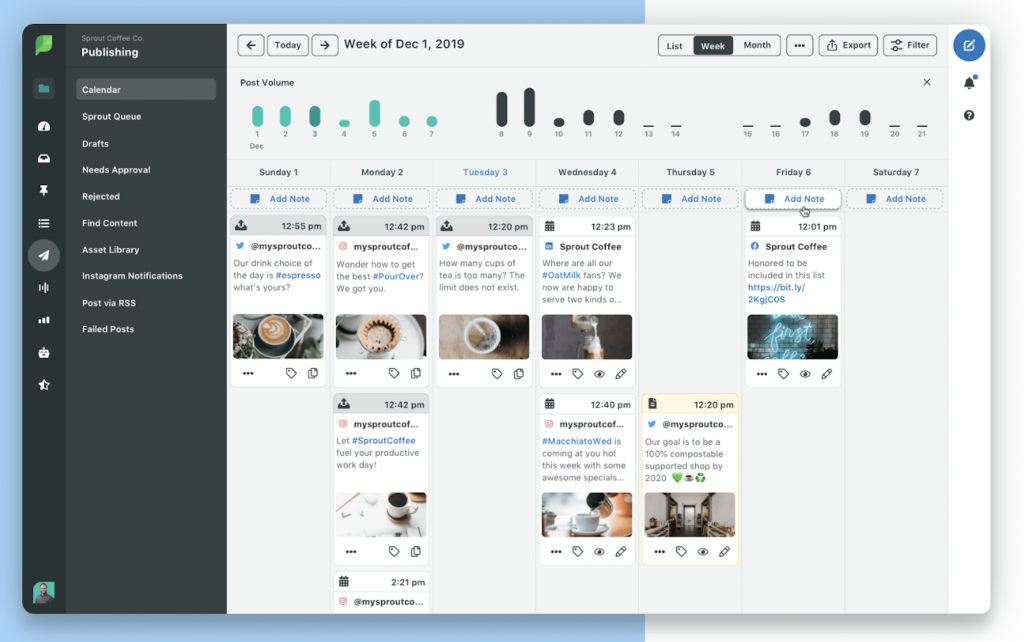
    Sprout Social

    Sprout Social is a premium social media automation platform for a premium price. Sprout Social has a slew of features like a customizable chatbot and sentiment research. While I’m showing a few standout features, there’s a ton more that aren’t mentioned. There are 3 levels of subscriptions: Standard, Professional, Advanced.

    • 5-10 social profiles depending on subscription 
    • ViralPost will automatically post at specific times for peak engagement
    • Audience Analysis
    • Sentiment Research
    • Competition comparison
    • Paid promotion tools
    • Customizable Chatbot
    • Profile, Keyword, and Location monitoring

    Opinion

    Sprout Social is one of the most expensive options on this list. It offers a ton of tools on top of the suite of standard automation features that makes the price worthwhile. For most businesses the decision to use Sprout Social is dependent on how much mileage you’ll get out of the extra features in comparison to the bigger price you pay. However, unless you have someone dedicated to optimizing your social media presence to a high degree, you might not get the most out of everything Sprout Social has to offer.

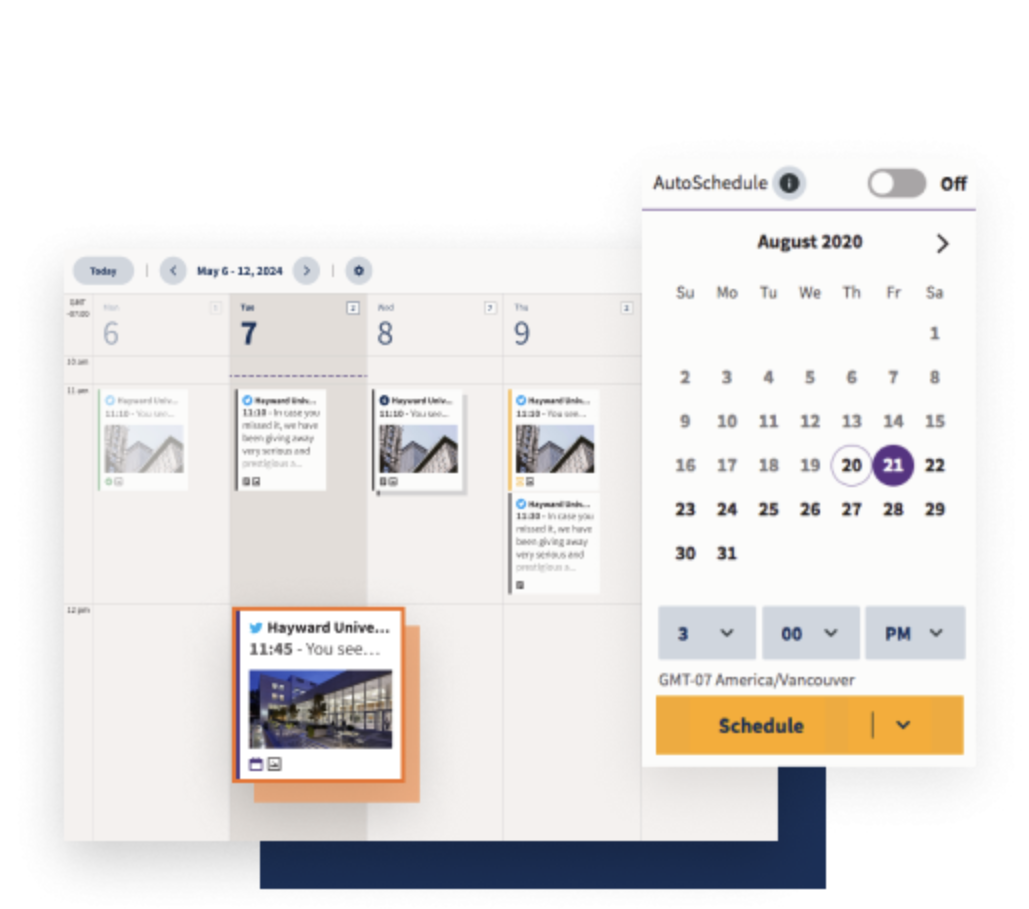
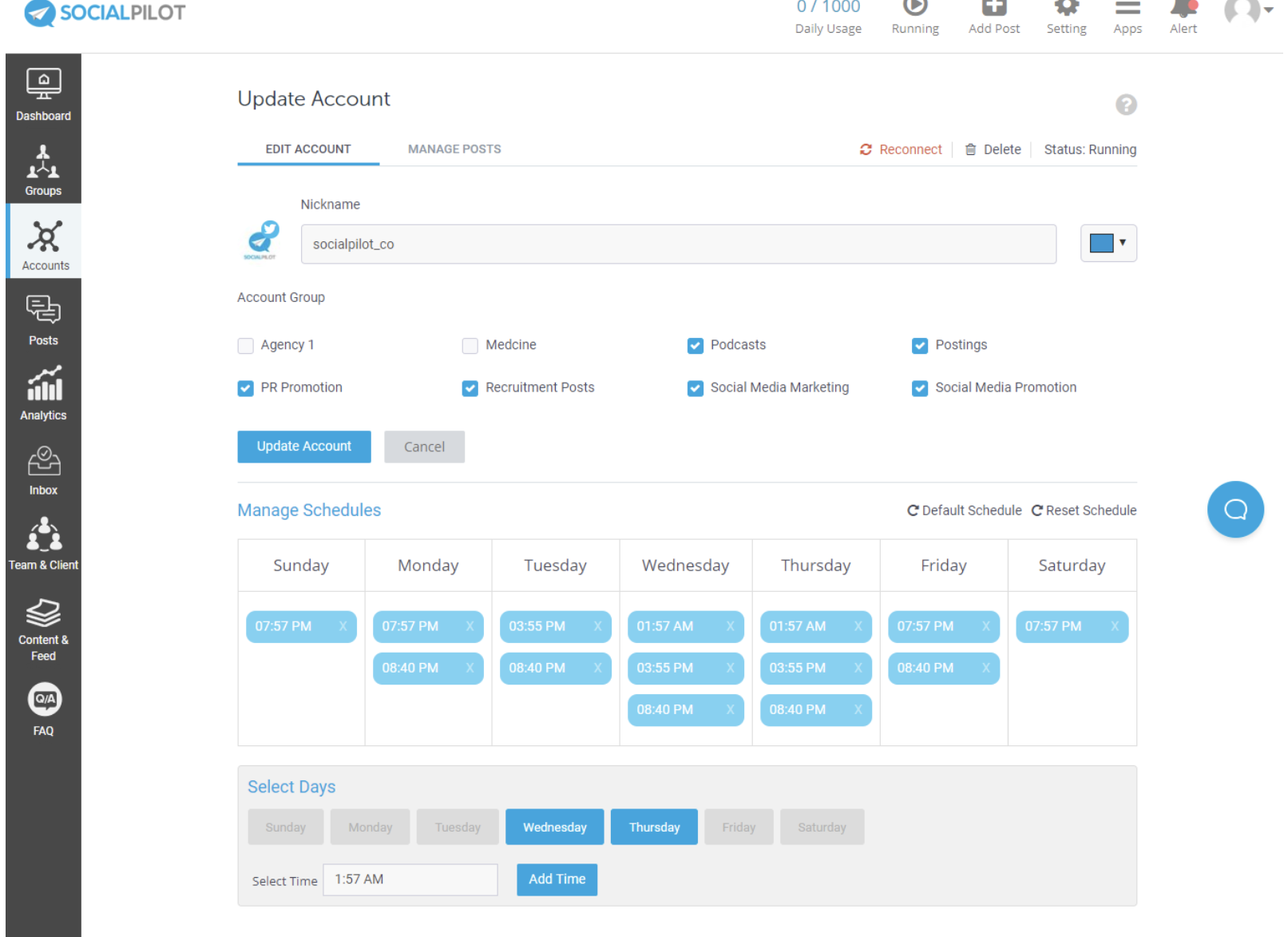
    Social Pilot

    Social Pilot has been around the block since 2014, but has been making waves recently because of their competitive pricing and bevy of features. They have 4 levels of pricing starting at $25/mo. Most of the tools for automation are available at every level, but the only difference is how much can be done at once. The platform puts a ton of focus on post scheduling; it hosts a ton of features. For users on the Small Team plan or higher, you also gain access to client management tools for an unlimited amount of clients. It doesn’t have robust social listening like other platforms, and you have to manually confirm every post.

    • Team management features
    • Monthly calendar view of future posts
    • 500 post bulk uploading and scheduling
    • Evergreen content features
    • Suggested content
    • Monitor blog and website feeds to add to the social media queue
    • Automatically creates a posting schedule for your content
    • Simplified analytics
    • 1-5 users, 10-100 accounts

    Opinion

    Social Pilot is a solid option with plenty of subscription options for any budget. Having to manually confirm posts can be inconvenient, but the bevy of features around the post scheduling is worthwhile. Depending on the size and scale of your business, the pros and cons of Social Pilot will likely be the deciding factor on whether you use it or not. If you don’t have the time to manually confirm every post at peak engagement times, it may be a deal breaker. But if you can work around some of the quirks, Social Pilot is a great bang for your buck option.

    Summary

    There is no individual tool that is the perfect choice for every business.  The right choice for yours will be the one that has the features you need at the price your budget can afford. Choose wisely! 

    If there is a tool that we left out, let us know in the comments and we will update this post to include  that comparison as well.

  • If You Don’t Learn About Virtual Fitness Buyers Now, You’ll Regret It

    If You Don’t Learn About Virtual Fitness Buyers Now, You’ll Regret It

    The virtual fitness buyer is not the same as in-person clients.

    Virtual fitness classes have become the norm for the fitness industry in the past few years given COVID-19. The ability to teach online through methods like Zoom, Skype, and Youtube have helped keep brick and mortar fitness studios running through lockdown and beyond. 

    Virtual Fitness Buyer

    However, beyond a studio’s regular in-person group meeting on Zoom, there is another demographic of customers. The virtual fitness buyer isn’t some new revelation from the pandemic, they’ve been a part of the fitness world for decades, but have been overlooked by many fitness professionals.

    The virtual fitness buyer is an online customer that doesn’t operate in the same way as in-person clients. While both have fitness needs, the virtual buyer has different priorities when it comes to what they look for in a fitness product. These buyers spend a lot of money too but in different ways, Allied Market Research found that the virtual fitness market will reach $59 billion by 2027, a mere 5 years from now. Who wouldn’t want to get a slice of that pie?

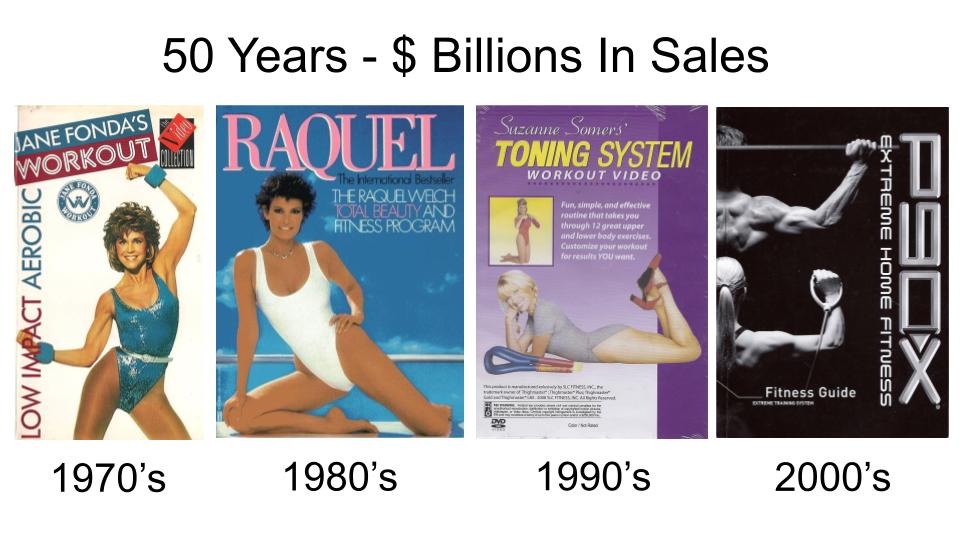
    The virtual fitness buyer has been around for a long time. At-home fitness has been sold to consumers since the 1970s with programs like the Jane Fonda Workout, and since then the creative process has only gotten easier to do.

    Up through the 1990s most home fitness videos were created by big media companies using celebrities to help sell the videos, but from the 2000s onwards this changed. Products like P90X have proven that you no longer need big name celebrities to sell fitness; the virtual fitness buyer cares about quality over a brand name. In the age of the internet, the fastest way to the virtual fitness buyer is by creating the best content possible, first and foremost. Learn how to future proof your fitness business by going virtual.

    The virtual fitness buyer cares about quality over a brand name.

    In order to access the online fitness industry, you first have to understand what the buyer values. The virtual fitness buyer has some key differences from the in-person buyer. 

    • They tend to be do-it-yourselfers, seeking out whatever they need to solve their problems on their own. 
    • They know what they need, or what they think they need, seeking out specific solutions.
    • Virtual fitness buyers want expertise delivered on demand, whenever and wherever they want it.

    This differs from in-person clients who show up to classes on certain days and collaborate with instructors to create the experience. See how we’re creating content for this buyer over on Fitstreams.club

    How They Spend Their Money

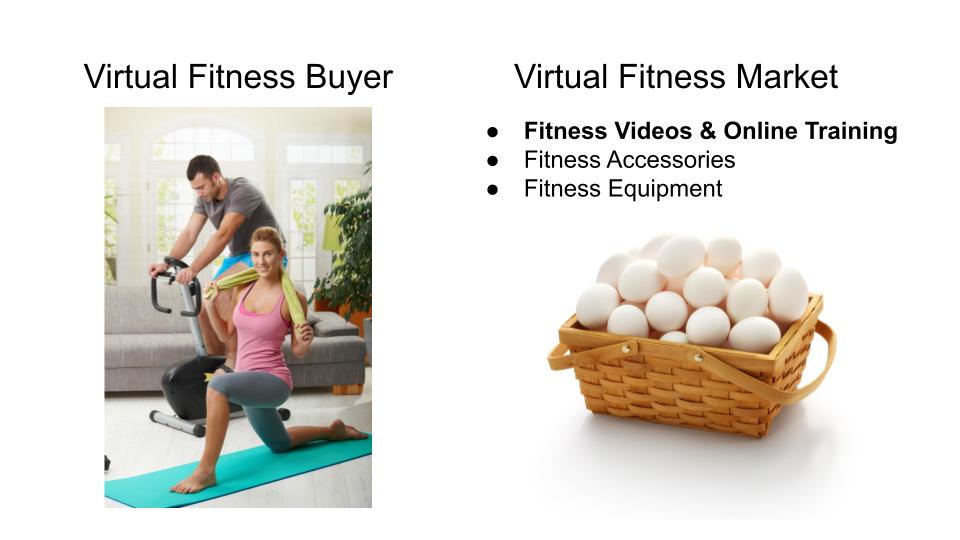
    These qualities also define the way virtual fitness buyers spend their money. There are three main ways: fitness accessories, fitness equipment, and fitness videos and virtual training. By knowing what the buyer will buy, businesses can better use their resources on things that will appeal to the online buyer in that soon to be $59 billion dollar industry.

    Summary

    Tap Into The Online Fitness Market

    It has been made clear that the virtual fitness buyer is a valuable customer, one that the boutique fitness pro should be more aware of. With a 50 year history and tremendous growth, online fitness is a segment to start learning to serve. Understanding the values differences between the online buyer and the in-person buyer is the key because trying to cater to the virtual fitness buyer the same as in-person clients will not work.

    The self-starting nature of the online buyer means that they seek specific solutions rather than wanting to work with an instructor to find the correct path forward. Being aware of these differences, means you will be able to tailor your content and your approach so that you can appeal to this new buyer type and as result begin to capitalize on an incredibly valuable opportunity for additional revenue streams from a previously untapped market.

    All courses…

      My courses Not started Finished In progress Not started Topics Marketing Fitness Videos Virtual Fitness Fitness Production Business Access restrictions Only for Members Free Premium Course Reimbursable Course

    Search

    1 Lessons   Easy

    Free

    Future Proof Your Fitness Business Selling Videos To Clients Beyond Your Neighborhood

    Learn about the steps necessary to reduce the threat we all experienced due to covid in 2020.  This mini course is a high-level flyover in that 19 min. and 8 seconds shows shows 8 important things; Exactly what our shared vulnerability is and how it has been hiding in plain sight. How Covid Revealed it to us. Where the REAL opportunity for reliable secondary revenue is. What that target market is worth in the next five years. What 3 categories of things are being sold in that marketplace. Who the buyer is, and how they are different from the buyer we are used to. Understanding the simple steps we can take to delight that buyer so they will pay us even while we sleep. How to inspire ourselves into action by calculating how many of those buyers we need to match or exceed our existing in person revenue. There is a downloadable tool that can help you do that calculation. Don’t miss this! We need you to join this movement, meant to disrupt the disruption of the boutique fitness industry. 

    Guide

    Guide

    12 Lessons   None

    Free

    Pathway To The Truly Hybrid Fitness Business

    This course is the result of more than two years of research, personal and professional inquiry, soul-searching with a singular end goal in mind. To figure out a way to get through the next major disruption more gracefully than we did the last. We decided that it was not enough to simply hope that we never have to experience the severe emotional and financial impacts that we experienced when Covid shutdown our Pilates studio for months in April of 2020.  To do that we knew that we had to begin by Analyzing the situations we found ourselves in more thoroughly. Committing to develop multiple ideas, weighing all options, and only committing time and resources to the soundest of ideas. Making sure that our plans were built on a solid framework that was governed by principles known to reliably produce measurable progress toward our overriding objective. Our Overriding Objective To be profitable, quarter to quarter, year to year with or without disruptions. Seek out, understand and learn to attract an additional and completely different customer type. To establish secondary revenue streams in addition to our primary and traditional revenue streams. Do that without depleting our energy and human resources or compromising the quality of service to our existing in person clients. No one ever plans to fail, but thanks to the pandemic we woke up to the reality that we, like so many others like us, we were failing to plan thoughtfully and thoroughly.  This Course Is Not a Sales Pitch It is a comprehensive “Open Source” business plan that is fundamentally different than the traditional boutique fitness service business plan that is almost universal across the industry.  What we have learned is that what needs to be done, can not effectively be done alone. The reasons for that are very clearly outlined in this material.  This course lays out a comprehensive business plan that requires a group of like-minded boutique fitness experts who also share the same desires to take power over disruption and reliably secure economic and emotional abundance for a business, our families, our employees and our clients.  In lesson 1, we lead with the invitation we make to any fitness experts that want to join Fitstreams.club in this mission. That may not be you, but it might be someone you know. Someone that might be upset if you didn’t let them know about the opportunity.  In the end, you’ll have the understanding you need to join us, or to refer others that you know that might wish to, or both!  The more people that understand what were doing, the faster we will build the cooperative coalition of like-minded experts necessary to reach the critical mass this business plan requires for success.  Yours in Fitness Mark Firehammer, Laurie Johnson, Katrina Hawley

    Text

    Text

    11 Lessons   Intermediate

    Reimbursable Course

    Concise Cueing For The Virtual Fitness Buyer

    Developing a cueing style for your recorded on demand videos that appeal to the known preferences of the virtual fitness buyer profile.

    Text

    Text

  • The Sooner You Understand Your Circle of Vulnerability the Better

    The Sooner You Understand Your Circle of Vulnerability the Better

    Escape the Circle of Vulnerability

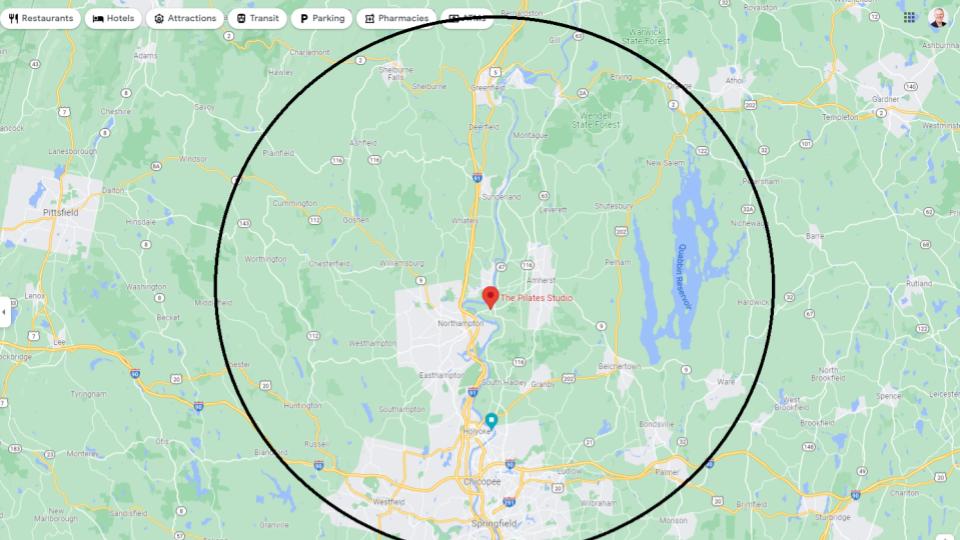
    Fitness businesses rely on clients from a relatively small area. While this is a sustainable model during normal times, the past few years have proven how fragile this model is.

    Because in person clients must be very close by, anything that stops in-person classes will hit that fitness business hard. COVID-19 was simply the first event to reveal the flaws of this model.

    The traditional fitness business model’s reliance on in-person clients to thrive embodies the business and financial mistake of putting all your eggs in one basket. Many amazing businesses had been created in spite of this mistake, an easy one to make when living inside the experience of what was “normal times”.

    Suddenly, with covid, that seemingly large circle of clients became much smaller when the usual in-person classes got disrupted by the pandemic. The immediate impact to any business that relies on a single revenue source is a devastating loss of revenue. For brick-and-mortar fitness studios, it was practically inevitable that we’d find ourselves in this difficult situation. 

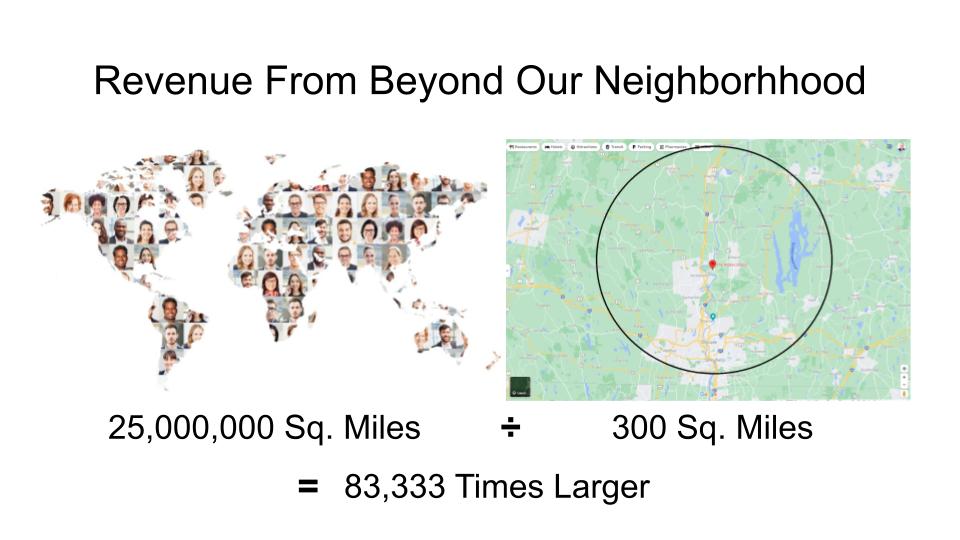
    When COVID-19 hit, many studios were forced to shut down for extended periods of time. While many survived by providing online classes, most businesses during this time did not extend their reach beyond their traditional 300 sq mile or so range. Unfortunately, some great businesses are gone forever.

    Studios that scrambled to adjust to online classes began to lose a significant amount of clients who weren’t willing to make the transition to virtual fitness classes for very long.

    COVID-19 forced us all to discover that only a percentage of the in person clients were willing to follow that business online during quarantine. The new realization was that in person clients, and virtual fitness clients are different types. To further compound the problem, many businesses did not fully commit to the new online environment, using it as a stopgap measure until in-person classes returned. 

    This choice is the equivalent of wanting to remain in the circle of vulnerability.

    They didn’t take the time to discover they needed to learn to appeal to a different and additional client type, the virtual fitness client. As a result, no new revenue streams were created to compensate for the loss incurred from the loss of access to their in person clients.

    After the Quarantine

    The world is not back to normal yet. It may not ever go back. Fitness businesses have to make a choice; adapt to the new world and extend their reach beyond the circle of vulnerability, or simply accept the losses caused by the next event that forces them to lose their in person clients for a period of time. 

    Rather than trying to increase the amount of clients in the neighborhood, focus on expanding the reach of your business to a larger area that will guarantee more clients.

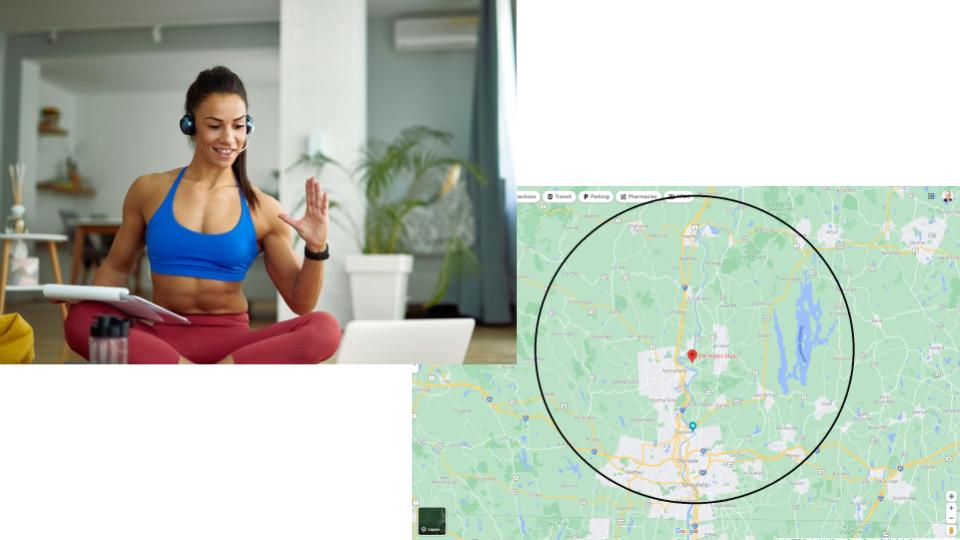
    It might seem like there’s only doom and gloom for brick and mortar fitness businesses. However, that is not the case. COVID has given businesses an opportunity to pivot into online fitness, which exponentially increases their circle of potential clients. In contrast to the 300 square miles of in-person business the normal fitness studio is limited to, the world has over 25 million square miles of potential clients. By winning over new virtual clients from the world outside their small local circle, a business can massively increase both the amount of clients and revenue. All it takes is understanding the virtual fitness world and catering to that additional demographic.

    Summary

    Fitness businesses can start to attract clients on a global scale by tapping into the virtual fitness marketplace. 

    With proper execution a brick-and-mortar business can not only retain their in-person clientele, but expand into creating online content for a second audience that creates a secondary revenue stream. Over time, with care and attention to details, this secondary revenue stream can eventually match, and exceed, in person revenue. What business wouldn’t want a huge increase in revenue during normal circumstances, and extra financial security when the world experiences the next disruptive event?

    Related Courses

    [tva_course_list query=”{‘terms’:|{|’500135′,’500139’|}|,’authors’:|{||}|,’topics’:|{||}|,’labels’:|{||}|,’levels’:|{||}|,’progress’:|{||}|}” ct=”course_list-69324″ ct-name=”Course List 03″ type=”list” columns-d=”1″ columns-t=”2″ columns-m=”1″ vertical-space-d=”12″ horizontal-space-d=”12″ posts_per_page=”6″ no_posts_text=”There are no courses to display.” no_posts_text_color=”#999999″ pagination-type=”none” pages_near_current=”2″ css=”tve-u-1815d12a9da” total_post_count=”5″ paged=”1″ disabled-links=”1″ horizontal-space-t=”15″ vertical-space-t=”15″ class=’tve-content-list tve_no_duplicate’][tva_course_list_item id=’500135′][tva_course_list_dynamic_variables][tva_course_list_item_label css=”tve-u-1815d12a9df”][tva_course_list_item_type_icon]

    [tva_course_list_item_lessons_number] lessons  |  [tva_course_list_item_difficulty_name inline=’1′]

    [tva_course_list_item_name link=’1′ target=’0′ rel=’0′ inline=’1′ static-link='{“className”:””,”href”:”https://staging.fitbusinesspros.com/courses/future-proofing-your-fitness-business-selling-video-to-clients-beyond-your-neighborhood/”,”data-css”:”tve-u-1815d12a9e8″}’ link-css-attr=”tve-u-1815d12a9e8″]

    [/tva_course_list_item][/tva_course_list]

  • The Quickest & Easiest Way To Start Your Pilates Blog

    The Quickest & Easiest Way To Start Your Pilates Blog

    You are a business owner. You have found the best web designer. He/she has made your page, and when you review the website in the toolbar you see the word blog.

    You pause for a moment. You’ve read blogs. You’ve even learned from blogs. But never in your life have you identified as a blogger. You’ve heard that blog posts help the world find your amazing business, but how in the world are you going to think of something to write about on a regular basis? Where are you going to get these ideas? What about time? Who has the time to put together these essays?

    I have been there. I own a Pilates studio, and the first time I saw the word blog on our website, I had the same sense of panic. But then I realized something. I loved talking about Pilates, and even more I loved getting geeky about Pilates. If a client asked me about the knee joint, I could go on for hours with fascination about the intricacies of knees. And it only took me a little while for me to understand that this geekiness is what google needed from me to recognize my expertise and authority in the local Pilates market. Time was still a problem. I was teaching pilates after all, but over the course of a year, I found a few formulas to make the writing a little easier:

    1

    Joints

    Pick a joint, describe it’s anatomy, then pick three to five favorite exercises for this joint, and tell your audience why you love them. Then snap a couple of pictures of these exercise and you’ve got yourself a blog post

    2

    Clients

    Case study – You know those wonderful sessions where you feel the magic of Pilates and see your client’s body changing before your very eyes. Document it with your words and a picture and you’ve got a case study blog post.

    • What was the goal of the session?
    • How did your thinking create a workout?
    • What was the result?
    • What was the magic?

    3

    Challenge

    Pick a hard Pilates exercise and challenge every client to accomplish this exercise as best they can. Take Pictures, Videos and tell a story for each client’s accomplishment and you have a studio challenge blog post.

    4

    Lifestyle

    We all understand that Pilates will change a person’s lifestyle. We are healthier and happier when moving our bodies. Outline how might one can take the concepts of Pilates to other parts of their lives. Give tips and tricks to bring the magic of Pilates to everything you do

    5

    Sports

    Pick a sport and write about the ways that Pilates will help improve the athlete that plays that sport.  Golf, Horse Back Riding, Skiing, Swimming, Tennis and Dance are all great examples.

    6

    Anatomy

    Pick an exercise and get nerdy. Write about the muscles, bones, and joints involved.  This posts will appeal to the clients who like a deeper understanding

    These 6 topic ideas can lead to countless blog posts and these posts will help with the content creation. But if you’re still undecided about the value of blogging to your marketing strategy, take a look at these 7 statistics.

    7 Statistics on Why You Should Be Blogging

    • Among those who use e-mail marketing, companies that blog get twice as much traffic from their email than those who don’t. (Source: HubSpot)
    • Companies that blog have 55% more website visitors. (Source: Simple Marketing Now)
    • 82% of marketers who blog get positive ROI. (Source: HubSpot)
    • Top three ways bloggers drive traffic to their posts: Social Media Marketing; Search Engine Optimization; Email Marketing. (Source: Orbit Media)
    • You have a 434% higher chance of being ranked highly on search engines if you feature a blog as part of your website (Source: Tech Client)​
    • Blogs have been rated as the 5th most trusted source for accurate online information. (Source: Searching Engine People)
    • 94% of people who share posts do so because they think it might be helpful to others. (Source: Ad Pushup)

    Leave your comments below if you found this helpful, and feel free to leave a link to your Pilates blog.

  • Discovering My Word-Of-Mouth Marketing Assets

    Discovering My Word-Of-Mouth Marketing Assets

    Whether you are just starting out, or you are trying to grow your Pilates studio word of mouth marketing is key.  Waiting for your clients to refer their friends or family is only one way for word of mouth referrals. Read on for more.

    Ten years ago I was a Pilates Instructor who worked at a studio.  I had spent my professional life being as nerdy as possible about the human body and functional movement.  I was addicted to continuing education and had developed a strong practice and reputation as an expert Pilates Instructor. Then came the opportunity to buy the studio with my colleague and best friend.  What could be better?

    I knew plenty about how to teach Pilates, I didn’t know anything about business.

    For example, my business partner and I wrote a business plan in which we used the word “doable” (looking back at that I questioned whether our banker actually read our business plan)…but with some perseverance and a whole lot of googling we eventually became the proud business owners of a pilates studio with a new name and a new website.  AND the first thing we learned as new business owners was that google was listing our website about six pages down…So basically we had just purchased a studio that had a clientele who found the studio via the web, and then changed the website and branding of the studio, which caused the studio to lose all of its google cred…

    This led us to a big, “now what??”… 

    We had to figure out how else to market the business while we were learning how to help the google algorithms find us.  We had to assess what we had besides our soon to be but not quite yet very effective website that was found on page 6.

    Solution 1: use my reputation in the community

    I was already known as an excellent Pilates instructor in my community. We quickly learned we could use that reputation to grow referral sources for new business.It is a wonderful thing to learn that your excellent listening skills are a great marketing tool!

    Remember

    Marketing isn’t about selling your services. It’s about showing potential customers how you can help them.

    How can you help them transform?

    I had a good reputation in the community as a Pilates Instructor because my clients liked me and my work and my work excelled because I was a good listener and observer of the folks I taught.  I was especially good at this part because I was using every tactic I could to avoid talking about myself.

    Surprisingly, it just so happens that when you learn the name and goings on of every family member of a client (even if it is only to avoid letting them learn about the goings on in your life), that client might start sending those family members to you when they are in need. The client feels heard and respected, and then says to her friend, “You just have to see this person who helped me.”

    Imagine this conversation:

    Pilates Instructor: How’s your husband doing these days?

    Client: Oh goodness…He is struggling with some intense back pain.  It’s all he talks about.

    Pilates Instructor:  hmmm does he sit a lot at work…I wonder if he should find a way to open the front of his hips.

    Client:  Wait… do you think you could help him?

    Pilates Instructor:  It depends on what’s going on, but often when folks sit at a computer a lot the posture leads to some back pain…

    Client:  Do you have gift certificates?

    Pilates Instructor: Of course!

    While waiting for folks to find us on google we created a great referral incentive for our current clients.

    There is space in the pilates session to learn about the families of the clients. I can’t tell you how many times I have delighted clients by knowing the names of their grand kids and remembering the events of those lives.

    Solution 2: Creating referral relationships with physicians in my network

    When finding referral partners:

    • Find people that see the world similarly to you.
    • Make connections, find common ground and develop assets.
    • Then offer them a free session.

    It’s a slow game with a gigantic return on investment.

    I had a friend who happened to be transitioning from ER Medicine to Sports Medicine. We were acquaintances. Then luckily enough there was a two year period where I would walk across the street carrying some anatomy book or another and have lunch at the cafe with what my business partner called my lunch buddies.

    Picture a  bustling cafe with a large round table where people are working/eating in parallel with reading material or screens.

    On one of these days I looked up and saw this friend that I knew as an ER doc. As we were catching up, I found out that he was becoming a sports medicine doc.  He saw my Anatomy Trains book and we had a geek out session. (Nerds unite to save the world) For the next two years we would end up at the round table once or even twice a week and we built a friendship grounded in collegiality.

    When my business partner and I bought the studio I offered my friend a free session. Now 10 years later he is the studio’s largest referral source!

    PS  I found our web designer and health insurance agent at the round table too…Never eat lunch alone is real, but it can also happen with parallel lunch at a community table in a cafe.

    take away

    A friendship that starts over a common interest over lunch is likely to develop into a referral partnership.

    Solution 3: Networking at the chamber of commerce

    Third, the chamber of commerce is your friend. That’s right, go to the events and every lunch that you can.

    The first time My business partner and I went to a chamber arrive at five it was a lesson in awkward small talk…We’d play games. We’d say to each other, “Let’s split up and meet back together with five business cards. This was a little fruitless. At least, I am not sure we did anything with those business cards. But we were determined and we showed up every time.

    Then we started making headway. We were building relationships again. We were adding touches to the folks out there. Every person at the chamber knew us as the Pilates gals. We weren’t selling pilates to the folks at the chamber, but we were making sure that we were at the top of mind when a chamber member’s loved one said, “You should try Pilates.”

    Remember

    It is a basic marketing principle that it takes seven touches before someone will internalize and/or act upon your call to action. 

    What can you do to build your Word of Mouth marketing

    1. Make lists – Who do you know and how do you know them.  Who are you eating lunch with? What organizations can you be a part of?
    2. Learn and Remember the names of your clients friends family, and anything else they talk about.  Keep asking questions!
    3. Keep going to the chamber networking events…Don’t sell Pilates but be prepared to answer any question that a person might have about their own body.