fitbusinesspros.com

Category: Knowing Your Numbers

Key Performance Indicators (KPI) best practices for knowing your numbers and making data-driven decisions for a boutique fitness business

  • 3 Reports For Bookkeeping Essential To Running A Business

    3 Reports For Bookkeeping Essential To Running A Business

    The “WHY” Behind Needing To Know The 3 Reports For Bookkeeping

    You’re Not The Only Business Owner Struggling To Manage Your Finances.

    3 Reports For Bookkeeping

    If you are a small business owner who is struggling with managing your finances and keeping track of your business’s financial health, we have 4 words for you: you are not alone!!

    Staying on top of your finances is crucial for sustainable growth and success. This article is meant to help end the struggle of managing your business finances by setting the path to success firmly on a foundation of effective bookkeeping.

    One of the most important benefits of effective bookkeeping is being able to generate the financial reports that can give you a clear and accurate picture of your business’s financial health.

    There are 3 reports for bookkeeping that set your foundation for success:

    1. 1Balance Sheet
    2. 2Profit & Loss Statement
    3. 3Cash Flow Statement 

    The Problem With Not Understanding Your Business’s Finances

    It’s simple, without accuracy in those 3 Reports For Bookkeeping, you will not have the ability to:

    1. 1Make informed business decisions
    2. 2Assess profitability

    In this blog post, we’ll discuss the importance of these 3 reports in bookkeeping, and how to ensure the reports that your bookkeeping software gives you are an accurate picture of your business’s finances.

    We will include a few tips with each report on how to ensure accuracy.

    The 3 Reports For Bookkeeping Solution

    The Balance Sheet: Assessing Financial Position

    3 Reports For Bookkeeping

    The balance sheet provides a snapshot of your business’s financial position at a specific point in time.

    It provides an overview of your assets, liabilities, and equity, giving you a clear understanding of your financial position.

    assets include

    • cash
    • inventory
    • Accounts Receivable

    liabilities include

    • loans
    • Accounts Payable
    • taxes owed

    equity represents

    • owner’s stake in the business

    assets include

    • cash
    • inventory
    • Accounts Receivable

    liabilities include

    • loans
    • Accounts Payable
    • taxes owed

    equity represents

    • owner’s stake in the business

    The 1 of 3 reports for bookkeeping IS the balance sheet is essential because it allows you to see how much your business is worth and how much debt you owe. It also enables you to identify potential financial risks, such as excessive debt or slow-paying customers. 

    Here are 2 essential tips to ensure accuracy on a balance sheet:

    Double-Check Data Entry: Accuracy starts with inputting the correct information into the balance sheet. Double-check all the data including numbers, names and accounts to minimize the chances of errors. Ensure that the information is entered accurately on source documents such as:

    • financial statements
    • invoices
    • bank statements
    • supporting schedules

    Reconcile Accounts: Regularly reconcile all accounts mentioned in the balance sheet to ensure that the recorded balances match the actual balances.  This includes:

    • bank accounts
    • Accounts Receivable
    • Accounts Payable
    • inventory
    • Any other relevant accounts

    Reconciliation involves comparing the balances in the financial records with the corresponding external documents or statements, such as bank statements or supplier statements.

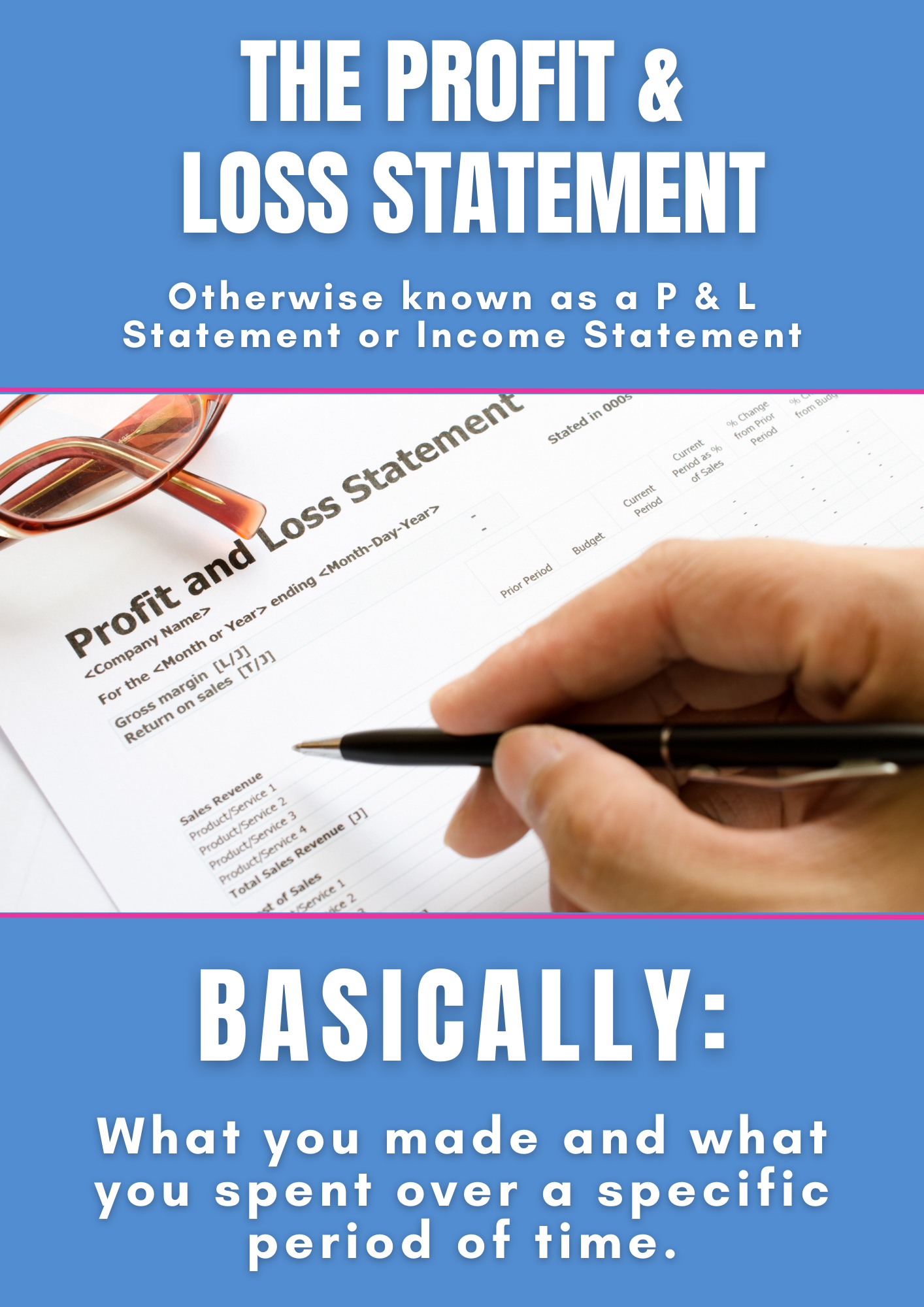
    Profit & Loss Statement: Assessing Financial Performance
    3 Reports For Bookkeeping

    The Profit & Loss provides a summary (over a specific period) of your company’s

    • revenue
    • expenses
    • net income

    The 2 of 3 reports for bookkeeping is the P&L statement which provides an overview of your business’s profitability, showing how much money you’ve made and how much you’ve spent.

    Your Profit & Loss statement is crucial because it enables you to see whether your business is making a profit, or taking a loss. It also enables you to identify areas where you can reduce expenses or increase revenue. 

    Here are 2 essential tips to ensure accuracy on a P&L statement:

    Categorize Expenses Correctly: Accurately categorizing expenses is crucial for a reliable P&L statement. Create well-defined and appropriate expense categories that align with your business operations. Ensure that expenses are correctly allocated to the appropriate categories. Misclassifying expenses can distort the financial picture and hinder accurate analysis and decision-making.

    Thoroughly Review and Verify Data: Carefully review all the financial data and information that goes into preparing the P&L statement. Verify the accuracy of the figures, such as revenue, expenses and costs by cross-referencing them with supporting documents like

    • invoices
    • receipts
    • bank statements

    Pay close attention to any potential errors or inconsistencies and rectify them before finalizing the statement. 

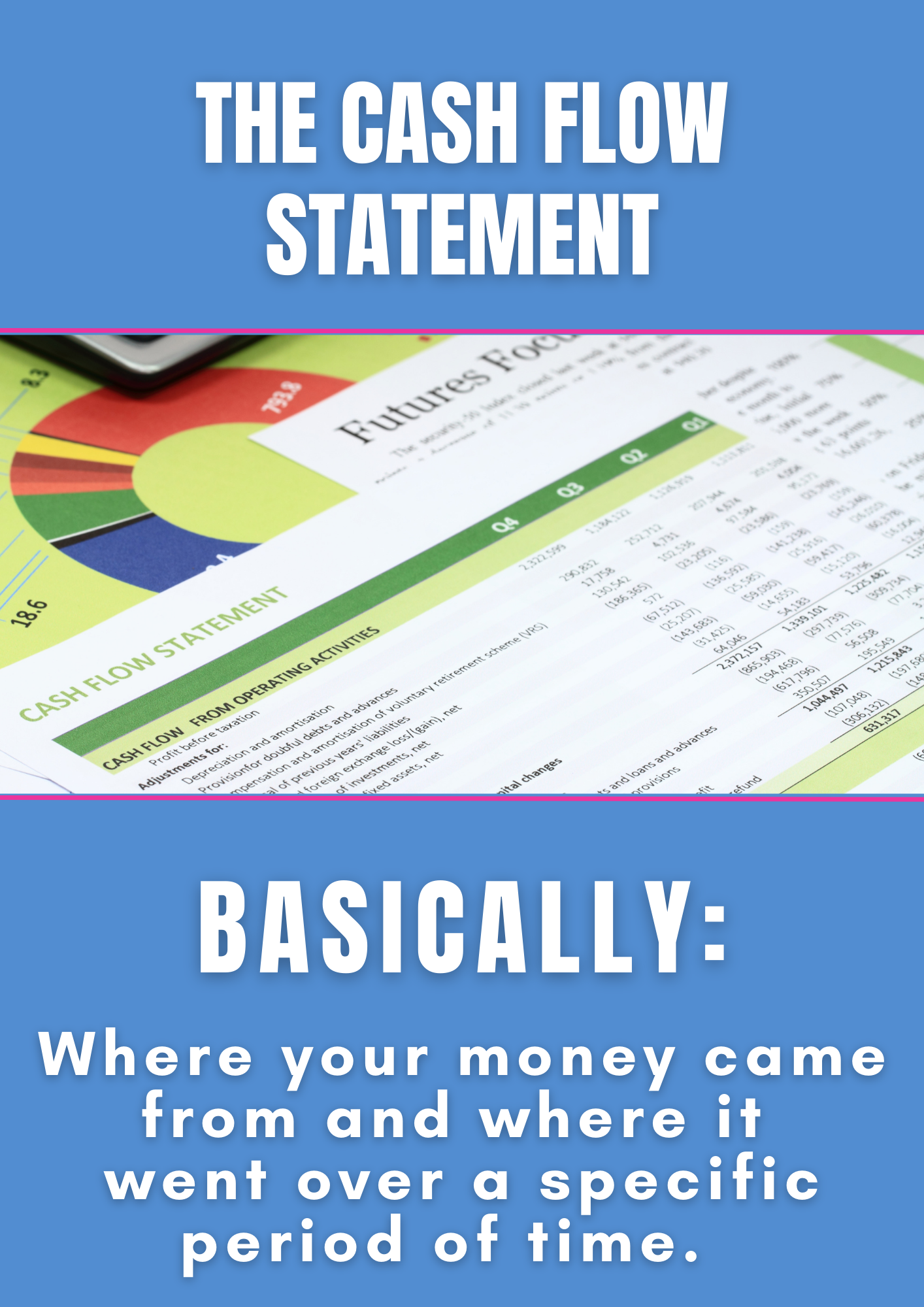
    Cash Flow Statement: Assessing Cash Management
    3 Reports For Bookkeeping

    The cash flow statement tracks the flow of cash in and out of your business over a specific period of time in categories like:

    • cash
    • accounts receivable
    • accounts payable

    Those three help you understand how changes in the company’s balance sheet accounts affect its cash position. 

     Your cash flow statement the 3rd of the 3 reports for bookkeeping is important because it allows you to see whether your business is generating enough cash to pay its bills. It also enables you to identify potential cash flow problems such as slow-paying customers or excessive inventory.

    Here are 2 essential tips to ensure accuracy on a cash flow statement:

    Accurate Recording of Cash Transactions: Ensure that all cash transactions are recorded accurately and promptly. This includes inflows (income received) and outflows (expenses paid) from various activities such as operating, investing and financing activities.Thoroughly review source documents such as

    • bank statements
    • invoices
    • receipts
    • payment records

    Ensure the correct amounts and dates are recorded.

    Reconciliation of Cash Balances: Regularly reconcile the cash balances between your financial records, bank statements, and other supporting documents. This process helps identify any discrepancies or errors in recording cash transactions. Reconciliation involves comparing the ending cash balance in your statement with the corresponding bank balance, and investigating and resolving any differences.

    3 Reports For Bookkeeping – The Bottom Line

    In conclusion, the most essential 3 reports for bookkeeping are the 

    1. 1Balance Sheet
    2. 2Profit & Loss Statement
    3. 3Cash Flow Statement 

    Their accuracy is crucial to managing your business’s financial health. They provide a clear understanding of your business assets, liabilities, revenue and expenses, allowing you to make informed decisions, set realistic goals and attract investors.

    Once the accuracy of your 3 reports for bookkeeping is insured by following the sound accounting practices outlined above, you have set the stage for success. Then, regular review will allow you to identify potential financial risks and opportunities, solve financial problems, and ensure the long-term success of your business. 
    Resources

  • 2 Tips On How To Increase Conversion Rate Of Intro Offers

    2 Tips On How To Increase Conversion Rate Of Intro Offers

    When Increasing Conversion Rates Doesn’t Go As Planned 

    I will never forget when my studio put out a couple of different intro offers. It was January, and the sales were going crazy!

    I had calculated the average client value for the next year and had dollar signs in my eyes. I couldn’t wait to see the February numbers.

    how to increase conversion rate

    But when February rolled around, the number of intro packages that had actually converted was very low. 

    I was shocked and was committed to figuring out what went wrong.

    Why Increased Conversion Rates Hadn’t Occurred

    After dealing with my disappointment that nothing happens magically, I analyzed the problem. I wanted to make sure that:

    • I offered the best intro packages
    • That my team was doing their best to help convert our newest clients to regulars

    When I looked at my intro offers, a distant memory popped into my head. Years ago, a consultant said, 

    “if you want to understand how to increase conversion rates remember, your intro offers should create an experience that makes the next purchase inevitable.” 

    Were my intro offers doing this?

    Answering that question would turn out to be the key to learning how to increase conversion rates for our studio.

    I had 6 different offers running to ensure people could find the best option.

    That was my first mistake: Too many options.

    I offered:

    1. 1A single discounted private session
    2. 24 Reformer classes at a discounted price
    3. 33 private sessions for clients coming back from injury
    4. 4A semi-private package discounted (for couples and friends)
    5. 52 private sessions and a Reformer class
    6. 6A “one of each” package, 1 mat class, 1 Reformer class, 1 private, and 1 semi-private session

    how to increase conversion rate

    In this analysis, I needed to weed out the number of purchase options. To do that, I needed to look at 2 data points:

    1. 1Which intro offers were purchased the most?
    2. 2Which intro offers, once purchased, had the most conversions?

    Once I had looked at these data points, I found some common threads for successful intro offers.

    The intro offers with the most conversions:

    • Were offered at a discount, but not so discounted that the next purchase felt out of reach.
    • Had multiple sessions to give the client a compelling experience – one session just wasn’t enough.
    • Provided consistency in the experience. (The packages with varied sessions led to a confused purchaser.)
    • Provided a chance for client/instructor to get to know each other.

    This made my next decision easy; I only needed 2 intro offers

    • 3 private sessions at a discounted rate
    • 4 Reformer classes at a discounted rate

    how to increase conversion rate

    But wait! We still hadn’t completely learned how to increase conversion rates of our intro offers!

    how to increase conversion rate

    At my next staff meeting another very important tactic that we were missing became clear.

    After talking with my teachers, I realized we hadn’t followed the best practices to get the clients to return. 

     We had neglected to make sure everyone who’d purchased an intro offer:

    • Had a specific intake procedure that outlined the client’s needs 
    • Had an opportunity to experience a win in their own body
    • Could experience the studio culture to its fullest extent

    It wasn’t enough to meet them for the first time, teach them a class or session, say “see you soon” and trust that they would come back.

    It became clear that I hadn’t given my teachers the sales training they needed. (BTW: IT DOES NOT HAVE TO SOUND SALES-Y!)

    how to increase conversion rate

    There were some simple things my teachers could have done to ensure the new clients kept coming back.  What were they?

    How To Increase Your Conversion Rate With These 2 Tips:

    • One-liners at the end of a class or session that lead to the next registration

    Just a quick, one-line follow-up at the end of a class or session puts you in the right direction to having the client come back.

    For instance,

    • Have you scheduled your next class/session?
    • I think the bone-building class would be perfect for you.
    • What about a weekly schedule?
    • I really think you could benefit from class twice a week.
    • “Let me introduce you to our studio manager, and she can get you set up!”

    Any of these (adjust them to fit your clients/studio) can easily guide into a conversation as people prepare to go. It’s even better if you follow up with, 

    It is also important when making suggestions that they fit the client that you have just gotten to know.

    Not everyone needs to come twice a week; some people do. 

    What’s that you’re thinking? You don’t want to sound salesy!

    The key  to making sure that your end-of-session one-liners are not sales-y is to personalize your suggestions to make them accurate and appropriate for the specific client. 

    We train our teachers to remember to see a path forward for the new client and help them understand what it is. In this way our teachers have learned that these questions are part of their expertise and a benefit of our services. 

    • Ensure someone is Responsible for lead management

    An office lead-management system that is communicated to all the staff makes sure that the team is working together to increase conversions.

    Example: Say you get a notification that someone new has registered with your studio. Don’t just let the notification go by.

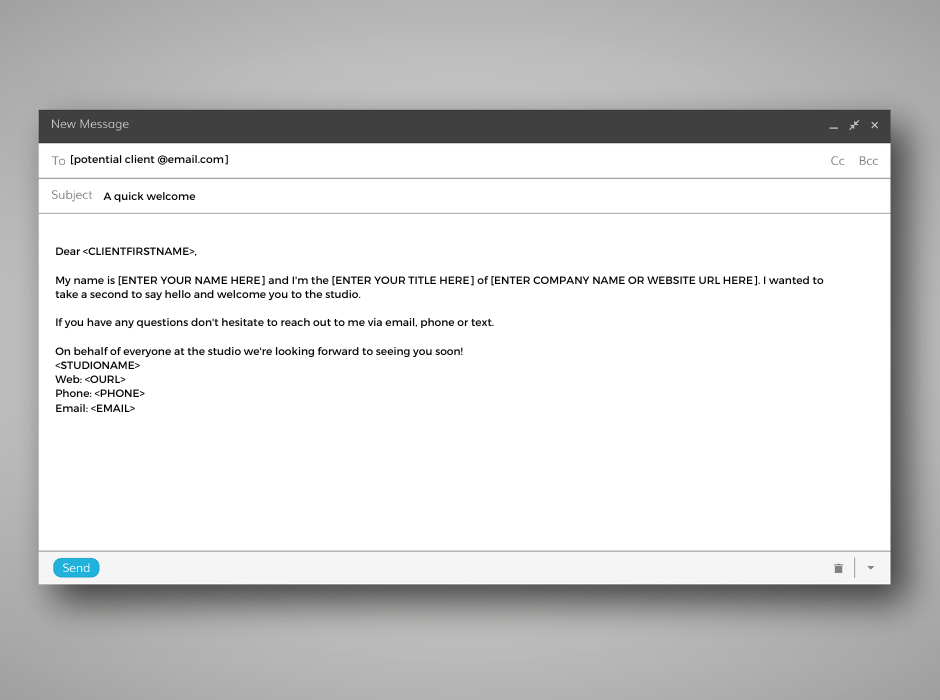
    • Have a template entitled “A Quick Welcome” and email the person directly.
    • It doesn’t have to be long or complicated.
    • Just a short welcome letting them know who you are (owner, manager, instructor, etc.) and that you’re happy to answer any questions they might have, help with scheduling, etc
    • Or better yet, pick up the phone, give them a call and do the same thing. 

    how to increase conversion rate

     That quick reach out will make them feel welcome, showing they’re not just a random new person. Short, sweet, and to the point.

    What if a client completes the intro package and doesn’t convert? 

    • Check with the teacher for any extenuating circumstances.
    • if not, make a call to the client see if you can help them take the next steps.

    Summary of How to Increase Conversion Rates.

    Helping my teachers understand exactly how important these one-liners at the end of class were and keeping on top of lead management have been the keys to conversion for our studio. 

    Try it, you won’t be disappointed. 

    Please drop a comment below and share any tips you might have on how to increase conversion rates.

  • Why Not Knowing Your Marketing Return On Investment Can Be Disastrous

    Why Not Knowing Your Marketing Return On Investment Can Be Disastrous

    When I Knew Nothing About Marketing Return On Investment – A True Story

    marketing return on investment

    I want to tell you how not knowing my marketing return on investment almost got the best of me. I’m hoping that by putting my story out there, it will help other business owners save time and energy when it comes to marketing.

    When I finally opened the doors to my Pilates studio, I was elated. I had put so much hard work into opening my own place, and it had finally come to fruition. I had a great network of colleagues and friends who spread the word about my studio which landed me a bunch of wonderful clients. 

    marketing return on investment

    After a successful year, I knew that I wanted to grow my studio even more. I decided to try all of the different strategies that I’d seen in similar businesses. The plethora of strategies included:

    • Social Media Posts
    • Blogging
    • Opening a retail store in the studio itself
    • Ebook for email list building
    • Email Marketing
    • Various Intro offers
    • Internet ads
    • Facebook ads
    • Studio events
    • Radio ads
    • Newspaper ads

    As you might imagine, after about six months of this extensive yet disorganized marketing plan, the exhaustion set in.

    I was working so hard and knew that if I continued at the rate I was going, burnout was coming. 

    Creating the content, organizing inventory and planning events was taking so much time and energy. Not to mention the fulfillment side of the business; I still had to teach Pilates!

    marketing return on investment

    On top of all this, I had no idea what was working. Something had to give. But what? I didn’t want to take the chance of eliminating the wrong things.

    But I had no idea what the right things were.

    What You Don’t Know CAN Hurt You

    The problem was that I had no idea what was working (and what wasn’t working) when it came to getting (and keeping) clients. I didn’t know :

    marketing return on investment

    1. 1What tactics were bringing clients in
    2. 2What tactics were helping clients make the first purchase
    3. 3What tactics were keeping the clients interested
    4. 4What tactics were leading directly to increased income

    I couldn’t tell if all of my efforts were worth it. I was working harder but not smarter.

    And then a friend and fellow business owner told me how to figure out my average client value, or ACV. More importantly she showed me how to use it to make critical decisions.

    marketing return on investment

    I had heard about lifetime client value (LCV) but ACV was new to me. It turns out that in the fitness business industry, we can’t really go by LCV as an average. It’s too hard to figure out when you have so many different relationships with your clients. For instance:

    • A 10-year relationship with a client vs. a 6-month relationship
    • If a client has an injury that takes them out of commission for a while
    • Maybe a client wants a home program and will only be coming for a few sessions
    • If a client only comes in sporadically for check-ins

    All of these inconsistencies in the boutique fitness industry make the LCV less helpful when making marketing decisions.

    Checking the ACV for a consistent rolling time period paints a clearer picture of the habits of your clientele.

    This customer data allows you to assess your marketing return on investment and client retention. 

    The ACV can also help analyze strategies that maximize customer value and aid in pricing decisions. But how do you do that? It’s actually pretty simple and I’ve narrowed it down to 4 steps. Keep reading

    How To Figure Out Your Average Client Value

    1. 1Time Frame – While you can do this calculation for any time frame, you’ll definitely want to know your ACV over the past 365 days.
    2. 2Number of Active Clients – How many active clients and members do you currently have? Most scheduling softwares will have a report that tells you this. (If you use Mindbody, see the end of the article for specific steps to pull up this report.)
    3. 3Total Revenue – Next, get your total revenue for the same time period.
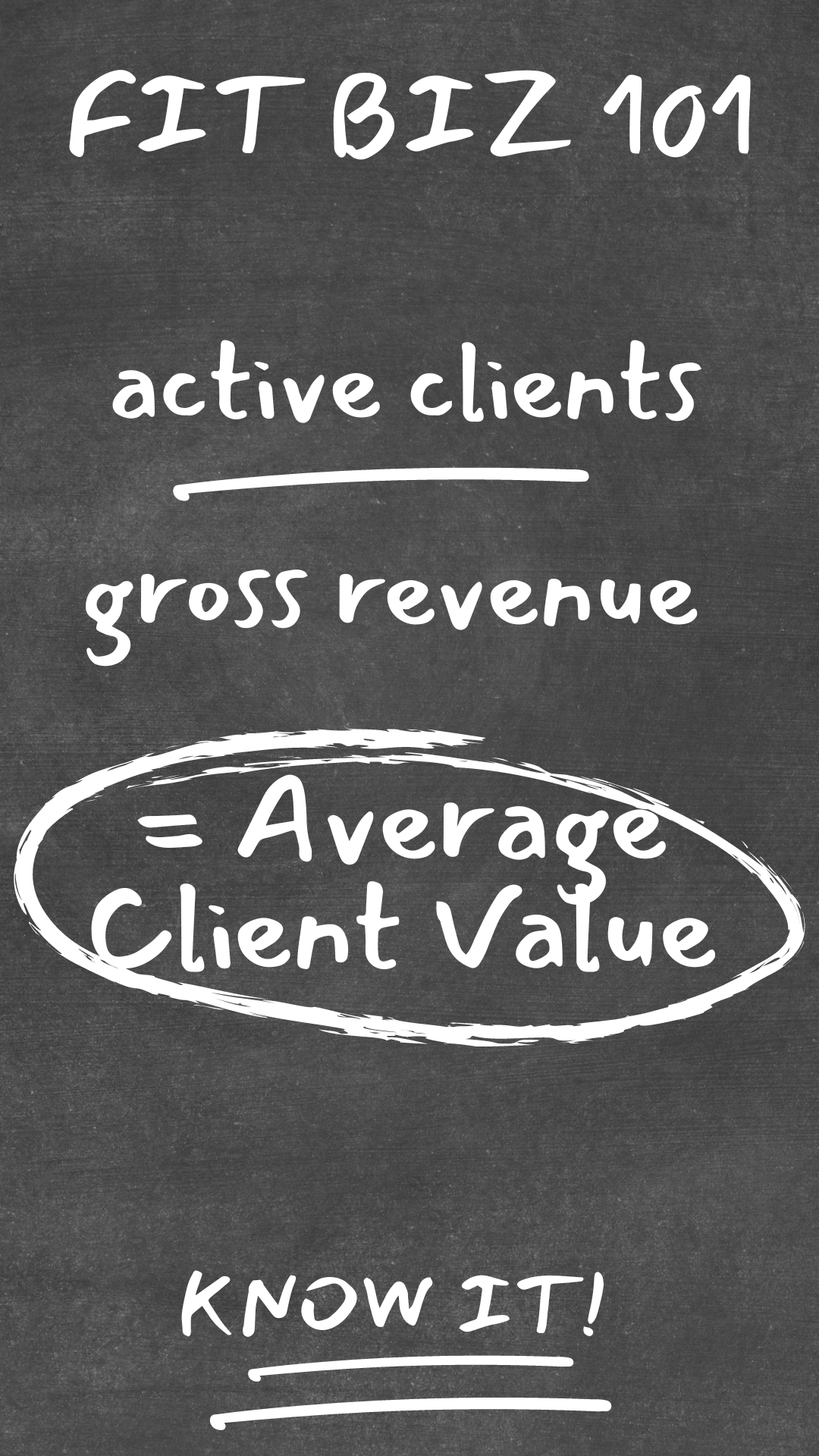
    4. 4Calculate – Total Revenue divided by Total Active Unique Clients will equal your average client value.

    How ACV Can Measure Marketing Return on Investment and Help Maximize Customer Value

    If you’re investing in internet advertising

    • Calculate your rolling 365 ACV.
    • Create your first ad budget. (Remember this is an investment and not an expense.)
    • Make sure that in your intake process new leads have a way to tell you how they found you.
    • After a period of time see how many people who clicked on the ads became clients.
    • Multiply that number by your ACV and then subtract your ad spend budget to find your projected return on investment.

    If you want to increase existing customer value

    • Calculate your rolling ACV.
    • Create a special that you will promote through social media and email marketing to your current clients. Possibilities include a retail sale, class special, and anything else you might like to try. (Click this link for some of the promotions that have worked for clients of FBP.)
    • Run the special for a period of time.
    • Calculate your rolling ACV again for the special’s time period.
    • Compare that ACV to the previous period.
    • Is it higher?

    What about Retention?

    The ACV is a fantastic tool to calculate retention success. If you calculate your Rolling ACV on a monthly basis you can learn so much about your studio’s retention performance.

    • If your ACV is increasing, look further. If the number of clients increased and your income increased you can be confident that your retention strategies are working.
    • If your ACV decreases because your income is stagnant. This means you have more clients making initial purchases, but they are not purchasing as many services or services of the same price as previous months. In this situation, you can ask yourself what you can do to maximize the value of each and every client.
    • If your ACV decreases because the number of clients decreases and the income is stagnant or decreases. You can deduce that there are problems with retention and look at your systems for retention after the first visit. Do you need more email nurture sequences, or do you need to speak with staff about making sure that clients are scheduling their next appointment?

    Choices About Pricing

    • Calculate your ACV.
    • Recalculate your ACV with a 5% increase.
    • Use this information to make decisions and create budgets around infrastructure and ad expenditure.

    By knowing your ACV, you’ll have data that will tell you what is adding income to your bottom line.

    marketing return on investment

    Work Smarter, Not Harder

    The bottom line is this. You don’t need to do all the things to try get a marketing return on your investment. Use the data. Use your ACV and let it tell you what specific marketing endeavors are profitable, and focus on those.

    Our own Results

    Data analysts tell us that at the end of Q4 2022

    • The Pilates market had recovered to 100% of pre-pandemic revenue levels.
    • That the Yoga market had recovered to 80% of pre-pandemic revenue levels.

    By following the very advice in this article, our Pilates Studio, in a tiny market in Massachusetts, had recovered to 

    • 122% of pre-pandemic revenue levels
    • With 40% fewer instructors.   

    You’ll have the same results by following time proven business practices like these.   

  • If Your Profit and Loss Statements Are Traumatizing You – Do 3 Things

    If Your Profit and Loss Statements Are Traumatizing You – Do 3 Things

    When You’re An Expert At What You Do, But Not In Running A Business

    profits and loss statements

    I’m going to tell you a secret I haven’t told many people. I Googled examples of what to put in the business plan section on my loan application for the bank. I had no idea what I was doing- I was lost in a world of 

    • Profit and loss statements (or P&L) 
    • Balance sheets
    • Cash flow statements

    My expertise is in Pilates, not things like profit and loss statements.

    profits and loss statements

     I knew I wanted to own my own studio, and that I’d be good at it! But I had absolutely no idea about the business side of it. I knew I needed a business loan, but also knew that I needed a business plan to get a loan. 

    profits and loss statements

    Google became my best friend and teacher. I remember throughout the loan process our loan officer would ask for more projections and more spreadsheets, and it felt like I was just making it all up.

    Finally, we got a call from the bank and our loan officer said, “Guess what? Your loan has gone to underwriting. You’ve done great, now go get some rest.”

    profits and loss statements

    I could tell from the sound of his voice that this was good news. I turned to Google and searched for the key words, “What is underwriting?” Thankfully, the bank saw the big picture through the weeds of my naivete and I was able to open my business! 

    profits and loss statementsprofits and loss statements

    During the first year, I struggled with understanding my cash flow. I couldn’t understand why there were times when I was so super busy yet there was no money in the bank. But then times when business was slower, I had plenty of money in the bank. It made no sense to me. Thankfully, a close friend heard my (somewhat desperate) cries for help and worked with me to figure it out.

    profits and loss statements

    Why Messy Bookkeeping Makes Things 10 Times Harder.

    1. 1Identify the areas where you could be saving money, as well as opportunities for generating more revenue
    2. 2It tells you whether your company’s financial performance is positive or negative
    3. 3Reveals trends in your financial performance over time.
    4. 4If you stay on top of your profit and loss statements on a monthly basis, it makes your bookkeeping accurate in real time. (This will save you big time when you go to do your taxes!)
    5. 5It helps you figure out which activities are helping you make a return on investments, and which ones are resulting in losses.

    This was all very eye-opening and helpful to me. But I still wasn’t organized when it came to all of my financial stuff. That’s when I learned about the 3-step cleanup.

    Easily Manage Your Profit and Loss Statements With This 3-Step Cleanup

    profits and loss statementsprofits and loss statements

    In order to ensure the reviewing of your profit and loss statements is as easy as possible, it’s highly recommended to utilize these 3 organizational steps.

    1. 1Delete Irrelevant Categories – oftentimes bookkeeping software comes preloaded with default categories you may not use. Go to your Chart of Accounts and delete the categories you aren’t using or that don’t apply to your business. (You won’t mess anything up as long as you’ve never assigned a transaction to them!)
    2. 2Condense – comb through your categories and see what you can condense. For instance, you may have one category for supplies and one for materials. You’ll have to change the transactions to the new category, which can be time consuming if your software does not allow for a bulk operation. (QuickBooks does) But it will save you a lot of time and frustration in the future!
    3. 3Rename Categories and Be Specific – A category named “supplies” is too vague. Rename it so you’re clear on what is supposed to go in that category. For example, a boutique fitness studio may have one category called “office supplies” and one called “studio supplies.” 

    Being as organized and specific as possible will be quite beneficial in reviewing your profit and loss statements each month.

    The Bottom Line 

    profits and loss statements

    So there you have it. You now know that you’re definitely not the only one who has difficulty with understanding their profit and loss statements, cash flow, or any of the other business-related bookkeeping activities. Organization of your categories and checking the profit and loss statements monthly will go a long way in keeping things running smoothly.