fitbusinesspros.com

Category: Bookkeeping

articles covering bookkeeping and accounting best practices for boutique fitness businesses

  • 3 Reports For Bookkeeping Essential To Running A Business

    3 Reports For Bookkeeping Essential To Running A Business

    The “WHY” Behind Needing To Know The 3 Reports For Bookkeeping

    You’re Not The Only Business Owner Struggling To Manage Your Finances.

    3 Reports For Bookkeeping

    If you are a small business owner who is struggling with managing your finances and keeping track of your business’s financial health, we have 4 words for you: you are not alone!!

    Staying on top of your finances is crucial for sustainable growth and success. This article is meant to help end the struggle of managing your business finances by setting the path to success firmly on a foundation of effective bookkeeping.

    One of the most important benefits of effective bookkeeping is being able to generate the financial reports that can give you a clear and accurate picture of your business’s financial health.

    There are 3 reports for bookkeeping that set your foundation for success:

    1. 1Balance Sheet
    2. 2Profit & Loss Statement
    3. 3Cash Flow Statement 

    The Problem With Not Understanding Your Business’s Finances

    It’s simple, without accuracy in those 3 Reports For Bookkeeping, you will not have the ability to:

    1. 1Make informed business decisions
    2. 2Assess profitability

    In this blog post, we’ll discuss the importance of these 3 reports in bookkeeping, and how to ensure the reports that your bookkeeping software gives you are an accurate picture of your business’s finances.

    We will include a few tips with each report on how to ensure accuracy.

    The 3 Reports For Bookkeeping Solution

    The Balance Sheet: Assessing Financial Position

    3 Reports For Bookkeeping

    The balance sheet provides a snapshot of your business’s financial position at a specific point in time.

    It provides an overview of your assets, liabilities, and equity, giving you a clear understanding of your financial position.

    assets include

    • cash
    • inventory
    • Accounts Receivable

    liabilities include

    • loans
    • Accounts Payable
    • taxes owed

    equity represents

    • owner’s stake in the business

    assets include

    • cash
    • inventory
    • Accounts Receivable

    liabilities include

    • loans
    • Accounts Payable
    • taxes owed

    equity represents

    • owner’s stake in the business

    The 1 of 3 reports for bookkeeping IS the balance sheet is essential because it allows you to see how much your business is worth and how much debt you owe. It also enables you to identify potential financial risks, such as excessive debt or slow-paying customers. 

    Here are 2 essential tips to ensure accuracy on a balance sheet:

    Double-Check Data Entry: Accuracy starts with inputting the correct information into the balance sheet. Double-check all the data including numbers, names and accounts to minimize the chances of errors. Ensure that the information is entered accurately on source documents such as:

    • financial statements
    • invoices
    • bank statements
    • supporting schedules

    Reconcile Accounts: Regularly reconcile all accounts mentioned in the balance sheet to ensure that the recorded balances match the actual balances.  This includes:

    • bank accounts
    • Accounts Receivable
    • Accounts Payable
    • inventory
    • Any other relevant accounts

    Reconciliation involves comparing the balances in the financial records with the corresponding external documents or statements, such as bank statements or supplier statements.

    Profit & Loss Statement: Assessing Financial Performance
    3 Reports For Bookkeeping

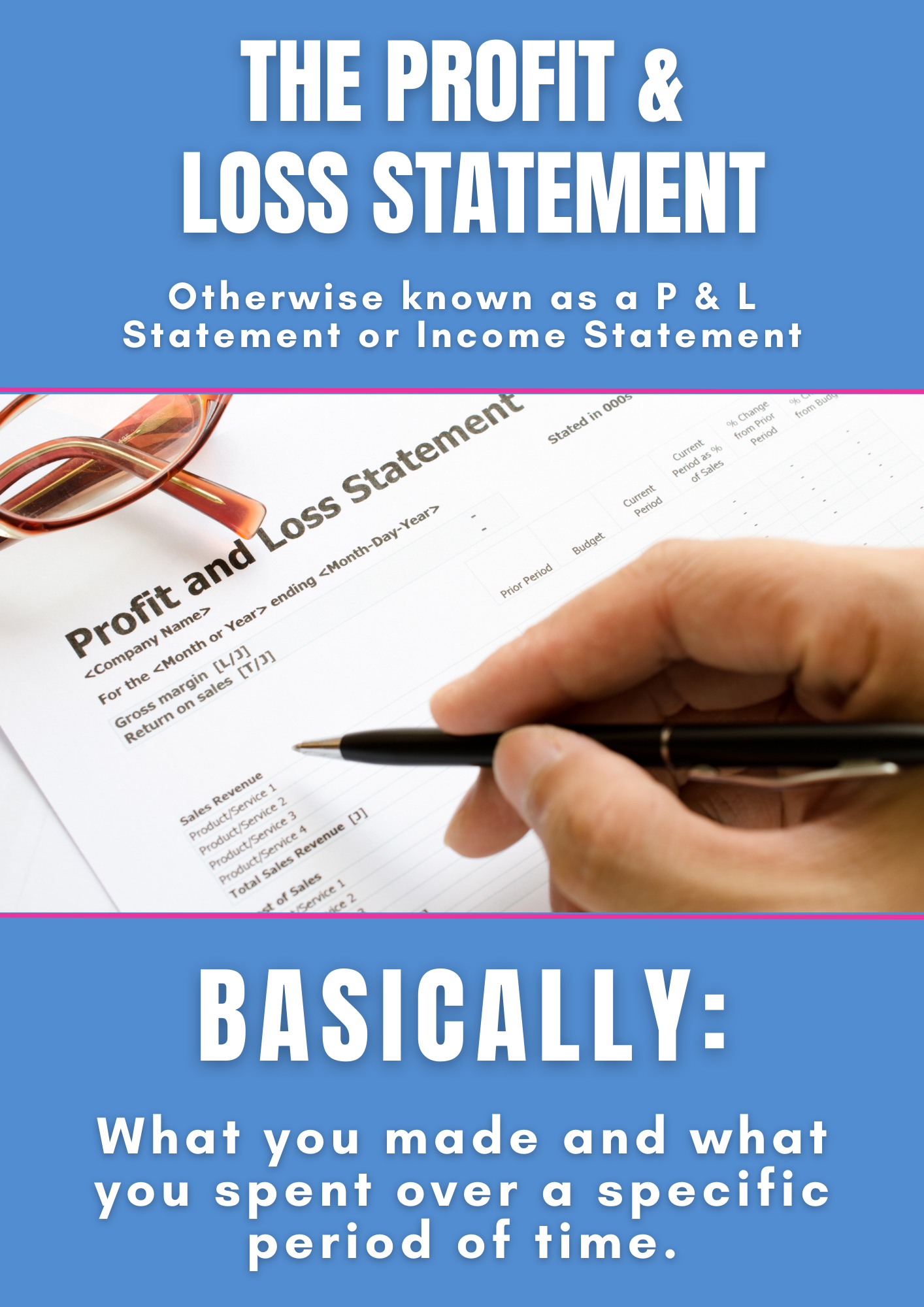
    The Profit & Loss provides a summary (over a specific period) of your company’s

    • revenue
    • expenses
    • net income

    The 2 of 3 reports for bookkeeping is the P&L statement which provides an overview of your business’s profitability, showing how much money you’ve made and how much you’ve spent.

    Your Profit & Loss statement is crucial because it enables you to see whether your business is making a profit, or taking a loss. It also enables you to identify areas where you can reduce expenses or increase revenue. 

    Here are 2 essential tips to ensure accuracy on a P&L statement:

    Categorize Expenses Correctly: Accurately categorizing expenses is crucial for a reliable P&L statement. Create well-defined and appropriate expense categories that align with your business operations. Ensure that expenses are correctly allocated to the appropriate categories. Misclassifying expenses can distort the financial picture and hinder accurate analysis and decision-making.

    Thoroughly Review and Verify Data: Carefully review all the financial data and information that goes into preparing the P&L statement. Verify the accuracy of the figures, such as revenue, expenses and costs by cross-referencing them with supporting documents like

    • invoices
    • receipts
    • bank statements

    Pay close attention to any potential errors or inconsistencies and rectify them before finalizing the statement. 

    Cash Flow Statement: Assessing Cash Management
    3 Reports For Bookkeeping

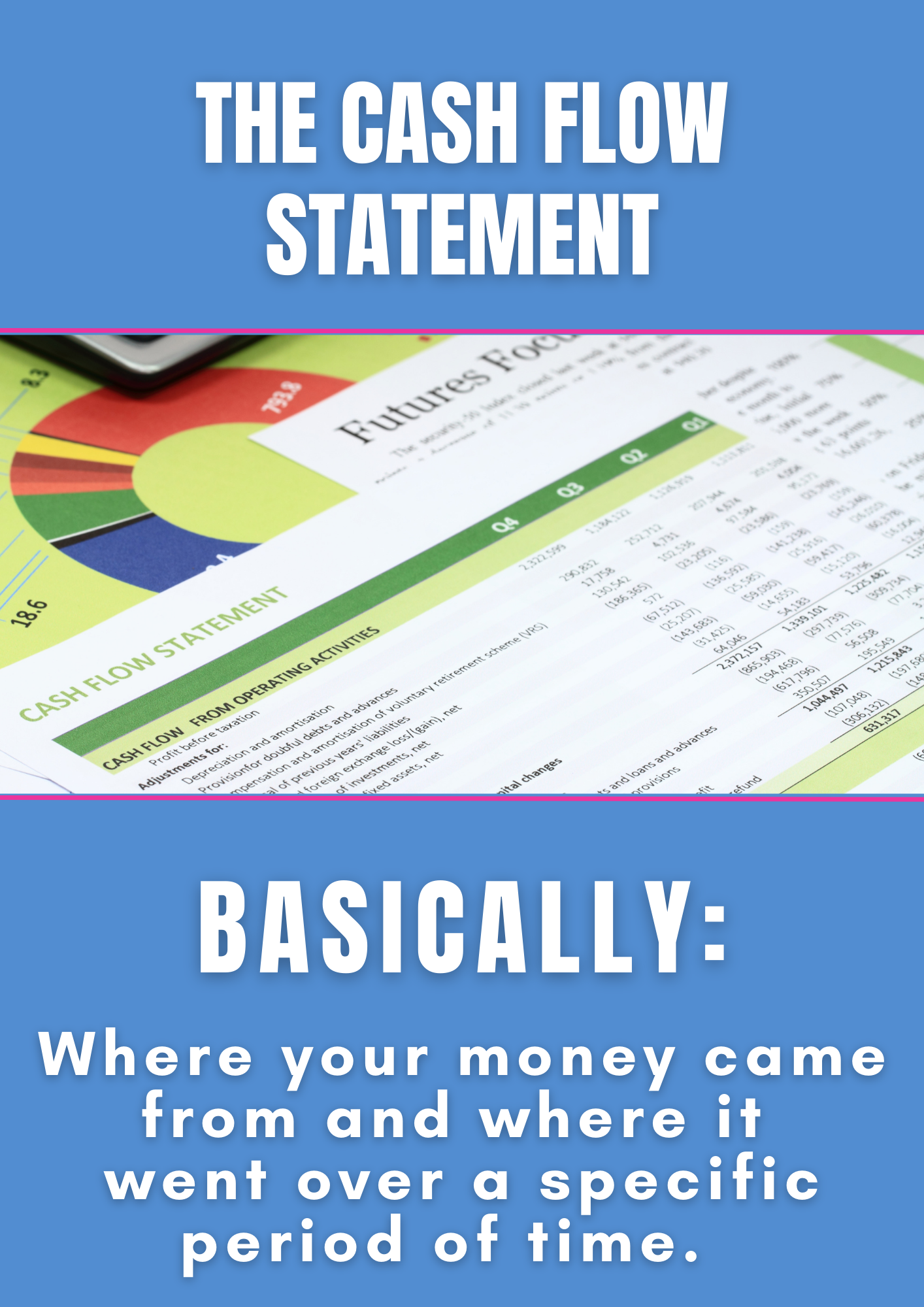
    The cash flow statement tracks the flow of cash in and out of your business over a specific period of time in categories like:

    • cash
    • accounts receivable
    • accounts payable

    Those three help you understand how changes in the company’s balance sheet accounts affect its cash position. 

     Your cash flow statement the 3rd of the 3 reports for bookkeeping is important because it allows you to see whether your business is generating enough cash to pay its bills. It also enables you to identify potential cash flow problems such as slow-paying customers or excessive inventory.

    Here are 2 essential tips to ensure accuracy on a cash flow statement:

    Accurate Recording of Cash Transactions: Ensure that all cash transactions are recorded accurately and promptly. This includes inflows (income received) and outflows (expenses paid) from various activities such as operating, investing and financing activities.Thoroughly review source documents such as

    • bank statements
    • invoices
    • receipts
    • payment records

    Ensure the correct amounts and dates are recorded.

    Reconciliation of Cash Balances: Regularly reconcile the cash balances between your financial records, bank statements, and other supporting documents. This process helps identify any discrepancies or errors in recording cash transactions. Reconciliation involves comparing the ending cash balance in your statement with the corresponding bank balance, and investigating and resolving any differences.

    3 Reports For Bookkeeping – The Bottom Line

    In conclusion, the most essential 3 reports for bookkeeping are the 

    1. 1Balance Sheet
    2. 2Profit & Loss Statement
    3. 3Cash Flow Statement 

    Their accuracy is crucial to managing your business’s financial health. They provide a clear understanding of your business assets, liabilities, revenue and expenses, allowing you to make informed decisions, set realistic goals and attract investors.

    Once the accuracy of your 3 reports for bookkeeping is insured by following the sound accounting practices outlined above, you have set the stage for success. Then, regular review will allow you to identify potential financial risks and opportunities, solve financial problems, and ensure the long-term success of your business. 

    Resources

  • 51% Of Business Owners Skip Their Own Paycheck Have you?

    51% Of Business Owners Skip Their Own Paycheck Have you?

    Overhead Costs Are More Than Just Rent & Utilities

    As a boutique fitness business owner, the many facets of cash flow were always mysterious.  I had underestimated the plethora of overhead costs.  The overhead of a boutique fitness studio is so much more than just rent and utilities.  I hadn’t taken into account:

    • Liability insurance
    • Workman’s comp insurance
    • Payroll taxes
    • Property taxes
    • Office and studio supplies
    • Loan payments
    • Health insurance
    • Networking memberships
    • Equipment maintenance
    • Oh, and of course, a host of unexpected surprises

    It wasn’t until I struggled with my own cash flow that I realized how little I understood about this fundamental aspect of running a business. And while this didn’t take down my business, it was quite a disadvantage in my personal bank account.

    Small Business Owners Skip Their Own Paycheck.

    When You Underestimate The Cost It Takes To Run A Business

    When I first started my business, I was focused on two things:

    • Providing quality classes and sessions
    • Building a community

    Small Business Owners Skip Their Own Paycheck.

    But…I didn’t pay enough attention to the financial side of things.

    I didn’t understand how much my overhead costs were, but I wanted to show how much I value my employees. I set teacher pay WAY too high which resulted in me not making any money.

    Too often I was skipping my own paycheck. For years, I just thought that this was the price I paid for the freedom of owning my own business. I’ve come to realize – this is NOT ok!!

    Small Business Owners Skip Their Own Paycheck.

    It wasn’t until I realized I was paying my teachers more than I could afford that I knew I had to make a change. But that change was terrifying! I was scared of losing some of my best teachers and risking the future of my business.

    Putting The Right Plan In Action

    Fortunately, I asked for help and was exposed to the 30-30-30-10 formula. This formula breaks down cash flow into four main categories:

    Small Business Owners Skip Their Own Paycheck.

    • 30% for teacher payroll
    • 30% for administrative payroll
    • 30% for operating expenses
    • 10% for profit

    When I compared my profit and loss reports to this formula, it became clear that I was paying my teachers more than I could afford, which was the root of my cash flow problems.

    Making the necessary changes was scary, but it was also liberating. Yes, I lost some of my teachers, but the new formula allowed me room in my budget to shoot for this balance:

    Small Business Owners Skip Their Own Paycheck.

    • Hire a full-time administrative assistant who made all of my teachers’ working lives easier.
    • Set aside money to pay for continuing education.
    • Create a profit-sharing model that incentivized my teachers to work together as a team rather than as individual entities.

    Management became easier, and I could once again focus on my true expertise and doing what I loved. When everyone was incentivized to be a part of the solution, the community created by my teachers modeled the community I had dreamed about when first thinking about my business.

    It was a valuable lesson to learn that understanding overhead costs and the 30-30-30-10 formula is critical to running a successful business.

    Since then, this formula has helped me understand my business in other ways. When the business’s profit rose beyond 10%, I knew that I could afford to give my teachers a raise and that the business would be safe. And I got a raise too!

    Small Business Owners Skip Their Own Paycheck.

    There was one quarter when my operating costs rose more than 30%. This was the catalyst for me to dig deep into an analysis of studio capacity. I was able to ask the question, how can I maximize the use of my brick-and-mortar space? I was paying for it after all. This led to an analysis of marketing tactics and beyond. And yes, this led to a revenue increase and then more profit and then another raise. YIPPEE!

    The 30-30-30-10 formula was a lifesaver! It continues to provide guidance in all of my business decisions.

    Summary:

    If you’re a business owner struggling with cash flow, I encourage you to closely examine your overhead costs and compare them to the 30-30-30-10 formula. It may be scary to make changes, but it’s worth it in the end when you’re able to create a profitable and sustainable business that allows you to do what you love.

    Article of Interest

    Two learn more about effective bookkeeping for your fitness business, take a look at the article “3 Reports For Bookkeeping Essential To Running A Business”

  • If Your Profit and Loss Statements Are Traumatizing You – Do 3 Things

    If Your Profit and Loss Statements Are Traumatizing You – Do 3 Things

    When You’re An Expert At What You Do, But Not In Running A Business

    profits and loss statements

    I’m going to tell you a secret I haven’t told many people. I Googled examples of what to put in the business plan section on my loan application for the bank. I had no idea what I was doing- I was lost in a world of 

    • Profit and loss statements (or P&L) 
    • Balance sheets
    • Cash flow statements

    My expertise is in Pilates, not things like profit and loss statements.

    profits and loss statements

     I knew I wanted to own my own studio, and that I’d be good at it! But I had absolutely no idea about the business side of it. I knew I needed a business loan, but also knew that I needed a business plan to get a loan. 

    profits and loss statements

    Google became my best friend and teacher. I remember throughout the loan process our loan officer would ask for more projections and more spreadsheets, and it felt like I was just making it all up.

    Finally, we got a call from the bank and our loan officer said, “Guess what? Your loan has gone to underwriting. You’ve done great, now go get some rest.”

    profits and loss statements

    I could tell from the sound of his voice that this was good news. I turned to Google and searched for the key words, “What is underwriting?” Thankfully, the bank saw the big picture through the weeds of my naivete and I was able to open my business! 

    profits and loss statementsprofits and loss statements

    During the first year, I struggled with understanding my cash flow. I couldn’t understand why there were times when I was so super busy yet there was no money in the bank. But then times when business was slower, I had plenty of money in the bank. It made no sense to me. Thankfully, a close friend heard my (somewhat desperate) cries for help and worked with me to figure it out.

    profits and loss statements

    Why Messy Bookkeeping Makes Things 10 Times Harder.

    1. 1Identify the areas where you could be saving money, as well as opportunities for generating more revenue
    2. 2It tells you whether your company’s financial performance is positive or negative
    3. 3Reveals trends in your financial performance over time.
    4. 4If you stay on top of your profit and loss statements on a monthly basis, it makes your bookkeeping accurate in real time. (This will save you big time when you go to do your taxes!)
    5. 5It helps you figure out which activities are helping you make a return on investments, and which ones are resulting in losses.

    This was all very eye-opening and helpful to me. But I still wasn’t organized when it came to all of my financial stuff. That’s when I learned about the 3-step cleanup.

    Easily Manage Your Profit and Loss Statements With This 3-Step Cleanup

    profits and loss statementsprofits and loss statements

    In order to ensure the reviewing of your profit and loss statements is as easy as possible, it’s highly recommended to utilize these 3 organizational steps.

    1. 1Delete Irrelevant Categories – oftentimes bookkeeping software comes preloaded with default categories you may not use. Go to your Chart of Accounts and delete the categories you aren’t using or that don’t apply to your business. (You won’t mess anything up as long as you’ve never assigned a transaction to them!)
    2. 2Condense – comb through your categories and see what you can condense. For instance, you may have one category for supplies and one for materials. You’ll have to change the transactions to the new category, which can be time consuming if your software does not allow for a bulk operation. (QuickBooks does) But it will save you a lot of time and frustration in the future!
    3. 3Rename Categories and Be Specific – A category named “supplies” is too vague. Rename it so you’re clear on what is supposed to go in that category. For example, a boutique fitness studio may have one category called “office supplies” and one called “studio supplies.” 

    Being as organized and specific as possible will be quite beneficial in reviewing your profit and loss statements each month.

    The Bottom Line 

    profits and loss statements

    So there you have it. You now know that you’re definitely not the only one who has difficulty with understanding their profit and loss statements, cash flow, or any of the other business-related bookkeeping activities. Organization of your categories and checking the profit and loss statements monthly will go a long way in keeping things running smoothly.