fitbusinesspros.com

Category: Business

Questions and information about, Strategy, Vision and goals, Client management, Teams, Tools and Making money.

  • The Unseen Trap: Why Your Fitness Business Can’t Be Your Community

    The Unseen Trap: Why Your Fitness Business Can’t Be Your Community

    Introduction (The Tragic Mistake)

    As a consultant and operator in the boutique fitness space, I’ve witnessed a heartbreaking scenario unfold time and again. It’s the story of the idealist business owner, whether young and eager or seasoned with a corporate past, who makes a critical error: believing their business can also serve as their community. While younger operators often have the resilience to learn from this mistake and adapt, for older entrepreneurs, the consequences can be particularly devastating, leading to profound disappointment at a time when they seek meaning and success.

    The Core Conflict (Business vs. Community)

    The heart of the issue lies in a fundamental misunderstanding of how businesses and communities function. Businesses operate on clear, measurable metrics: client retention, lifetime value, profit and loss, and the return on investment from advertising. These are the guideposts for informed decisions that drive success.

    Community, however, thrives on a different set of values: trust, loyalty, mutual benefit, safety, and comfort – all deeply rooted in emotion and connection.

    The Downward Spiral (Consequences of Mixing)

    When we blur these lines, convincing ourselves that clients can also be community members, especially when we are both the landlord and service provider, we set ourselves up for a tragic downfall. The moment you need to make tough business decisions – like adjusting pricing to ensure sustainability and reasonable profit (because, let’s be honest, businesses need to make money to survive!) – those clients you’ve embraced as community members will often resist. Their personal connection can make them feel entitled to influence decisions that, while necessary for your business, might negatively impact them.

    A Real-World Example (The Pilates Studio)

    Consider the example of our own Pilates studio. Two well-meaning, idealistic owners inherited a business they advertised as “your Pilates community.” They treated staff and clients like close friends. The result? The business consistently struggled, never turning a profit, and the owners frequently sacrificed their own paychecks to make payroll. Years passed, and the core problem persisted. Then COVID hit, and with clients and employees gone, it presented a stark opportunity for a fresh start.

    The Turning Point (The Solution)

    I helped them see the crucial need to separate the business from the concept of community. The clients could certainly form a community among themselves, but the owners, as business leaders, could not actively participate in that dynamic without compromising their ability to make essential decisions.

    The Transformation (The Success Story)

    Five years later, the transformation is remarkable. The business is thriving beyond their wildest dreams, all because of that single, pivotal decision to distinguish business from community. To put it in perspective, before this change, annual revenue never exceeded $400,000. Today, it’s closer to $900,000 and projected to hit a million next year.

    Key Takeaway/Call to Action

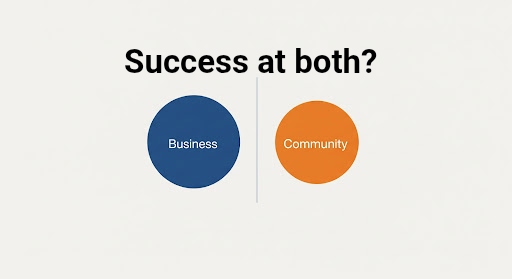
    If you aspire to both business success and a rich community life, that’s a commendable goal. But the key to achieving both is to build them separately. Your business needs clear boundaries and strategic decisions to flourish, while your community thrives on authentic, unburdened connection. Seek both, but build them separately according to the principles the govern each, and you’ll likely find success in each.

  • 3 Reports For Bookkeeping Essential To Running A Business

    3 Reports For Bookkeeping Essential To Running A Business

    The “WHY” Behind Needing To Know The 3 Reports For Bookkeeping

    You’re Not The Only Business Owner Struggling To Manage Your Finances.

    3 Reports For Bookkeeping

    If you are a small business owner who is struggling with managing your finances and keeping track of your business’s financial health, we have 4 words for you: you are not alone!!

    Staying on top of your finances is crucial for sustainable growth and success. This article is meant to help end the struggle of managing your business finances by setting the path to success firmly on a foundation of effective bookkeeping.

    One of the most important benefits of effective bookkeeping is being able to generate the financial reports that can give you a clear and accurate picture of your business’s financial health.

    There are 3 reports for bookkeeping that set your foundation for success:

    1. 1Balance Sheet
    2. 2Profit & Loss Statement
    3. 3Cash Flow Statement 

    The Problem With Not Understanding Your Business’s Finances

    It’s simple, without accuracy in those 3 Reports For Bookkeeping, you will not have the ability to:

    1. 1Make informed business decisions
    2. 2Assess profitability

    In this blog post, we’ll discuss the importance of these 3 reports in bookkeeping, and how to ensure the reports that your bookkeeping software gives you are an accurate picture of your business’s finances.

    We will include a few tips with each report on how to ensure accuracy.

    The 3 Reports For Bookkeeping Solution

    The Balance Sheet: Assessing Financial Position

    3 Reports For Bookkeeping

    The balance sheet provides a snapshot of your business’s financial position at a specific point in time.

    It provides an overview of your assets, liabilities, and equity, giving you a clear understanding of your financial position.

    assets include

    • cash
    • inventory
    • Accounts Receivable

    liabilities include

    • loans
    • Accounts Payable
    • taxes owed

    equity represents

    • owner’s stake in the business

    assets include

    • cash
    • inventory
    • Accounts Receivable

    liabilities include

    • loans
    • Accounts Payable
    • taxes owed

    equity represents

    • owner’s stake in the business

    The 1 of 3 reports for bookkeeping IS the balance sheet is essential because it allows you to see how much your business is worth and how much debt you owe. It also enables you to identify potential financial risks, such as excessive debt or slow-paying customers. 

    Here are 2 essential tips to ensure accuracy on a balance sheet:

    Double-Check Data Entry: Accuracy starts with inputting the correct information into the balance sheet. Double-check all the data including numbers, names and accounts to minimize the chances of errors. Ensure that the information is entered accurately on source documents such as:

    • financial statements
    • invoices
    • bank statements
    • supporting schedules

    Reconcile Accounts: Regularly reconcile all accounts mentioned in the balance sheet to ensure that the recorded balances match the actual balances.  This includes:

    • bank accounts
    • Accounts Receivable
    • Accounts Payable
    • inventory
    • Any other relevant accounts

    Reconciliation involves comparing the balances in the financial records with the corresponding external documents or statements, such as bank statements or supplier statements.

    Profit & Loss Statement: Assessing Financial Performance

    3 Reports For Bookkeeping

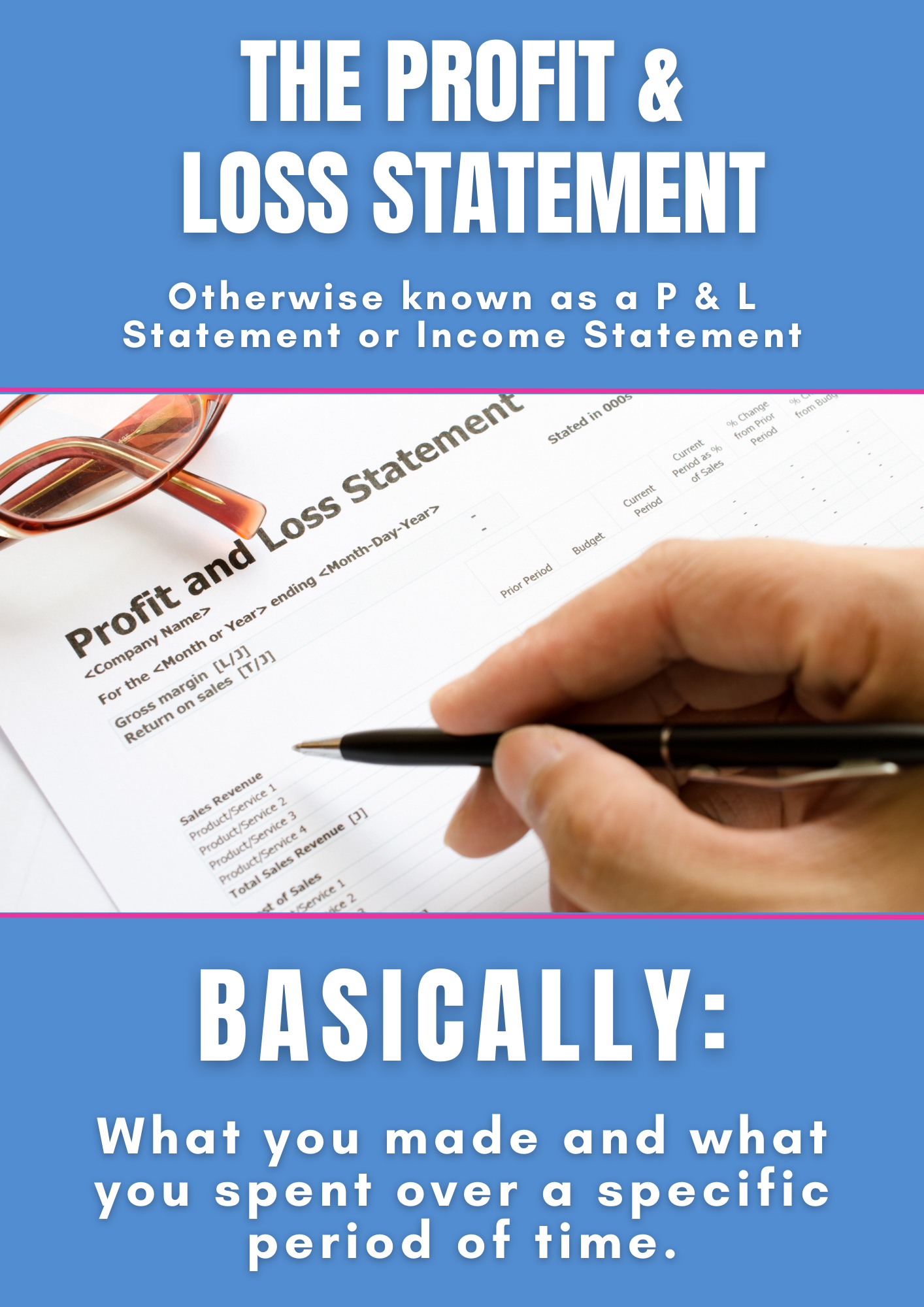
    The Profit & Loss provides a summary (over a specific period) of your company’s

    • revenue
    • expenses
    • net income

    The 2 of 3 reports for bookkeeping is the P&L statement which provides an overview of your business’s profitability, showing how much money you’ve made and how much you’ve spent.

    Your Profit & Loss statement is crucial because it enables you to see whether your business is making a profit, or taking a loss. It also enables you to identify areas where you can reduce expenses or increase revenue. 

    Here are 2 essential tips to ensure accuracy on a P&L statement:

    Categorize Expenses Correctly: Accurately categorizing expenses is crucial for a reliable P&L statement. Create well-defined and appropriate expense categories that align with your business operations. Ensure that expenses are correctly allocated to the appropriate categories. Misclassifying expenses can distort the financial picture and hinder accurate analysis and decision-making.

    Thoroughly Review and Verify Data: Carefully review all the financial data and information that goes into preparing the P&L statement. Verify the accuracy of the figures, such as revenue, expenses and costs by cross-referencing them with supporting documents like

    • invoices
    • receipts
    • bank statements

    Pay close attention to any potential errors or inconsistencies and rectify them before finalizing the statement. 

    Cash Flow Statement: Assessing Cash Management

    3 Reports For Bookkeeping

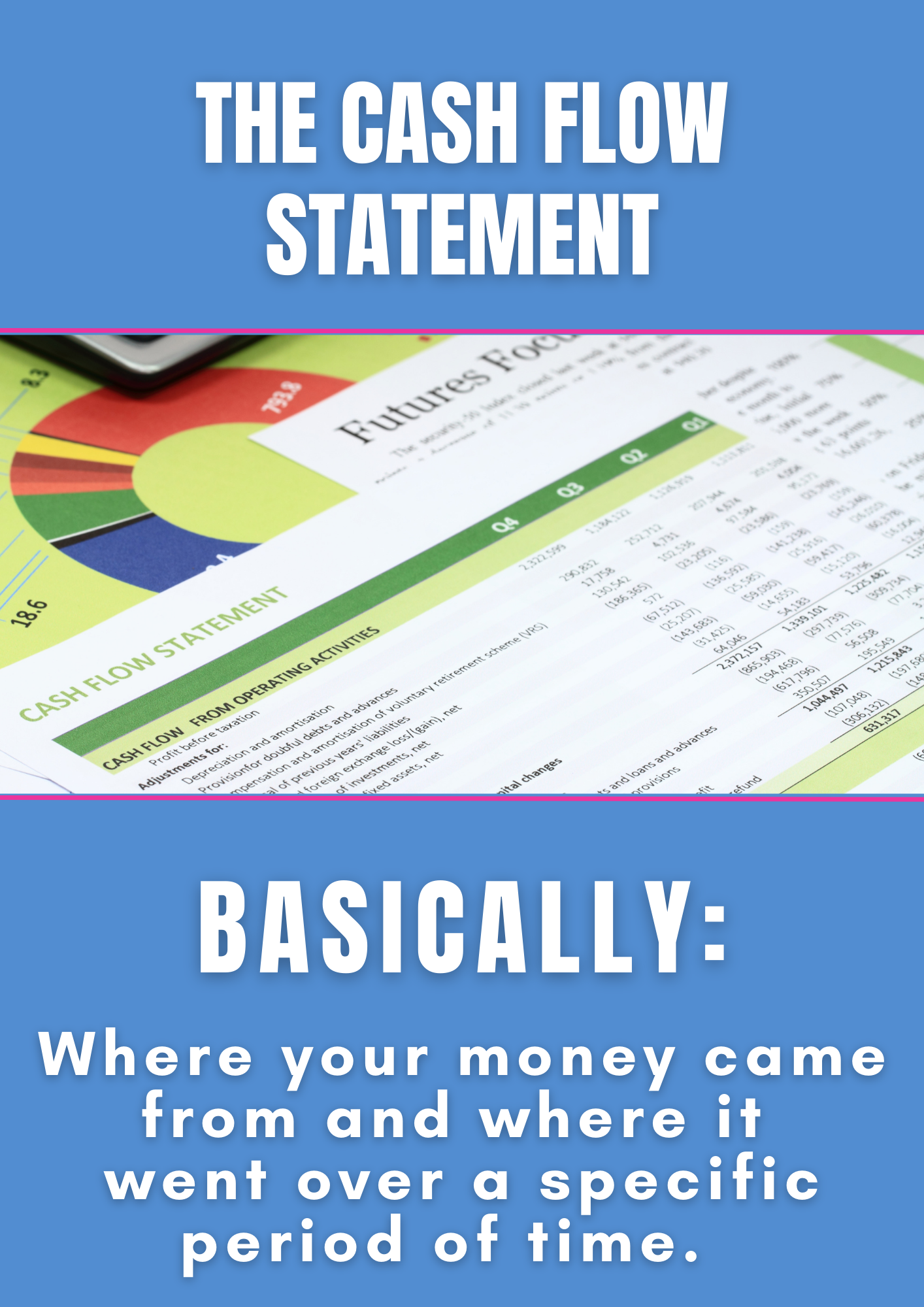
    The cash flow statement tracks the flow of cash in and out of your business over a specific period of time in categories like:

    • cash
    • accounts receivable
    • accounts payable

    Those three help you understand how changes in the company’s balance sheet accounts affect its cash position. 

     Your cash flow statement the 3rd of the 3 reports for bookkeeping is important because it allows you to see whether your business is generating enough cash to pay its bills. It also enables you to identify potential cash flow problems such as slow-paying customers or excessive inventory.

    Here are 2 essential tips to ensure accuracy on a cash flow statement:

    Accurate Recording of Cash Transactions: Ensure that all cash transactions are recorded accurately and promptly. This includes inflows (income received) and outflows (expenses paid) from various activities such as operating, investing and financing activities.Thoroughly review source documents such as

    • bank statements
    • invoices
    • receipts
    • payment records

    Ensure the correct amounts and dates are recorded.

    Reconciliation of Cash Balances: Regularly reconcile the cash balances between your financial records, bank statements, and other supporting documents. This process helps identify any discrepancies or errors in recording cash transactions. Reconciliation involves comparing the ending cash balance in your statement with the corresponding bank balance, and investigating and resolving any differences.

    3 Reports For Bookkeeping – The Bottom Line

    In conclusion, the most essential 3 reports for bookkeeping are the 

    1. 1Balance Sheet
    2. 2Profit & Loss Statement
    3. 3Cash Flow Statement 

    Their accuracy is crucial to managing your business’s financial health. They provide a clear understanding of your business assets, liabilities, revenue and expenses, allowing you to make informed decisions, set realistic goals and attract investors.

    Once the accuracy of your 3 reports for bookkeeping is insured by following the sound accounting practices outlined above, you have set the stage for success. Then, regular review will allow you to identify potential financial risks and opportunities, solve financial problems, and ensure the long-term success of your business. 

    Resources

  • What Is Branding? 5 Essential Elements For Building A Successful Boutique Fitness Brand

    What Is Branding? 5 Essential Elements For Building A Successful Boutique Fitness Brand

    What IS Branding And Why You Need To Know

    When I first bought my Pilates studio, I remember being so excited to have my logo and website designed. I didn’t ask myself, “what is branding?” I just knew I wanted it to be beautiful.

    I hired a graphic designer, paid for an hour-long design consultation, and slogged through 3 rounds of revisions before we finally arrived at the finished, very pricey logo.

    what is branding

    Looking back, I realize that the process was arduous and expensive. I thought that the measure of a perfectly branded business was me loving it. Since then, I’ve learned that what’s perfect about branding isn’t just the logo or website.

    I’m going to share with you 5 key elements you must consider when asking yourself, “what is branding?”

    When you need the answer to “What Is Branding?”

    It’s critical that you know the answer to the question “What Is Branding?” before you do the branding work.

    what is branding

    That’s because branding is so much more than just a logo or a tagline. It’s a strategic approach that helps individuals build a successful boutique fitness brand. In today’s competitive market, effective service business branding plays a crucial role in

    • Differentiating your business
    • Building trust and credibility
    • Connecting with your potential clients
    • Increasing awareness of the possibility that your service meets their needs

    When you’re looking to build a boutique fitness brand, you will end up having created the 5 essential elements branding experts say you need, your:

    1. 1Brand Identity
    2. 2Brand Messaging
    3. 3Brand Personality
    4. 4Brand Consistency
    5. 5Brand Engagement

    what is branding

    Creating Your 5 Key Elements Is Not As Simple As Answering The Question “What Is Branding?”

    There are lots of choices that can be made to produce these 5 elements. Which means that

    1. 1An infinite number of outcome variations are possible
    2. 2Some variations will be more effective than others

    The way to ensure your variations lean toward the more effective side is to be conscious of what informs your choices.

    Here is the most important thing to know about branding!

    If you only take 1 lesson learned with you from this article – let this be it!

    1. 1All human beings have an “ego”. Not just the customer, the marketer has one too!
    2. 2The ego’s role is to maintain the drive toward “pleasure and satisfaction” and away from “pain and dissatisfaction”.

    what is branding

    The ego is constantly ask questions like 

    • “What’s in this for me?”
    • “Will this help me meet my present needs, desires, wishes, goals, whatever they are?

    With that profound and simple truth in mind, which of these choices regarding the best answer to the question “What is branding?” is likely to be successful?

    A

    “YOUR brand should reflect YOUR unique personality, YOUR values, and what sets YOU apart from others in your industry.”

    or

    B

    Your brand should reflect the unique personality and values of your CLIENTS, and effectively communicate that YOUR brand exists to fulfill THEIR needs.

    [theme music from Jeopardy playing as you consider your answer}

    The choice you make will mean the difference between becoming an average brand or an extraordinary brand!

    Hopefully you chose B as your answer.

    what is branding

    Because developing the 5 elements of YOUR boutique fitness brand, while holding the unique personality and value of YOUR clients in your mind, will help you craft the content variation that effectively communicates that YOUR brand exists to fulfill THEIR needs!

    The 5 Elements

    1

    IDENTITY

    The visual, verbal, and sensory elements that represent a brand:

    • Brand name
    • Logo
    • Colors
    • Fonts
    • Visual style


    2

    MESSAGING

    The language, tone, and style that a brand uses to communicate with its audience:

    • Brand story
    • Tagline
    • Elevator pitch
    • Overall tone of voice


    3

    PERSONALITY

    The human-like characteristics associated with a brand to make it more relatable to consumers.

    EXAMPLES:

    • Exciting: Bold, adventurous, and daring. 
      • Example: Red Bull.
    • Sincere: Honest, genuine, and down-to-earth.
      • Example: Dove.
    • Innovative: Creative, cutting-edge, and visionary. 
      • Example: Apple.
    • Authentic: Genuine, transparent, and real. 
      • Example: Patagonia.
    • Friendly: Approachable, welcoming, and warm.
      • Example: AIRBNB.


    4

    CONSISTENCY

    The need for a brand to be uniform and recognizable across all channels and touchpoints.

    • Visuals: 
      • colors, typography, and design images
    • Tone of Voice:
      • emails, social posts, and ads
    • Customer Experience:
      • service standards, quality, and customer support across in-store, online, and on social media.

    5

    ENGAGEMENT

    The act of creating emotional connections with customers through interactions and experiences with the brand

    • Social media interactions
    • Customer service interactions
    • Providing valuable content
    • Creating a community around the brand


    The Bottom Line on the question “What Is Branding?”

    The bottom line is this: effective branding is essential for building a successful boutique fitness brand. This is accomplished by starting with a client-centric point of view to craft the 5 essential elements of branding.

    1. 1Consistent brand identity (colors, fonts, etc) 
    2. 2Brand messaging that highlights potential client transformation
    3. 3Transparent and honest brand personality
    4. 4Brand consistency across all channels
    5. 5Client-centered brand engagement

    You can create a strong and memorable boutique fitness brand that really resonates with your potential clients.

    By helping others achieve their personal goals you will build trust and achieve your personal and professional goals.

    what is branding

    Investing time and effort into understanding and implementing these branding elements will put you well on your way to crafting a boutique fitness brand that will thrive in today’s competitive market.

  • 51% Of Business Owners Skip Their Own Paycheck Have you?

    51% Of Business Owners Skip Their Own Paycheck Have you?

    Overhead Costs Are More Than Just Rent & Utilities

    As a boutique fitness business owner, the many facets of cash flow were always mysterious.  I had underestimated the plethora of overhead costs.  The overhead of a boutique fitness studio is so much more than just rent and utilities.  I hadn’t taken into account:

    • Liability insurance
    • Workman’s comp insurance
    • Payroll taxes
    • Property taxes
    • Office and studio supplies
    • Loan payments
    • Health insurance
    • Networking memberships
    • Equipment maintenance
    • Oh, and of course, a host of unexpected surprises

    It wasn’t until I struggled with my own cash flow that I realized how little I understood about this fundamental aspect of running a business. And while this didn’t take down my business, it was quite a disadvantage in my personal bank account.

    Small Business Owners Skip Their Own Paycheck.

    When You Underestimate The Cost It Takes To Run A Business

    When I first started my business, I was focused on two things:

    • Providing quality classes and sessions
    • Building a community

    Small Business Owners Skip Their Own Paycheck.

    But…I didn’t pay enough attention to the financial side of things.

    I didn’t understand how much my overhead costs were, but I wanted to show how much I value my employees. I set teacher pay WAY too high which resulted in me not making any money.

    Too often I was skipping my own paycheck. For years, I just thought that this was the price I paid for the freedom of owning my own business. I’ve come to realize – this is NOT ok!!

    Small Business Owners Skip Their Own Paycheck.

    It wasn’t until I realized I was paying my teachers more than I could afford that I knew I had to make a change. But that change was terrifying! I was scared of losing some of my best teachers and risking the future of my business.

    Putting The Right Plan In Action

    Fortunately, I asked for help and was exposed to the 30-30-30-10 formula. This formula breaks down cash flow into four main categories:

    Small Business Owners Skip Their Own Paycheck.

    • 30% for teacher payroll
    • 30% for administrative payroll
    • 30% for operating expenses
    • 10% for profit

    When I compared my profit and loss reports to this formula, it became clear that I was paying my teachers more than I could afford, which was the root of my cash flow problems.

    Making the necessary changes was scary, but it was also liberating. Yes, I lost some of my teachers, but the new formula allowed me room in my budget to shoot for this balance:

    Small Business Owners Skip Their Own Paycheck.

    • Hire a full-time administrative assistant who made all of my teachers’ working lives easier.
    • Set aside money to pay for continuing education.
    • Create a profit-sharing model that incentivized my teachers to work together as a team rather than as individual entities.

    Management became easier, and I could once again focus on my true expertise and doing what I loved. When everyone was incentivized to be a part of the solution, the community created by my teachers modeled the community I had dreamed about when first thinking about my business.

    It was a valuable lesson to learn that understanding overhead costs and the 30-30-30-10 formula is critical to running a successful business.

    Since then, this formula has helped me understand my business in other ways. When the business’s profit rose beyond 10%, I knew that I could afford to give my teachers a raise and that the business would be safe. And I got a raise too!

    Small Business Owners Skip Their Own Paycheck.

    There was one quarter when my operating costs rose more than 30%. This was the catalyst for me to dig deep into an analysis of studio capacity. I was able to ask the question, how can I maximize the use of my brick-and-mortar space? I was paying for it after all. This led to an analysis of marketing tactics and beyond. And yes, this led to a revenue increase and then more profit and then another raise. YIPPEE!

    The 30-30-30-10 formula was a lifesaver! It continues to provide guidance in all of my business decisions.

    Summary:

    If you’re a business owner struggling with cash flow, I encourage you to closely examine your overhead costs and compare them to the 30-30-30-10 formula. It may be scary to make changes, but it’s worth it in the end when you’re able to create a profitable and sustainable business that allows you to do what you love.

    Article of Interest

    Two learn more about effective bookkeeping for your fitness business, take a look at the article “3 Reports For Bookkeeping Essential To Running A Business”

  • 2 Tips On How To Increase Conversion Rate Of Intro Offers

    2 Tips On How To Increase Conversion Rate Of Intro Offers

    When Increasing Conversion Rates Doesn’t Go As Planned 

    I will never forget when my studio put out a couple of different intro offers. It was January, and the sales were going crazy!

    I had calculated the average client value for the next year and had dollar signs in my eyes. I couldn’t wait to see the February numbers.

    how to increase conversion rate

    But when February rolled around, the number of intro packages that had actually converted was very low. 

    I was shocked and was committed to figuring out what went wrong.

    Why Increased Conversion Rates Hadn’t Occurred

    After dealing with my disappointment that nothing happens magically, I analyzed the problem. I wanted to make sure that:

    • I offered the best intro packages
    • That my team was doing their best to help convert our newest clients to regulars

    When I looked at my intro offers, a distant memory popped into my head. Years ago, a consultant said, 

    “if you want to understand how to increase conversion rates remember, your intro offers should create an experience that makes the next purchase inevitable.” 

    Were my intro offers doing this?

    Answering that question would turn out to be the key to learning how to increase conversion rates for our studio.

    I had 6 different offers running to ensure people could find the best option.

    That was my first mistake: Too many options.

    I offered:

    1. 1A single discounted private session
    2. 24 Reformer classes at a discounted price
    3. 33 private sessions for clients coming back from injury
    4. 4A semi-private package discounted (for couples and friends)
    5. 52 private sessions and a Reformer class
    6. 6A “one of each” package, 1 mat class, 1 Reformer class, 1 private, and 1 semi-private session

    how to increase conversion rate

    In this analysis, I needed to weed out the number of purchase options. To do that, I needed to look at 2 data points:

    1. 1Which intro offers were purchased the most?
    2. 2Which intro offers, once purchased, had the most conversions?

    Once I had looked at these data points, I found some common threads for successful intro offers.

    The intro offers with the most conversions:

    • Were offered at a discount, but not so discounted that the next purchase felt out of reach.
    • Had multiple sessions to give the client a compelling experience – one session just wasn’t enough.
    • Provided consistency in the experience. (The packages with varied sessions led to a confused purchaser.)
    • Provided a chance for client/instructor to get to know each other.

    This made my next decision easy; I only needed 2 intro offers

    • 3 private sessions at a discounted rate
    • 4 Reformer classes at a discounted rate

    how to increase conversion rate

    But wait! We still hadn’t completely learned how to increase conversion rates of our intro offers!

    how to increase conversion rate

    At my next staff meeting another very important tactic that we were missing became clear.

    After talking with my teachers, I realized we hadn’t followed the best practices to get the clients to return. 

     We had neglected to make sure everyone who’d purchased an intro offer:

    • Had a specific intake procedure that outlined the client’s needs 
    • Had an opportunity to experience a win in their own body
    • Could experience the studio culture to its fullest extent

    It wasn’t enough to meet them for the first time, teach them a class or session, say “see you soon” and trust that they would come back.

    It became clear that I hadn’t given my teachers the sales training they needed. (BTW: IT DOES NOT HAVE TO SOUND SALES-Y!)

    how to increase conversion rate

    There were some simple things my teachers could have done to ensure the new clients kept coming back.  What were they?

    How To Increase Your Conversion Rate With These 2 Tips:

    • One-liners at the end of a class or session that lead to the next registration

    Just a quick, one-line follow-up at the end of a class or session puts you in the right direction to having the client come back.

    For instance,

    • Have you scheduled your next class/session?
    • I think the bone-building class would be perfect for you.
    • What about a weekly schedule?
    • I really think you could benefit from class twice a week.
    • “Let me introduce you to our studio manager, and she can get you set up!”

    Any of these (adjust them to fit your clients/studio) can easily guide into a conversation as people prepare to go. It’s even better if you follow up with, 

    It is also important when making suggestions that they fit the client that you have just gotten to know.

    Not everyone needs to come twice a week; some people do. 

    What’s that you’re thinking? You don’t want to sound salesy!

    The key  to making sure that your end-of-session one-liners are not sales-y is to personalize your suggestions to make them accurate and appropriate for the specific client. 

    We train our teachers to remember to see a path forward for the new client and help them understand what it is. In this way our teachers have learned that these questions are part of their expertise and a benefit of our services. 

    • Ensure someone is Responsible for lead management

    An office lead-management system that is communicated to all the staff makes sure that the team is working together to increase conversions.

    Example: Say you get a notification that someone new has registered with your studio. Don’t just let the notification go by.

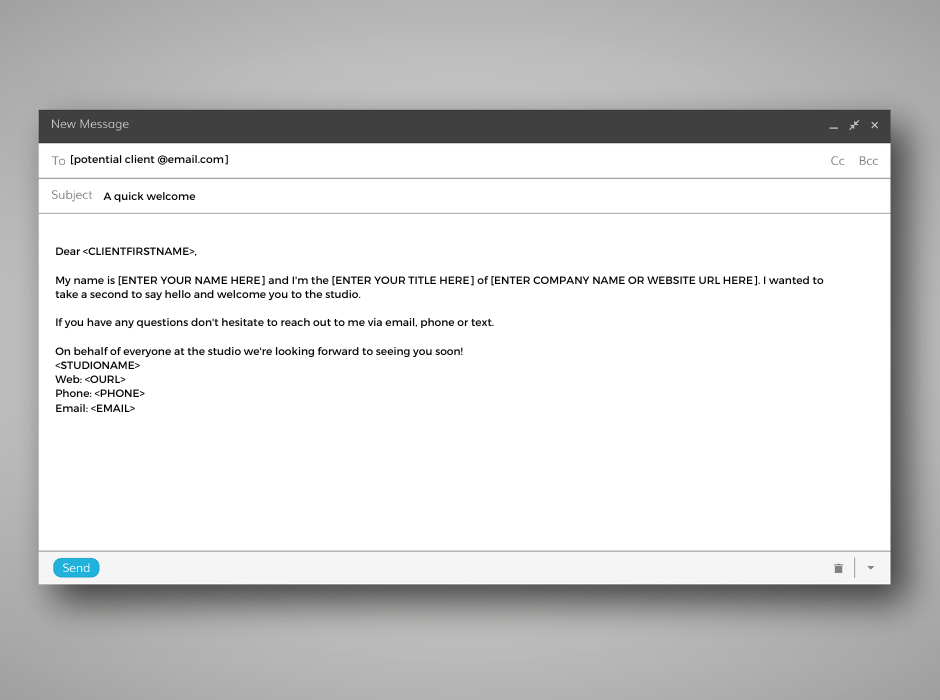
    • Have a template entitled “A Quick Welcome” and email the person directly.
    • It doesn’t have to be long or complicated.
    • Just a short welcome letting them know who you are (owner, manager, instructor, etc.) and that you’re happy to answer any questions they might have, help with scheduling, etc
    • Or better yet, pick up the phone, give them a call and do the same thing. 

    how to increase conversion rate

     That quick reach out will make them feel welcome, showing they’re not just a random new person. Short, sweet, and to the point.

    What if a client completes the intro package and doesn’t convert? 

    • Check with the teacher for any extenuating circumstances.
    • if not, make a call to the client see if you can help them take the next steps.

    Summary of How to Increase Conversion Rates.

    Helping my teachers understand exactly how important these one-liners at the end of class were and keeping on top of lead management have been the keys to conversion for our studio. 

    Try it, you won’t be disappointed. 

    Please drop a comment below and share any tips you might have on how to increase conversion rates.

  • Why Not Knowing Your Marketing Return On Investment Can Be Disastrous

    Why Not Knowing Your Marketing Return On Investment Can Be Disastrous

    When I Knew Nothing About Marketing Return On Investment – A True Story

    marketing return on investment

    I want to tell you how not knowing my marketing return on investment almost got the best of me. I’m hoping that by putting my story out there, it will help other business owners save time and energy when it comes to marketing.

    When I finally opened the doors to my Pilates studio, I was elated. I had put so much hard work into opening my own place, and it had finally come to fruition. I had a great network of colleagues and friends who spread the word about my studio which landed me a bunch of wonderful clients. 

    marketing return on investment

    After a successful year, I knew that I wanted to grow my studio even more. I decided to try all of the different strategies that I’d seen in similar businesses. The plethora of strategies included:

    • Social Media Posts
    • Blogging
    • Opening a retail store in the studio itself
    • Ebook for email list building
    • Email Marketing
    • Various Intro offers
    • Internet ads
    • Facebook ads
    • Studio events
    • Radio ads
    • Newspaper ads

    As you might imagine, after about six months of this extensive yet disorganized marketing plan, the exhaustion set in.

    I was working so hard and knew that if I continued at the rate I was going, burnout was coming. 

    Creating the content, organizing inventory and planning events was taking so much time and energy. Not to mention the fulfillment side of the business; I still had to teach Pilates!

    marketing return on investment

    On top of all this, I had no idea what was working. Something had to give. But what? I didn’t want to take the chance of eliminating the wrong things.

    But I had no idea what the right things were.

    What You Don’t Know CAN Hurt You

    The problem was that I had no idea what was working (and what wasn’t working) when it came to getting (and keeping) clients. I didn’t know :

    marketing return on investment

    1. 1What tactics were bringing clients in
    2. 2What tactics were helping clients make the first purchase
    3. 3What tactics were keeping the clients interested
    4. 4What tactics were leading directly to increased income

    I couldn’t tell if all of my efforts were worth it. I was working harder but not smarter.

    And then a friend and fellow business owner told me how to figure out my average client value, or ACV. More importantly she showed me how to use it to make critical decisions.

    marketing return on investment

    I had heard about lifetime client value (LCV) but ACV was new to me. It turns out that in the fitness business industry, we can’t really go by LCV as an average. It’s too hard to figure out when you have so many different relationships with your clients. For instance:

    • A 10-year relationship with a client vs. a 6-month relationship
    • If a client has an injury that takes them out of commission for a while
    • Maybe a client wants a home program and will only be coming for a few sessions
    • If a client only comes in sporadically for check-ins

    All of these inconsistencies in the boutique fitness industry make the LCV less helpful when making marketing decisions.

    Checking the ACV for a consistent rolling time period paints a clearer picture of the habits of your clientele.

    This customer data allows you to assess your marketing return on investment and client retention. 

    The ACV can also help analyze strategies that maximize customer value and aid in pricing decisions. But how do you do that? It’s actually pretty simple and I’ve narrowed it down to 4 steps. Keep reading

    How To Figure Out Your Average Client Value

    1. 1Time Frame – While you can do this calculation for any time frame, you’ll definitely want to know your ACV over the past 365 days.
    2. 2Number of Active Clients – How many active clients and members do you currently have? Most scheduling softwares will have a report that tells you this. (If you use Mindbody, see the end of the article for specific steps to pull up this report.)
    3. 3Total Revenue – Next, get your total revenue for the same time period.
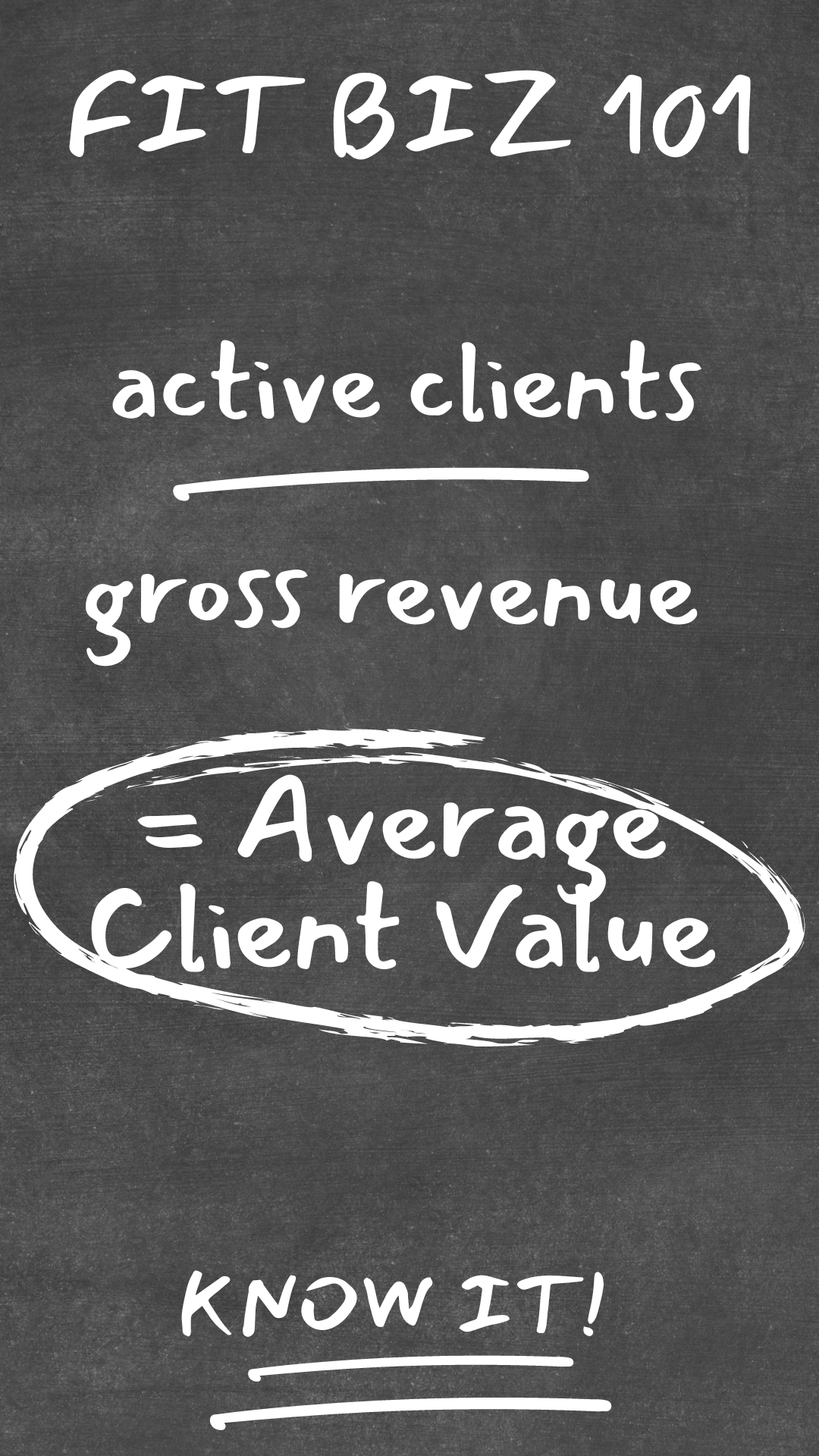
    4. 4Calculate – Total Revenue divided by Total Active Unique Clients will equal your average client value.

    How ACV Can Measure Marketing Return on Investment and Help Maximize Customer Value

    If you’re investing in internet advertising

    • Calculate your rolling 365 ACV.
    • Create your first ad budget. (Remember this is an investment and not an expense.)
    • Make sure that in your intake process new leads have a way to tell you how they found you.
    • After a period of time see how many people who clicked on the ads became clients.
    • Multiply that number by your ACV and then subtract your ad spend budget to find your projected return on investment.

    If you want to increase existing customer value

    • Calculate your rolling ACV.
    • Create a special that you will promote through social media and email marketing to your current clients. Possibilities include a retail sale, class special, and anything else you might like to try. (Click this link for some of the promotions that have worked for clients of FBP.)
    • Run the special for a period of time.
    • Calculate your rolling ACV again for the special’s time period.
    • Compare that ACV to the previous period.
    • Is it higher?

    What about Retention?

    The ACV is a fantastic tool to calculate retention success. If you calculate your Rolling ACV on a monthly basis you can learn so much about your studio’s retention performance.

    • If your ACV is increasing, look further. If the number of clients increased and your income increased you can be confident that your retention strategies are working.
    • If your ACV decreases because your income is stagnant. This means you have more clients making initial purchases, but they are not purchasing as many services or services of the same price as previous months. In this situation, you can ask yourself what you can do to maximize the value of each and every client.
    • If your ACV decreases because the number of clients decreases and the income is stagnant or decreases. You can deduce that there are problems with retention and look at your systems for retention after the first visit. Do you need more email nurture sequences, or do you need to speak with staff about making sure that clients are scheduling their next appointment?

    Choices About Pricing

    • Calculate your ACV.
    • Recalculate your ACV with a 5% increase.
    • Use this information to make decisions and create budgets around infrastructure and ad expenditure.

    By knowing your ACV, you’ll have data that will tell you what is adding income to your bottom line.

    marketing return on investment

    Work Smarter, Not Harder

    The bottom line is this. You don’t need to do all the things to try get a marketing return on your investment. Use the data. Use your ACV and let it tell you what specific marketing endeavors are profitable, and focus on those.

    Our own Results

    Data analysts tell us that at the end of Q4 2022

    • The Pilates market had recovered to 100% of pre-pandemic revenue levels.
    • That the Yoga market had recovered to 80% of pre-pandemic revenue levels.

    By following the very advice in this article, our Pilates Studio, in a tiny market in Massachusetts, had recovered to 

    • 122% of pre-pandemic revenue levels
    • With 40% fewer instructors.   

    You’ll have the same results by following time proven business practices like these.   

  • The Monumental Importance Of Online Reviews For Businesses

    The Monumental Importance Of Online Reviews For Businesses

    If You Think Online Reviews For Businesses Don’t Matter – Think Again

    I have a confession to make. I used to be someone who NEVER read online reviews for businesses. I was young and silly and figured, “Eh, how bad could it be?” Well, let me tell you. I ended up experiencing some pretty terrible unpleasantries, all of which could have been avoided had I taken the time to read the reviews. It wasn’t until I started working for a boutique fitness studio that I realized the massive importance of online reviews for businesses. 

    We, as a studio, had spent all of this money on hiring a search engine optimization (SEO) company. The goal we had in mind was simple- to have our website appear when people search for what we do. 

    online reviews for businesses

    It sounded easy enough, yet despite utilizing the SEO company, the number of clicks to our website didn’t increase.

    online reviews for businesses

    The owners expressed their frustration in a meeting when another employee said something that suddenly made everything crystal clear. 

    He said that when he searches for local businesses, he always starts with the one with the best reviews. It was like a light went on.

    online reviews for businesses

    After doing a little research, we discovered that we had only a fraction of the reviews that our competitors had.

    It would have been nice if our SEO provider had pointed out that being “found” by a search engine is only half of the equation. Being chosen is the other half. Instead, our SEO investment was pointing people to the competition because they already had reviews! 

    Why Online Reviews For Businesses Are Crucial

    online reviews for businesses

    For any business offering services or products to the public, customer satisfaction is essential for success. Demonstrating to potential customers that your company is committed to providing the best service possible is another great way to set yourself apart from the competition and build trust.

    One of the most powerful tools for demonstrating customer satisfaction is customer reviews.

    Reviews from existing customers provide potential customers with an insight into the experiences of using your company and can be a competitive advantage for businesses.  Understandably, potential customers want to see genuine customer reviews before using a company. 

    Here are some ways in which online reviews for businesses can be beneficial:

    online reviews for businesses

    • They validate your expertise – Online reviews show potential customers that you know what you’re doing. They show that you’ve helped people before and achieved the results people want. They validate your expertise – Online reviews show potential customers that you know what you’re doing. They show that you’ve helped people before and achieved the results people want. 

    online reviews for businesses

    • They give you an open line to consumers – Reviews and personalized responses are the ultimate way to put a friendly face to your brand. Showing you’re open to feedback will give your brand a major boost!

    online reviews for businesses

    • They make you visible – Online reviews boost your website in search engine rankings. With a higher rank, algorithms and people will see you as a trusted source in your industry, resulting in greater visibility.They expand your reach – Online reviews boost your brand’s online presence beyond your website and social media channels. Customers can discover more about your brand on well-known third-party sites like Google, Angi and Yelp.

    online reviews for businesses

    Those online reviews for businesses sound pretty worthwhile, right? It is imperative to have online reviews so potential customers can find you, see what you’re about, and know they’ll be in good hands.

    online reviews for businesses

    But how, as a business, do you go about getting these reviews from your clients? Keep reading to discover some easy-peasy ways to boost your business’s online reviews.

    The Trick To Getting Online Reviews For Business

    Now that you know the why behind online reviews for your business, it’s time to learn how.

    Here are 4 ways that have been tested by us that have garnered a ton of new reviews.

    1. 1Ask – Often getting a review is as simple as asking. As long as the process is clear and you make it fast and easy to do, you’re likely to get warm responses to your request. (P.S. We discovered that a lot of our clients were super happy to leave a review, even though we assumed it might be a bother to them!)
    2. 2Get specific – Ask a specific question instead of asking for a general review. Something like;a. What have you achieved since using [your product or service]?b. What’s the #1 reason you’d recommend [your product or service] to a friend?c. What would you tell someone who is considering [your product or service]? 
    3. 3Make it easy – Make the process of leaving a review as easy as possible for your customers. Ideally you should provide them with a link that brings them directly to where they write their review.
    4. 4Be prompt – Encourage your customers to share their thoughts soon after their experience while the details are still top of mind! (BTW, we have some awesome email templates you can use!)

    So there you have it- a better understanding about why online reviews for businesses are so monumentally important. This is especially true if you are a business owner yourself! 

    online reviews for businesses

    You have your beloved clientele who know how wonderful your business is – now let them go and tell everyone else just how awesome you are! It will really make a huge difference in how your business is viewed. 

  • If Your Profit and Loss Statements Are Traumatizing You – Do 3 Things

    If Your Profit and Loss Statements Are Traumatizing You – Do 3 Things

    When You’re An Expert At What You Do, But Not In Running A Business

    profits and loss statements

    I’m going to tell you a secret I haven’t told many people. I Googled examples of what to put in the business plan section on my loan application for the bank. I had no idea what I was doing- I was lost in a world of 

    • Profit and loss statements (or P&L) 
    • Balance sheets
    • Cash flow statements

    My expertise is in Pilates, not things like profit and loss statements.

    profits and loss statements

     I knew I wanted to own my own studio, and that I’d be good at it! But I had absolutely no idea about the business side of it. I knew I needed a business loan, but also knew that I needed a business plan to get a loan. 

    profits and loss statements

    Google became my best friend and teacher. I remember throughout the loan process our loan officer would ask for more projections and more spreadsheets, and it felt like I was just making it all up.

    Finally, we got a call from the bank and our loan officer said, “Guess what? Your loan has gone to underwriting. You’ve done great, now go get some rest.”

    profits and loss statements

    I could tell from the sound of his voice that this was good news. I turned to Google and searched for the key words, “What is underwriting?” Thankfully, the bank saw the big picture through the weeds of my naivete and I was able to open my business! 

    profits and loss statementsprofits and loss statements

    During the first year, I struggled with understanding my cash flow. I couldn’t understand why there were times when I was so super busy yet there was no money in the bank. But then times when business was slower, I had plenty of money in the bank. It made no sense to me. Thankfully, a close friend heard my (somewhat desperate) cries for help and worked with me to figure it out.

    profits and loss statements

    Why Messy Bookkeeping Makes Things 10 Times Harder.

    1. 1Identify the areas where you could be saving money, as well as opportunities for generating more revenue
    2. 2It tells you whether your company’s financial performance is positive or negative
    3. 3Reveals trends in your financial performance over time.
    4. 4If you stay on top of your profit and loss statements on a monthly basis, it makes your bookkeeping accurate in real time. (This will save you big time when you go to do your taxes!)
    5. 5It helps you figure out which activities are helping you make a return on investments, and which ones are resulting in losses.

    This was all very eye-opening and helpful to me. But I still wasn’t organized when it came to all of my financial stuff. That’s when I learned about the 3-step cleanup.

    Easily Manage Your Profit and Loss Statements With This 3-Step Cleanup

    profits and loss statementsprofits and loss statements

    In order to ensure the reviewing of your profit and loss statements is as easy as possible, it’s highly recommended to utilize these 3 organizational steps.

    1. 1Delete Irrelevant Categories – oftentimes bookkeeping software comes preloaded with default categories you may not use. Go to your Chart of Accounts and delete the categories you aren’t using or that don’t apply to your business. (You won’t mess anything up as long as you’ve never assigned a transaction to them!)
    2. 2Condense – comb through your categories and see what you can condense. For instance, you may have one category for supplies and one for materials. You’ll have to change the transactions to the new category, which can be time consuming if your software does not allow for a bulk operation. (QuickBooks does) But it will save you a lot of time and frustration in the future!
    3. 3Rename Categories and Be Specific – A category named “supplies” is too vague. Rename it so you’re clear on what is supposed to go in that category. For example, a boutique fitness studio may have one category called “office supplies” and one called “studio supplies.” 

    Being as organized and specific as possible will be quite beneficial in reviewing your profit and loss statements each month.

    The Bottom Line 

    profits and loss statements

    So there you have it. You now know that you’re definitely not the only one who has difficulty with understanding their profit and loss statements, cash flow, or any of the other business-related bookkeeping activities. Organization of your categories and checking the profit and loss statements monthly will go a long way in keeping things running smoothly. 

  • 3 Groups Are Emerging In The Boutique Fitness Industry. Which Are You In?

    3 Groups Are Emerging In The Boutique Fitness Industry. Which Are You In?

    Let me preface this article with this:

    • These are only words and they are from someone in the same boat as you.
    • This is a prediction based upon the past, I might be wrong!
    • I apologize in advance, if you feel strong disagreement at some point.
    • Before you leave though, please consider adding your point of view to the conversation ongoing each week at Pilates Business Pros Facebook

    The boutique fitness business mid-2022 looks very different from before February 2020. We’ve learned a lot. We’ve known small disruptions of our businesses before. Uncomfortable and inconvenient, yes, but not game-ending before 2020. From a business point of view, pandemics are just larger scale disruptions of revenue. Caught off guard and unprepared meant game over for over 12,000 facilities in the USA alone between 2020 and 2022.

    That was then. Now that we know about the threat, and can prepare for next time, it doesn’t have to mean game over. We simply have to get strategic and plan for it. The best news is that if we NEVER get another major disruption, we’ll be even more successful because we’re running our businesses in a way that compensates for our known vulnerabilities. We become more resilient by operating our businesses strategically and thoughtfully.

    This article is Win-Win-Win thinking For the Boutique Fitness Industry

    1. 1You, your family and your business wins
    2. 2Your clients win
    3. 3Our shared industry wins

    Who In the boutique fitness industry doesn’t want to win?

    Predictions of How the Boutique Fitness Industry Will Look

    Some will survive, others won’t. Then there will be those that thrive. What do you suppose will be the difference between them? That’s simple. Business is really much like a game. There are rules. You break them, you are penalized. There are playbooks with strategies and tactics. Practice them and start winning more. There are big plays like the Hail Mary pass in football or the 3-pointer in basketball. Mastering them takes practice. Do that, score more. Knowing when to use them takes understanding either through experience, or by thoughtful analysis of the wins and losses of the past. Mastery comes with knowledge and practice.

    The next generation of boutique fitness industry champions will be;

    • Those that master the game of business.
    • Understand the defensive and offensive positions they can take, and when to take them.

    In business, it’s the smartest that actually thrive under any conditions, and the boutique fitness industry like every other is a competition.

    <p “=”” style=””The boutique fitness industry is also uniquely suited to evolve under these new realities. There is an opportunity right now to do what independents rarely do -/pp “=”” style=”text-align: center;”> embrace cooperation.

  • In 3 Minutes and 15 Seconds Free Yourself From Believing Professional Video is Out Of Reach

    In 3 Minutes and 15 Seconds Free Yourself From Believing Professional Video is Out Of Reach

    If any of the following statements Are true, you must watch this video

    1. The word EDITING comes to mind when thinking about creating fitness videos for your business. True or False?
    2. When you think video, you’re thinking about a single camera. True or False?
    3. I don’t have the time it takes to create professional quality video. True or False?

    Related Courses


    Free

    Guide

    1 lessons  |  Easy

    Future Proof Your Fitness Business Selling Videos To Clients Beyond Your Neighborhood


    Free

    Text

    12 lessons  |  None

    Pathway To The Truly Hybrid Fitness Business


    Reimbursable Course

    Text

    27 lessons  |  Intermediate

    Setting up An A.P.T. Stream Suite

  • Are You Talking to The Wrong Client in Your Fitness Videos?

    Are You Talking to The Wrong Client in Your Fitness Videos?

    00:00 Intro

    So, are you talking to the wrong client in your Fitness videos? I know that we were, and in case you are the same, I’m here to help you fix that. But first, let’s review how we actually got there in the first place.

    00:15 Covid, Pivoting Online, and the Circle of Vulnerability

    When covid-19 hit the boutique Fitness industry, many of us were forced to close our doors. For us, it was four months. So in that situation we did what we had to do to survive and it’s called the pivot in the industry. We moved to Zoom meetings and relied on recorded videos to serve our existing clients. The ones that are no longer allowed to come in to their comfort zone, which is in person Fitness. I put this circle up because its a realization that all boutique Fitness businesses have a small circle where you’re most prolific clients live. In fact for us about 90 or 95% of our Revenue comes from people that live within that Circle that’s only about 20 miles wide.

    01:02 Fitness Buyer Bell Curve

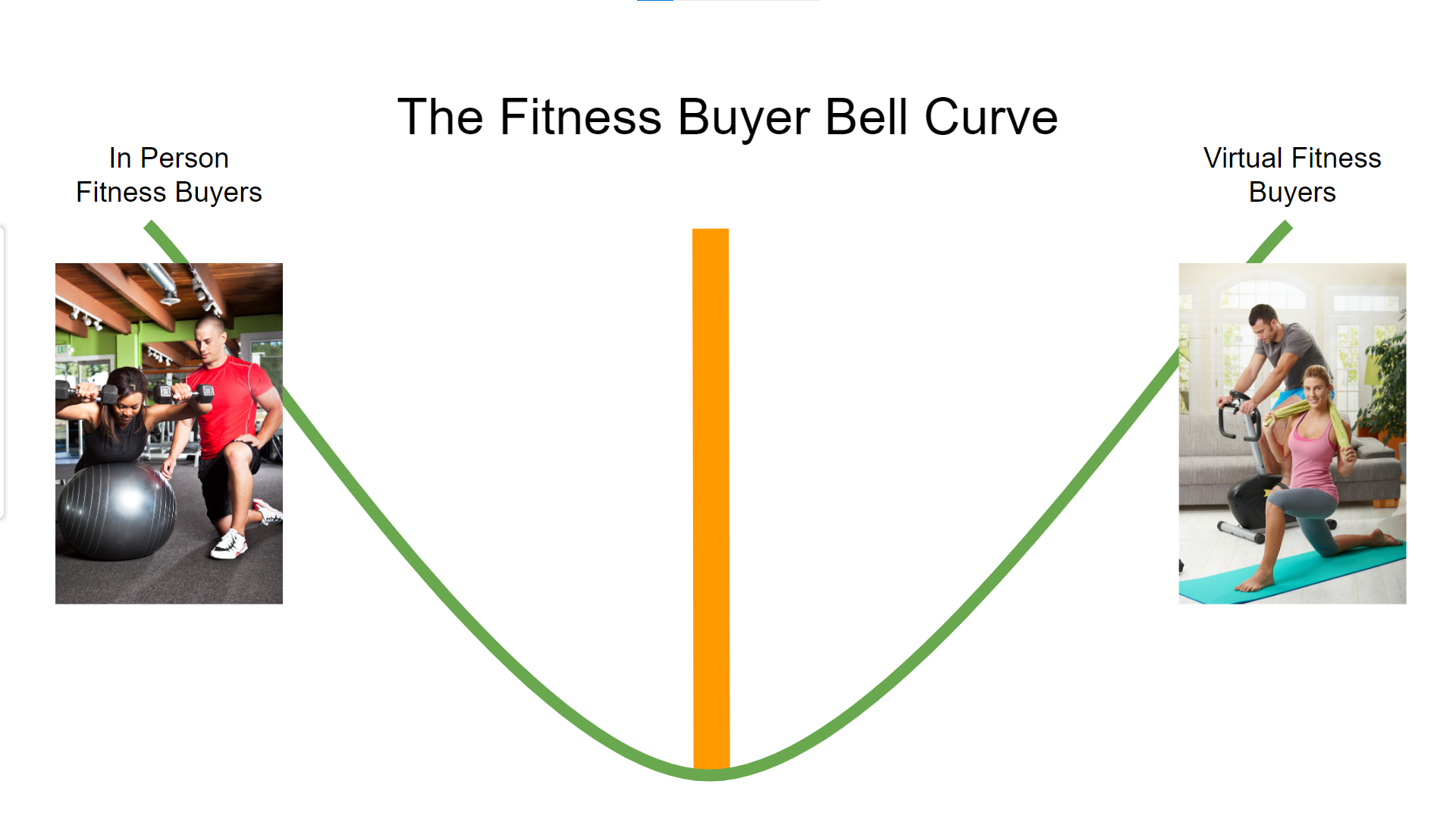
    So it’s probably true that the same is true for you. But I call them in-person Fitness clients because the realization was that they are one extreme on a bell curve of two different extremes. I’m going to show you the fitness buyer bell curve. On the left side, at the extreme, our in-person Fitness buyer never watches video, because that’s their comfort zone. They like to go into the studio and get their expertise that way.

    01:29 Virtual Fitness Buyer

    On the far side of the curve is the other extreme. The virtual Fitness buyer that never goes to the gym always works out at home, prefers to watch videos. That in fact would be me, I’m that type of Fitness buyer.

    01:45 Focusing on Existing Clients during Covid

    So it’s very natural that in the emergency situation, our focus was on our existing clients, and we either ignored, forgot about, or weren’t even aware of the fact that the other side of this curve existed. So when we were making these videos, in reality we were making them for the wrong client and we discovered that only about 18, 19, maybe 20% of these in-person Fitness buyers actually used and enjoyed the videos. And there’s the realization that we all as consumers exist somewhere on either side of that center. Either all the way out to the extreme or somewhere closer to the middle, but we’re on one side or the other.

    02:24 Talking to the right side of the curve

    So moving forward, we have hindsight. We’re now focusing on making our videos with the other side of the curve in mind. So that we’re making a product for someone that that product already appeals to, and the sales will be much higher as a result. If you want to sell anything to any group of consumers, you’ve got to appeal to them. You’ve got to learn to speak their language as well as you already speak the language of your existing in person Fitness buyer. 

    02:54 Understanding in person vs virtual fitness buyers

    So that’s what we set out to do and the key to that is understanding that these are different people. These are different kinds of buyers, and they have different needs and if we’re going to package our expertise in a way that appeals to them, we’ve really got to understand these differences. But first, what do they have in common?

    03:13 Seeking Transformation

    All consumers are seeking one thing when they buy a product or service. They’re seeking transformation. They want what that product or service will do for them. So a fitness example of this is, Grandpa Joe comes into the Pilates studios feeling his age. You can see he’s not a happy camper, his hips hurt, his knees hurt. his back hurts. He’s complaining that he can’t get up and down off the floor playing with the grandkids or the dog like he used to. But see Grandpa Joe remembers what it felt like to be able to do that, and that is his desired after state. He needs your expertise to be packaged in such a way to match his preferences, so he can get on that transformational journey and get to the after state.

    04:00 Transforming Differently

    So everybody is seeking transformation. They’re just doing it differently and it requires a different approach and a different package. They’re different in these ways: why they seek expertise, they’re understanding of their own needs, and their preference for accessing expertise. 

    04:15 The In Person Fitness Buyer

    Let’s look at the in person fitness buyer through that lens. What’s their why? Well, they are not do it yourselfers. They’re often unclear about what they need, and they prefer their expertise delivered in person. So the experience that they seek, that they go to find to get their transformation from before to after, takes the form of an improvised collaboration. It’s the dance that you do together to find the shortest path between their before State and their after state.

    04:46 Virtual Fitness Buyer

    Now by comparison look at the virtual Fitness buyer. Polar opposite, they are do-it-yourselfers, they love to watch the videos. Two; they’re clear about their needs even when they’re wrong about it. That means they just get more content. Three, they prefer their expertise delivered on demand wherever they are. It’s a lifestyle thing. So the experience that they seek out in order to get the transformation that they’re looking for takes the form of a scripted facilitation. 

    05:16 Side by Side Comparison

    Look at those side by side: two extremes, in person buyer – improvised collaboration, not a video. The other extreme, virtual Fitness buyer – scripted facilitation, perfect for video. See how we were making videos for the wrong buyer? We’re gonna change that. So now, we’re going to make our videos for this buyer and they’re going to be scripted facilitations. 

    05:40 Making the Perfect Scripted Facilitation

    And now that we understand who they are, how they are, what their preferences are. It’s gonna be really easy. To create this perfect scripted facilitation for them. Number one: you have to remember there’s no relationship. Purely transactional, they search for your content, they like it, they pay for it, they move on. Because there’s no relationship, there’s no collaboration, which means way less education going on here. In fact, less is more in general when making a scripted facilitation video for this type of buyer. You simply want to tell them what to do and encourage them all along the way. Do that and you’re gonna win them over, you’re now catering to them and they’re gonna buy your content. 

    06:25 Video Has Two Parts

    And of course, it takes the form of a video, and we all know that video has two parts. It’s what you see with your eyes and what you hear with your ears. I want to focus now on what you hear with your ears. Every word that an instructor says when making a video for this buyer should either be a diamond or a lump of coal. Now the diamond is what this virtual buyers are willing to pay for, and the diamond is a specific command. “Bend your elbow,” “Flex your foot,” “Lie on your back,” “Inhale,” “Exhale.” That sort of thing. All the other words are just lumps of coal because they don’t deliver any additional facilitation. It makes sense right? 

    07:06 An Example of Coal

    Think about it like this: you’ll hear this phrase often in a live class, and it belongs in a live class because it’s an improvised collaboration. It’s much more conversational. “So now what you’re going to do is you’re going to lie down on your back on the floor.” And keep in mind that’s just the setup for a single exercise. The instructor will do this many many times during the class, and that’s a deal breaker for the virtual buyer. Because remember they’re after the diamonds. There’s 21 words in this phrase, look how many are diamonds.

    If I can get the slide to go, there we go. Four of those words are diamonds, the rest are coal. And think about that. If you want to cater to them, you want to please them, if they want you to buy their content, then it needs to be the other way around. Right? Only 80- only 19% of these words are for this buyer. The other 81% are going to displease them. Wondering what the diamonds are? Lie on your back. Everything else really when you think about it, all it is, is the thought process of the instructor out loud. So the discipline to this lesson is just leave them out. Don’t use any of those extra words, always facilitate, always encourage. 

    08:22 The Value of Speaking Diamonds

    So, the art of learning to speak Diamond will pay great dividends, because as we’ve already discussed, they’re the way to attract a whole different flock of buyers. you know birds of a feather, they flock together. You’ve got your flock that comes to the studio. they love being with you, they love being with each other. That’s their style.That’s their culture. This new flock also flocks together. When they find a piece of content, full of diamonds, that facilitates them into the transformation they seek, they tell others. There’s 1, and then 10, and then 100. Imagine when you get a thousand of these new flock of birds, paying let’s say $20 a month for access to your extensive library of Fitness expertise, made specifically for them. How much money is that? $240,000 a year, for just a thousand customers from the entire world? 

    09:17 Want to Learn to Speak Diamond?

    So doesn’t that make you want to learn to speak Diamond? I hope so, because we’ve got the perfect training for you and it is called Concise Queuing for The Virtual Fitness Buyer.

    09:26 Details of the Module

    There’s three modules in module one. We make a business case for learning this method, that specifically ties it to revenue and the act of delighting the buyer of your content. Then we get into the psychology of structure, and it’s role in inspiring brand loyalty, which of course leads to more revenue, and that means more retention referrals, and finally advocacy for your brand. In module number two, you’ll set your baseline. How you queue before this training, so you know where you came from and where you’re going. There’s three tasks that help you to do that baseline. And finally in number three, you’re going to learn and practice the PODLEA method and move toward, again  that singular goal of predictably delighting your new on-demand Fitness customer.

    10:08 Becoming a Fitstreams Contributor

    Everybody who takes this course has the option to apply to be a contributor to our on-demand brand, FitStreams.club. And this is an exciting opportunity because one of the things that you’ll learn about FitStreams is we built it because none of us can do this alone and meaningfully get into a much bigger market and that secondary Revenue. So take the course, apply yourself to the learning of this way to delight a new buyer, and open up all sorts of possibilities for your future. And if we like what you’re doing, we’re going to give you your money back for this training. Thanks for listening and enjoy the course.

    Related Course

    Free

    Text

    12 lessons  |  None

    Pathway To The Truly Hybrid Fitness Business

    Reimbursable Course

    Text

    11 lessons  |  Intermediate
    Concise Cueing For The Virtual Fitness Buyer

  • A Breakdown of Fitness Trends 2022 in the Mindbody Wellness Index Report

    A Breakdown of Fitness Trends 2022 in the Mindbody Wellness Index Report

    Section 1: The Pandemic

    Mindbody Wellness Index Report

    What the Report Found

    • About half of consumers have reported their mental well-being has been negatively affected by the pandemic
    • 40% of consumers report their physical health being affected
    • Gen Z and Millenials are the most affected in both mental and physical health
    • Over 50% report staff vaccination status being an important factor for returning to gym/studios

    Opinion

    A Business Consultants Take:

    Yes, all of us with brick-and-mortar fitness facilities should absolutely take those statistics and realities to heart; have empathy, make changes, help people feel more comfortable to return. As business people, we ALSO need to talk about how to solve the business problem, brought on by the fundamental flaw of the boutique fitness business model. That any business dependent upon its doors being open to serve a very small pool of clients is at risk for disruption. The good news is that there are well-established, principle-oriented business strategies that can help us mitigate the impacts, and increase the survivability of these disruptions.

    The big risk is that one of the fitness experts’ strengths is also one of their greatest weaknesses. The boutique fitness expert/business owner who spends eight hours a day in their creative mind helping their clients reach their goals and solve their problems is a strength- their superpower in fact. It becomes a significant weakness when they forget to switch to a more analytical brain when it comes time to solving a business problem.

    There’s an old saying that if all you have is a hammer, everything looks like a nail. Evidence of this is clear in the fitness community these days. When you tune into podcasts, if you listen to consultants, you’ll hear 1000 different variations of a “Big Idea” approach to saving themselves, but the big ideas don’t solve the underlying problem.

    The most serious aspect of this risk is that it almost always results in the depletion of their limited resources. Thousands of creative and brilliant fitness experts making that same mistake is going to mean the eventual loss of even more valuable local experts. It doesn’t serve us, our families, our employees, our business, the industry, or the customers who depend on local fitness experts for any more of them to disappear. Talk to each other; compare notes, look closely and analyze to make sure that what you think is true actually is.

    And the proof can be found in one of your business’ key performance indicators. We need to do our best as a community to keep one another in check. When we see a colleague going down “The Big Idea” resources drain, have a conversation, and see if they can tell you exactly how they know it’s big!

    Section 2: Motivation

    What the Report Found

    • Over 75% of consumers report that being physically active helps their mental health
    • The top 3 reasons for working out have changed from pre-pandemic


    • The new reasons are reducing stress, feeling healthier mentally, and looking physically better are priorities above controlling weight, feeling good, and living a healthy life.


    Opinion

    A Business Consultants Take:

    The change in consumer motivations around exercise is important to note for effectively communicating the client’s current set of values and concerns when creating marketing materials. I would caution those without adequate resources considering the idea of adding some kind of mental health service or support to their business. Instead, consider cultivating cross-marketing referral relationships with experts already doing that work in your community. In this way you can feed two birds with one seed, rebuilding your businesses strength and resilience, while simultaneously supporting 2 completely separate businesses through a mutually beneficial referral relationship.


    Section 3: Variety

    What the Report Found

    • 46% of Americans want to try new services and treatments aimed at supporting immune health


    • Women are more interested in this topic than men, but this creates new opportunities around nutrition, sleep, and stress reduction.


    • A majority of people prefer businesses with a variety of services, with it influencing 69% of men and 64% of women.


    Opinion

    A Business Consultants Take:

    Another word of caution on this section! Again, like section 2, reading about a desire for new services doesn’t necessarily mean that the right thing to do is to add those services yourselves. Be mindful of your bandwidth, financial resources, and your area of expertise. Instead of trying to learn something, or build something new, the partner approach with existing providers will preserve all of your resources, leveraging each other’s expertise to the benefit of each other’s client list, while simultaneously gaining the valuable extended reach and referrals found in relationships of mutual benefit.

    Section 4: Barriers to Entry

    What the Report Found

    • Barriers to entry around fitness are still concerns for consumers, with 19% feeling too intimidated to go to a gym/fitness studio.


    • This is a 7% increase from 2021.


    • The top 4 reasons why people don’t go to a gym/studio are price, COVID-19 safety and cleanliness, time, and intimidation.


    Opinion

    A Business Consultants Take:

    Section 4 is interesting information. It’s a pretty good bet that after all this time, the vast majority of us are already seeing to the cleanliness and safety protocols necessary during a pandemic. The really big takeaway on this one for us is making sure that promotional materials and what you’re posting on social media are breaking away from “showing off” unattainable flexibilities and shapes which are out of reach for many. Good marketing content allows the target audience to see themselves in it, rather than being intimidated by what the expert or some model can do already. The very least that we can do is to stop doing that!

    Section 5: Virtual Fitness

    What the Report Found

    • 35% of Americans attend in-person classes after getting started through virtual fitness.


    • Millennials aged 25-40 proved to be the most likely to attend a class in-person after trying it online, at 43%.


    Opinion

    A Business Consultants Take:

    The report shows that virtual fitness classes are a valuable asset, but limits its commentary to framing it as a means to support in-person classes. It’s described more as a pipeline to get new clients into the studio rather than a new area to expand into. At-home fitness videos have been around since 1972, and now with the internet making them available on-demand is even easier.

    This section, in my opinion, is a gross understatement of the opportunity that is right in front of us as a community. The first thing you have to do is understand the virtual side of the industry before you make content. Otherwise, you run the very real risk of having been thinking about your existing in-person clients when you create the content for the on-demand client.  That won’t work. You have to do your homework to uncover the motivation- the specific variety the on-demand buyers are looking for, then create the content and package it precisely so they see themselves in it. That’s how you get them to buy it.

    In fact, that’s exactly what you’re already doing on the in-person side of your business. Do that correctly for this additional client type as well, and what you create can be successful far beyond the limits of geography and the doors being open.

    Did You Get That? I’m talking about the business solution to our universal boutique fitness business problem made clear by the pandemic:

    • Secondary Revenue


    • A completely new client type


    • Revenue not dependent on the doors being open


    It’s possible, and in fact already in progress. FitStreams.club is a product of a thorough analysis before executing content for the on-demand client profile. Take a look.

    FitStreams.club on-demand fitness classes

    Section 6: Recovery Services

    What the Report Found

    • Post-workout recovery is something that consumers are beginning to prioritize more with 32% of men and 24% of women regularly using recovery services post workout.


    Opinion

    A Business Consultants Take:

    This section of the report is very short, and there isn’t a lot to say that hasn’t already been said. If your fitness business has recovery services, that’s great. I’m sure that your own in-house numbers are indicating the growth indicated in this report. Obviously adding recovery services to what your business is already doing would involve significant investments in the necessary infrastructure.

    Be sure to avail yourselves of much more information than what this report provides. You could very easily spend yourself right out of business trying to build a new service, while simultaneously trying to recover what was lost on the fitness side of your business during the pandemic. Consider partnering first, unless of course, you have very deep pockets. Then by all means, apparently the water’s fine- jump right in!

    Section 7: Music

    What the Report Found

    • Music is a powerful motivator, with 71% of people being motivated by it while working out. The gym/studio is also a place where 40% of consumers discover new music.


    Opinion

    A Business Consultants Take:

    This section is very useful in showing that music might be a powerful tool for certain fitness businesses. Knowing that most people get motivated by listening to music, and that a good portion of them discover new music from the studio is informative. However, while music is universal, taste in music is not. The report does not say whether the music motivating consumers is provided by the studio or if they are listening to their own tunes.

    Sure, a fitness business playing specific styles of music creates a specific identity. But don’t forget, the other side of creating an identity is that you’re quite possibly and inadvertently excluding other identities. In these troubled times where inclusivity and representation are such divisive and difficult topics, one should take great care not to make music another thing that divides. Businesses should consider all angles before implementing these findings in their studio/gym.

    Get the full report here from MindBody Online